

Operation Epic Fury
A Case Study in Why Control of the Sky Doesn’t Guarantee Control of the Fight

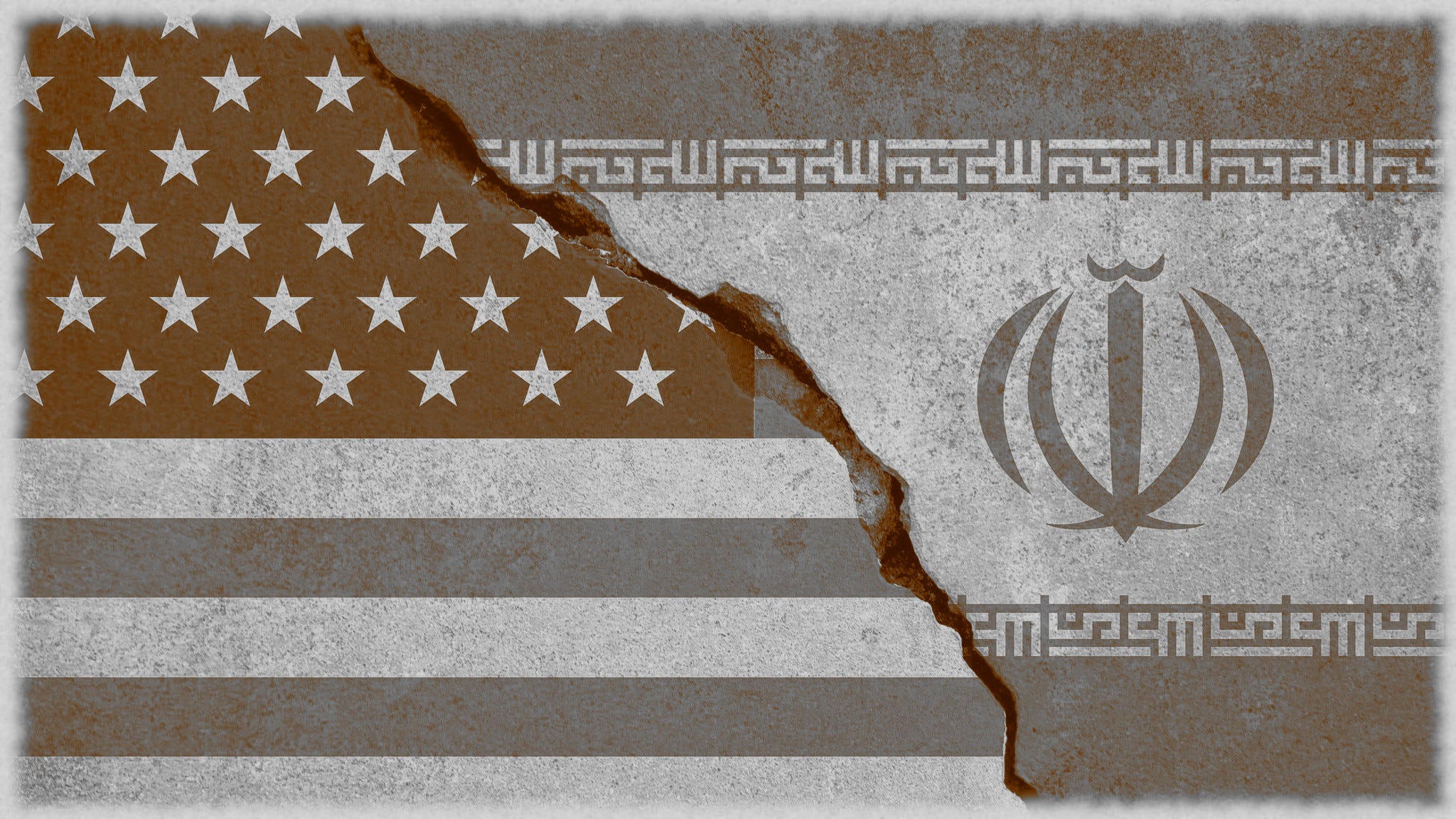
I wanted to do something different this week with the focus being on the conflict with Iran. To begin, I served as an infantryman in the United States Marine Corps from 2005 to 2009. This tenure included three deployments to Iraq within the Al Anbar Province. This vast desert region shares a significant border with Syria. Before the overthrow of Bashar Assad in 2024, Syria functioned as a primary Iranian proxy state and a vital strategic ally for the regime in Tehran. The combat experience in Al Anbar revealed a specific tactical reality. The primary adversary was not the local Iraqi population. Instead, the threat consisted of Iranian proxy militia fighters who entered Al Anbar through the Syrian border. These fighters utilized the porous nature of the frontier to transport weapons and personnel into the heart of the conflict zone. These weapons, men, and equipment were funded through the Iranian regime. American forces maintained total air supremacy throughout this period, yet the persistent overhead presence of strike and surveillance platforms could not effectively close the border or neutralize the flow of motivated guerrillas. The inability of high-altitude technology to solve the problem of ground-level infiltration highlights a fundamental limitation in modern kinetic operations. The reliance on precision munitions and aerial platforms often fails to account for the resilience of human networks and the complexities of hostile terrain. This historical friction suggests that the most advanced hardware cannot substitute for the physical control of territory. While American military might is unprecedented, air power alone will be insufficient to achieve the objectives of the war with Iran.
A Half-Century of Asymmetric Hostility
The modern history of Iranian foreign policy is defined by a persistent effort to project power through asymmetric warfare and through the cultivation of regional proxies. This geopolitical trajectory began with the 1979 Islamic Revolution and the subsequent seizure of the United States Embassy in Tehran. The ensuing 444-day hostage crisis established a permanent rift between the two nations and signaled the arrival of a regime that viewed state-sponsored kidnapping and indirect aggression as legitimate tools of statecraft. The revolutionary government sought to export its ideology beyond its borders and utilized the Islamic Revolutionary Guard Corps to establish a network of militant groups across the Middle East. These efforts were designed to challenge Western influence and undermine the security of regional rivals through a strategy of plausible deniability. This long history of provocation provides the necessary context for understanding the current state of conflict. Lebanon served as the first major theater for the expansion of Iranian influence. During the early 1980s, the Iranian regime provided substantial financial and organizational aid to the nascent organization that became Hezbollah. This support included the provision of specialized training and advanced weaponry, such as long-range rockets and sophisticated explosives. The Iranian government also utilized its diplomatic and political weight to persuade the group to take direct action against Western and Israeli interests. The results were catastrophic for the international community. During the deployment of the Multinational Force in Lebanon, Hezbollah carried out several devastating attacks with direct Iranian support. These operations included the 1983 bombing of the United States Marine barracks in Beirut, killing more than 200 Marines and Sailors. The United States government has maintained for decades that Iran provided the logistical and financial backing for these mass-casualty events. These bombings forced a withdrawal of international forces and demonstrated the effectiveness of Iranian-backed suicide missions in achieving strategic objectives. The campaign of terror directed by Tehran, through the Hezbollah proxy, continued throughout the 1980s and into the 1990s with a global scope. The Lebanon hostage crisis lasted from 1982 to 1992 and involved the systematic abduction of Western academics and journalists. In 1983, a bombing of the United States embassy annex resulted in the deaths of 24 people. The violence eventually expanded to South America where the 1992 bombing of the Israeli Embassy in Argentina killed twenty-nine people. This was followed in 1994 by the bombing of a Jewish community center in Argentina which resulted in 85 fatalities. These attacks proved that the reach of Iranian-sponsored groups was not confined to the Middle East. In 1996, the Khobar Towers bombing in Saudi Arabia killed 19 American servicemen. By February 2010, reports indicated that Hezbollah received approximately 400 million dollars annually from its patrons in Tehran. This massive influx of capital allowed the group to build a robust military infrastructure and a state-within-a-state that continues to threaten regional stability. The Palestinian territories represent another critical front in the Iranian effort to destabilize the region. While Hamas is a Sunni organization, it has found common ground with the Shia regime in Tehran through a shared commitment to the destruction of Israel. Mahmoud Abbas has explicitly stated that Hamas is funded primarily by Iran. He noted that the public donations the group claims to receive are far less significant than the direct support provided by the Iranian government. This support has enabled Hamas to conduct a multi-decade campaign of violence. Between 2000 and 2004, the group killed nearly 400 Israelis. From 2001 through May 2008, Hamas launched more than 3,000 rocket and 2,500 mortar attacks into Israeli territory. The culmination of this long-term investment in violence occurred on 7 October 2023. During that assault, Hamas launched a barrage of at least 3,000 rockets while 2,500 militants breached the Gaza border. This attack resulted in the deaths of at least 1,400 Israelis and remains a primary driver of the current regional escalation. The American invasion of Iraq in 2003 provided the Iranian regime with an opportunity to engage United States forces directly through proxy groups. The Quds Force acted as the primary instrument for this campaign of subversion. General David Petraeus testified that the Quds Force provided training and equipment to various Shiite militia groups with the specific goal of killing American soldiers. Captured Hezbollah fighter, Ali Musa Daqduq, confirmed that the Quds Force provided the direction for the 2007 Karbala raid which resulted in the execution of five American service members. The United States State Department reported that Iran smuggled advanced weaponry into Iraq to arm various factions. These weapons included explosively formed penetrators which were specifically designed to defeat the armor of American vehicles. This support extended to the Mahdi Army, and other groups, led by figures like Muqtada al-Sadr. These actions were intended to ensure that the American project in Iraq remained costly and unstable. The rise of the Popular Mobilization Units in the fight against the Islamic State added another layer of complexity to the Iranian presence in Iraq. While these units were nominally part of the Iraqi security architecture, many maintained primary loyalty to Tehran. During their operations, these groups committed extensive atrocities against Sunni civilians. Reports from the conflict zones described horrific acts, including burning people alive in their homes and playing soccer with severed human heads. The Popular Mobilization Units also engaged in the ethnic cleansing and razing of entire villages. These actions were not merely incidental to the war against the Islamic State, but were part of a broader effort to shift the demographic and political landscape of Iraq in favor of Iranian interests. The brutality of these groups exacerbated tribal tensions and served the long-term goal of creating a fragmented and dependent Iraqi state. The historical record demonstrates a consistent pattern of Iranian aggression spanning nearly half a century. The regime has utilized every available means to attack American interests and allies while attempting to avoid the consequences of direct conventional warfare. This strategy has relied on the suffering of civilians and the destabilization of entire nations to achieve a position of regional hegemony. Given this history, the decision to engage in direct military strikes against Iranian military targets and proxy infrastructure appears as a necessary response to a sustained campaign of hostility. Diplomacy and economic sanctions have historically failed to alter the fundamental objectives of the Iranian leadership. The current strikes represent a shift toward holding the regime accountable for the violence it has exported for decades. This analysis suggests that the current conflict is not the result of a single event, but is the inevitable consequence of a long and bloody policy of state-sponsored terror. These decades of state-sponsored violence and regional subversion have created the environment where direct military intervention became the only viable means of containment.
Midnight Hammer and Epic Fury: Strategic Escalation and Kinetic Execution
The strategic imperative to prevent a nuclear-armed Iran eventually eclipsed decades of diplomatic efforts and led to the most significant joint military operation in the history of the Middle East. For years, the Iranian regime utilized the Organization of Defensive Innovation and Research to advance its nuclear ambitions under the guise of civilian energy needs. This pursuit of a nuclear weapon was viewed by Western analysts as a means to provide a permanent umbrella for Iranian proxy aggression across the region. The threat of a nuclear-capable Tehran forced a fundamental shift in American and Israeli defense postures. This shift culminated in the dual offensives of Operation Midnight Hammer on 22 June 2025, targeting the Iranian nuclear infrastructure, and the current Operation Epic Fury. While Midnight Hammer focused specifically on the surgical degradation of nuclear research facilities and the enrichment sites at Fordow, Natanz, and Isfahan, Operation Epic Fury is designed as a comprehensive campaign to dismantle the entire Iranian military and political apparatus. On 28 February 2026, the geopolitical landscape changed permanently when President Trump posted an eight-minute video to Truth Social at 2:30 a.m. Eastern time. In this address, the president laid out the sweeping objectives for Operation Epic Fury. He stated that the mission intended to destroy the Iranian missile industry, annihilate the Iranian navy, and eliminate all nuclear facilities while ensuring the protection of American troops and allies. The president provided a historical justification for the strikes by reciting forty-seven years of Iranian hostility toward the United States. He specifically mentioned the 1979 embassy hostage crisis, the 1983 Marine barracks bombing, and the repeated attacks on American bases by proxy forces. He also cited the regime’s history of killing its own protesters, including the recent slaughter of thousands, as evidence of its illegitimate nature. During this address, the president explicitly urged the Iranian people to overthrow their government. He suggested that once the military operations were finished, the citizens should take control of their nation, as this might be their only chance for generations to secure a new future. The joint assault began around 9:45 a.m. Tehran time on 28 February 2026. This operation involved a massive coordination of kinetic assets from both the United States and Israel. The opening phase utilized Tomahawk cruise missiles launched from United States warships in the Persian Gulf and the Arabian Sea. These were supported by HIMARS strikes and the first combat use of low-cost one-way attack drones deployed by Task Force Scorpion Strike. Simultaneously, the Israeli Air Force conducted the largest military flyover in its history by committing approximately 200 aircraft to the mission. These strikes were not limited to a single region but targeted military infrastructure across twenty-four of Iran’s thirty-one provinces. The primary targets included Islamic Revolutionary Guard Corps command and control facilities, integrated air defense systems, and missile and drone launch sites. Military airfields and leadership compounds were also struck with precision munitions to paralyze the Iranian ability to coordinate a counterattack. The decapitation of the Iranian leadership was a central component of the operation. Targeted strikes on at least three major leadership sites resulted in the deaths of seven senior Iranian officials. Among the dead were IRGC Commander-in-Chief, Mohammad Pakpour, and Defense Minister, Aziz Nasirzadeh. The strikes also killed Security Council Secretary, Ali Shamkhani, and the Chief of Staff of the Armed Forces, Abdolrahim Mousavi. Other high-ranking figures eliminated in the initial wave included intelligence chief, Saleh Asadi, and the head of the Military Bureau, Mohammad Shirazi. The scientific leadership of the nuclear program was also targeted, resulting in the deaths of SPND chairman, Hossein Jabal Amelian, and his predecessor, Reza Mozaffari-Nia. Initial reports from CBS News indicated that approximately forty Iranian officials were killed during the first hours of the campaign. This rapid elimination of the senior command structure was intended to create a vacuum of authority within the Iranian military and political establishment. The most significant event of the campaign occurred when an Israeli airstrike destroyed the compound of the Supreme Leader in central Tehran. This strike killed the 86-year-old Ali Khamenei, along with his daughter, his son-in-law, and his grandson. President Trump confirmed the death of the Supreme Leader on Truth Social and described him as one of the most evil individuals in history. Iranian state media initially attempted to deny the report, with Foreign Minister Araghchi issuing several contradictory statements. However, the regime was eventually forced to confirm the death and subsequently declared forty days of official mourning. The loss of the Supreme Leader represented the ultimate failure of the Iranian defensive strategy and signaled the end of the political order that had governed the country since the 1979 revolution. The human cost of the operation and the subsequent retaliatory strikes was immediate and severe. Iran’s Red Crescent reported that over 200 people were killed and 747 were injured across the country during the initial wave of attacks. Despite the degradation of their command structure, some elements of the Iranian military managed to launch a retaliatory response. The Islamic Revolutionary Guard Corps announced that it had targeted twenty-seven United States bases with missiles and drones. These attacks focused on American installations in Bahrain, Kuwait, Qatar, the United Arab Emirates, Saudi Arabia, and Jordan. Iranian forces also launched strikes against Israeli population centers, resulting in the deaths of at least eleven people in Israel. The United States Central Command has reported that seven American soldiers were killed in action during these retaliatory strikes, and several others were seriously wounded. This exchange of fire demonstrated that even a severely degraded adversary can still inflict significant casualties through asymmetric and missile-based responses. The success of the initial air campaign in achieving its objectives is undeniable. The destruction of the Iranian nuclear infrastructure and the elimination of the senior leadership hierarchy were accomplished with remarkable speed and precision. However, the transition from successful air strikes to the achievement of broader political stability remains a complex challenge. The removal of the regime’s top tier of leadership did not immediately result in the total surrender of all military forces or the cessation of proxy activities. While the Iranian navy and missile industry suffered catastrophic damage, the underlying ideological and social structures of the nation remain intact. The reliance on aerial platforms to secure a total victory begins to face the friction inherent in any conflict where the ultimate goal is regime change and regional stabilization. The devastation wrought by Operation Epic Fury proved that American and Israeli air power could dismantle the physical manifestations of Iranian state power in a matter of hours. This capability achieved the immediate goals of degrading the nuclear threat and punishing the regime for decades of state-sponsored terror. Yet, as the smoke cleared over Tehran and the various provinces, the limits of this unprecedented military might became more apparent. The destruction of a government and its military assets through the air is a distinct task from the creation of a stable and cooperative successor state. The campaign successfully ended an era of Iranian history, but it also highlighted the enduring reality that technology alone cannot provide the final resolution to a conflict.
Historical Precedents and the Political Reality of Regime Change Wars
The strategic debate surrounding regime change has become increasingly polarized within the American political landscape. This division is largely the result of two decades of conflict in the Middle East. The American public has grown weary of the human and financial costs associated with the wars in Afghanistan and Iraq. This exhaustion was further deepened by the intervention in Libya which left a power vacuum and a fractured state in its wake. These experiences have created a prevailing skepticism regarding the ability of the United States to successfully dismantle an authoritarian government and replace it with a stable and functional alternative. However, a comprehensive historical analysis suggests that the outcomes of regime change are not universally negative. While the failures are often more prominent in the public consciousness, several key historical examples demonstrate that military intervention can lead to long term stability and the restoration of civil society when executed with clear objectives and a commitment to post conflict reconstruction. The most successful instances of regime change occurred in the aftermath of the Second World War with the reconstruction of Japan and Germany. These cases serve as the definitive model for transforming former belligerents into stable and democratic allies. In Germany, the Allied occupation faced the challenge of a nation that was physically decimated and ideologically poisoned by national socialism. The subsequent Marshall Plan provided the economic framework necessary to rebuild the industrial base and stabilize the currency. More importantly, the process of denazification and the establishment of a federal parliamentary system allowed for a complete break with the previous regime. The success in Germany was not merely the result of military victory, but was the product of a sustained commitment to legal and social reform. The reconstruction of Japan followed a similar trajectory under the administration of General Douglas MacArthur. The United States military did not simply defeat the Japanese Imperial Army, but also fundamentally restructured the Japanese constitution and social order. The preservation of the Emperor as a ceremonial figurehead provided a sense of continuity that prevented widespread insurgent activity while allowing for the implementation of radical democratic reforms. Both Japan and Germany were industrialized societies with high levels of literacy and a history of centralized administration which undoubtedly facilitated the transition. These examples prove that regime change can succeed when a nation is totally defeated and the occupying power has a clear mandate to rebuild the state from the ground up. The 1989 invasion of Panama provides a more modern example of a successful and limited regime change operation. Operation Just Cause was designed to remove Manuel Noriega from power and restore the democratic process in a nation of strategic importance to the United States. The military phase of the operation was swift and decisive, and utilized superior technology to paralyze the Panamanian Defense Forces. Following the removal of Noriega, the United States quickly transitioned authority to the civilian government that had been elected prior to the dictator’s interference. Panama, today, remains a relatively stable democracy with a growing economy and control over the Panama Canal. This operation demonstrates that regime change does not always require a decade of occupation if the political infrastructure for a successor government already exists and the military objectives are narrowly defined. The war in Iraq is frequently cited as a failure of American foreign policy, yet a more nuanced assessment suggests a degree of success that is often overlooked. The removal of Saddam Hussein ended one of the most repressive and murderous regimes of the late twentieth century. Had the invasion not occurred, Iraq would likely still be under the control of Hussein or his equally ruthless sons, Uday and Qusay. The brutality of the Hussein dynasty was characterized by the use of chemical weapons against civilian populations and the systematic torture of political dissidents. Today, Iraq maintains a mostly stable federal parliamentary government that has successfully navigated multiple internal crises and the existential threat of the Islamic State. While the cost of the transition was immense, the Iraqi state is no longer a regional aggressor or a primary sponsor of international terrorism. The existence of a pluralistic political system in Iraq is a significant improvement over the totalitarian dictatorship that preceded it. In contrast, the failures in Vietnam and Afghanistan highlight the dangers of engaging in regime change without a sustainable local partner or a clear understanding of the cultural landscape. In Vietnam, the United States attempted to bolster a succession of unstable and corrupt governments in Saigon while fighting a motivated insurgency supported by external powers. The ultimate collapse of the South Vietnamese state in 1975 underscored the reality that military force cannot substitute for political legitimacy. Similarly, the twenty-year mission in Afghanistan suffered from a lack of consistent objectives and a fundamental misunderstanding of the tribal dynamics of the region. The Afghan government remained dependent on American support and failed to establish a credible presence outside of the major urban centers. The rapid return of the Taliban in 2021 demonstrated that two decades of effort had failed to build a self sustaining state. The primary difference between successful and failed regime change appears to be the level of societal readiness for a new political order and the clarity of the post conflict plan. In Japan, Germany, and Panama, there were existing institutions or a high degree of social cohesion that allowed for a rapid transition. In Vietnam and Afghanistan, the United States faced deeply divided societies and entrenched insurgent movements that benefited from local knowledge and external sanctuaries. These historical parallels are essential for evaluating the potential outcome of the current conflict with Iran. The Iranian state possesses a much higher level of industrialization and administrative capacity than either Afghanistan or Iraq. The Iranian people also have a long history of political activism and a desire for social reform which suggests that a successor government could find fertile ground if the current regime were removed. The weariness of the American public is a legitimate constraint on foreign policy, but it should not lead to a total rejection of the utility of military intervention. The lessons of the past century indicate that the removal of a hostile and repressive regime can lead to a more peaceful and stable world order if the operation is conducted with a focus on long term governance. The objective in Iran is not merely the destruction of military assets, but the removal of a government that has spent decades destabilizing the Middle East. By analyzing both the triumphs of the post-WWII era and the frustrations of the early twenty-first century, planners can develop a more realistic strategy for the transition of power in Tehran. The historical record suggests that while the path of regime change is fraught with risk, the alternative of leaving a dangerous regime in power can often lead to a much greater catastrophe in the long term. These historical case studies provide a framework for understanding why some interventions lead to flourishing democracies while others descend into chaos. Success requires more than just overwhelming force. It requires a viable political alternative and a population that is willing to embrace a new direction. In the case of Iran, the stakes are too high to allow the fear of past failures to dictate future security. The goal must be to apply the lessons of successful reconstructions to ensure that the end of the current regime leads to a stable and cooperative Iranian state.
The Fallacy of Decisive Air Power
The persistent fascination with technological solutions to the problem of war often leads to a dangerous overestimation of air and weapon superiority as a decisive instrument of political compulsion. While the precision and lethality of modern aerial platforms are unprecedented, the history of conflict demonstrates that air supremacy alone is rarely sufficient to force a determined adversary to surrender. The fundamental reality of warfare remains centered on the control of territory and the subdual of the enemy will, which are objectives that can only be achieved through the presence of ground forces. Infantry remains the primary tool of warfare, and all other military capabilities exist as supporting elements designed to facilitate the success of the soldier or Marine on the ground. Despite the arrival of the digital age and the development of sophisticated munitions, the strategic center of gravity in any conflict is the ability to seize, hold, and govern land. Without the credible threat of a ground invasion, or the actual occupation of territory, an air campaign remains a limited instrument that can destroy infrastructure but cannot reliably dictate political outcomes. The theoretical framework of modern military doctrine emphasizes that every branch of service functions as a specialized support mechanism for the infantry. Artillery provides the fire support necessary to suppress enemy positions, and armor offers the mobile protection and shock action required to break defensive lines. Similarly, the role of an air force is to provide intelligence through forward air controllers, achieve air superiority to protect ground movements, and conduct interdiction to disrupt enemy logistics. However, none of these supporting arms can perform the essential task of land power, which is the physical presence required to enforce a new political order, as Clausewitz once said, “War is politics through other means.” The history of the twentieth and twenty-first centuries is replete with examples of air campaigns that achieved near total destruction of an enemy’s industrial and military assets yet failed to secure a definitive surrender until ground forces entered the theater. This enduring truth reflects the human nature of war, as a population and its leadership are far more likely to resist a distant aerial threat than an occupying force that directly controls their streets and resources. The Allied air campaign against Germany during the Second World War provides one of the most comprehensive examples of the limits of strategic bombing. For years, the United States and Great Britain launched massive raids against German industrial centers and residential areas with the intent of breaking the German will to resist. These operations resulted in the destruction of approximately twenty percent of the total housing stock in Germany and the deaths of hundreds of thousands of civilians. Cities such as Hamburg and Dresden were subjected to horrific firebombing campaigns that reduced entire neighborhoods to rubble. Despite this immense destruction and the systematic degradation of the German oil and transportation industries, the Nazi regime did not capitulate. The United States Strategic Bombing Survey later concluded that while air power was a decisive factor in the eventual victory, it did not independently compel the surrender of the government. The German leadership maintained its grip on power through a repressive police state and a mobilized population until Allied ground forces physically overran the country from both the East and the West. The German experience suggests that even when a nation is reduced to a state of industrial paralysis, the lack of a ground threat allows a regime to persist in its resistance. The case of Japan in 1945 is often cited as a counterargument to the necessity of ground forces, yet it remains an historical anomaly that proves the rule. While it is true that Japan surrendered following a period of total American air supremacy and the firebombing of over sixty Japanese cities, this outcome was only achieved through the employment of atomic weapons. The conventional firebombing of Tokyo in March 1945 resulted in more casualties than the later atomic strikes (excluding subsequent radiation deaths), yet the Japanese government remained committed to a final defense of the home islands. It was only the sudden and overwhelming introduction of nuclear warfare that provided the Emperor with the political justification to accept surrender. In the absence of atomic warfare, the United States was prepared to launch a massive ground invasion of Japan because military planners recognized that conventional air power alone could not guarantee an end to the conflict. The Japanese surrender was the result of a unique technological escalation that does not reflect the standard dynamics of conventional air campaigns. The American experience in Vietnam further illustrates the difficulty of utilizing air power to achieve diplomatic concessions. Operation Linebacker II, conducted in December 1972, involved the most concentrated use of strategic bombers in history. For eleven days, B-52s pounded military and logistical targets in Hanoi and Haiphong to force the North Vietnamese government back to the negotiating table in Paris. While the Nixon administration, and many air power advocates, claimed that the campaign successfully coerced the North into signing the Paris Peace Accords, the reality was more complex. The North Vietnamese government consistently denied that the bombings were the primary driver for their return to negotiations, and the final agreement did not fundamentally alter the strategic balance in favor of South Vietnam. The limitations of the air campaign were evident in the fact that the North Vietnamese were able to weather the storm and eventually achieve their long term objective of unifying the country through a conventional ground offensive three years later. Linebacker II represented the closest the United States has come to achieving a strategic goal through air power alone, yet it ultimately failed to produce a sustainable political victory because it was not linked to a credible ground threat to North Vietnam. The current situation with Iran and the execution of Operation Epic Fury must be viewed through this lens of historical skepticism. The 2026 strikes have achieved remarkable tactical success by eliminating the Supreme Leader and the senior command of the IRGC. However, the destruction of leadership compounds and missile sites does not automatically translate into the collapse of the Iranian state or the cessation of its regional influence. Without the presence of ground forces to manage the resulting power vacuum and secure key administrative centers, the Iranian regime or its successor elements may find ways to adapt and persist. The history of warfare suggests that air power is a magnificent tool for destruction but a poor instrument for construction. The reliance on aerial supremacy to compel a total surrender often results in a prolonged state of chaos rather than a stable peace. The strategic priority must always be the empowerment and protection of the infantry as the only force capable of delivering a final and unambiguous resolution to a conflict. The other branches of the joint force perform their roles with excellence, but their primary purpose is to set the conditions for land power to succeed. When political leaders and military planners lose sight of this hierarchy, they risk engaging in expensive and indecisive campaigns that achieve tactical brilliance while failing to meet strategic objectives. The enduring nature of war as a contest of human wills requires a human presence on the battlefield to ensure that the enemy’s ability to resist is physically and permanently removed. This principle remains as true in the era of hypersonic missiles and autonomous drones as it was during the age of the phalanx. The lessons of Germany, Japan, and Vietnam serve as a warning against the seduction of an air power-only strategy. True victory is found in the dirt and the streets where the infantry operates, and any analysis that ignores this reality is fundamentally flawed.
Geography and the Inherent Necessity of Land Power
The belief that a nation as large and geographically complex as Iran can be brought to a favorable political settlement through the exclusive use of air power represents a dangerous departure from historical reality. While the United States and its allies possess the most sophisticated strike capabilities in the history of warfare, these tools remain instruments of destruction rather than instruments of control. The precision of the aerial campaign of Operation Epic Fury, and the successful elimination of the Iranian senior leadership have demonstrated a remarkable level of tactical proficiency. However, the strategic objectives of the war, including the permanent neutralization of the nuclear threat and the stabilization of the region, require a physical presence that a flight of aircraft simply cannot provide. The fundamental nature of conflict has not changed despite the introduction of sophisticated missiles and autonomous drones. Warfare remains a human endeavor that is decided on the ground, in the rugged interiors of a nation rather than from the safety of high altitude. The primary flaw in the current strategy is the assumption that the destruction of a regime’s command and control infrastructure will automatically lead to its total collapse and subsequent capitulation. History provides numerous examples where air campaigns achieved near total devastation of military assets yet failed to compel a surrender. In the case of Iran, the Islamic Revolutionary Guard Corps has spent decades preparing for this exact scenario by decentralizing its command structure and hardening its critical infrastructure deep within the earth. The removal of the top tier of leadership during Operation Epic Fury was a necessary tactical step, but it did not dismantle the thousands of mid-level officers and regional commanders who are trained to operate independently. These elements are capable of maintaining a decentralized resistance that can persist long after the primary air defense systems have been neutralized. The lack of a credible ground threat allows these remnants to regroup and adapt to the new reality of a decapitated state. The geography of Iran presents an additional hurdle that air power is ill-equipped to overcome. The nation is dominated by the Zagros and Elburz mountain ranges which provide natural fortifications for mobile missile launchers and proxy militia operations. These regions are notorious for their difficult terrain and unpredictable weather, both of which can degrade the effectiveness of even the most advanced aerial sensors. During the campaign in Vietnam, the United States discovered that a determined adversary can utilize the natural landscape to hide an entire logistical network, spanning several countries, from overhead surveillance. Iran possesses a much larger and more industrialized version of this capability. Without infantry forces to clear these mountainous regions and secure the valleys, the Iranian military will continue to possess a strategic sanctuary from which it can launch retaliatory strikes against American interests and regional allies. The experience of patrolling the Syrian border in Al Anbar Province from 2005 to 2009 serves as a vital case study for the limitations of technology. During those deployments, the United States maintained total air supremacy and utilized an array of drones and satellites to monitor the Iraqi hinterland. Despite this unprecedented level of overhead coverage, Iranian proxy fighters and weapons continued to move across the border with relative ease. This infiltration occurred because an aircraft cannot physically block a mountain pass or conduct a thorough search of a suspicious vehicle. It cannot build relationships with the local populace to gather human intelligence or provide the physical security required to prevent the intimidation of civilians. The control of a border or a territory is a task that requires the persistent and physical presence of the infantry. If the current war in Iran remains a strictly aerial affair, the borders will remain open and the flow of Iranian influence will continue to destabilize the neighboring states. The history of successful regime change underscores the necessity of a comprehensive ground strategy. The transformation of Japan and Germany into stable democracies was only possible because American and Allied soldiers occupied the territory and enforced a new political order. This presence provided the stability required for economic reconstruction and the establishment of new judicial systems. The objective in Iran is not merely to punish the regime for its past crimes, but to ensure that it never again poses a threat to global security. Achieving this goal requires a level of engagement that transcends the delivery of precision munitions. It requires the physical security and administrative oversight that only a ground force can provide. There is a significant disconnect between the stated political objectives of the war and the current military means being employed to achieve them. The American public and its leadership are naturally wary of the costs associated with a large scale ground invasion. This hesitation is understandable, given the long and difficult experiences in Iraq and Afghanistan. However, the desire for a clean and low cost victory must not cloud the strategic judgment of the military establishment, nor the current administration. A sustained air campaign that fails to produce a definitive result is often more costly in the long term than a decisive ground operation. An indecisive conflict can lead to a state of perpetual instability that drains resources and damages the credibility of the United States. The lessons of the twentieth century suggest that the most humane and effective way to conclude a war is to apply overwhelming force in a way that rapidly achieves the political objectives and allows for the transition to a stable peace. The role of the infantry remains the pivot point upon which all other military operations turn. Artillery, armor, and air power are essential components of the modern joint force, but their primary purpose is to support the soldier on the ground. The infantry is the only force capable of delivering the finality required to end a regime’s resistance. In the current conflict, the air force has performed its role with excellence by clearing the path and degrading the enemy’s strength. Now, the question remains whether the United States has the strategic resolve to follow through with the only tool that can secure the objective. The reliance on technology to avoid the risks of ground combat is a luxury that history rarely rewards. The enemy in Tehran is a motivated and ideologically driven force that will not surrender simply because its headquarters have been destroyed.
Seeking Strategic Finality
I agree, in principle, with the necessity of the current war in Iran. The regime has spent nearly half a century as a primary source of instability and human suffering in the Middle East. I have lost friends at the hands of the Iranian regime and its proxies. Its support for terror groups like Hezbollah and Hamas and its pursuit of nuclear weapons made a military confrontation inevitable. The decision to strike at the heart of the regime’s power was a courageous and correct move to protect American lives and regional peace. The Iranian people have suffered under a repressive theocracy for too long and the removal of that regime is a strategic and moral imperative. There is no question that the world will be a safer place without the influence of the current leadership in Tehran. Despite my general agreement with the objectives of the conflict, there are profound doubts about how these objectives will be accomplished from a sustained air campaign alone. The current strategy appears to rely on the hope that the destruction of military assets will trigger a spontaneous internal collapse or a sudden change in behavior. While such an outcome is possible, it is not a sound basis for a military strategy. The risk of creating a failed state in the heart of the Middle East is significant. Without a plan for the physical control of the nuclear sites and the primary administrative centers, the United States may find itself in a situation where the threat has changed its form but has not been eliminated. The victory that was promised by the initial success of Operation Epic Fury may slip away if it is not grounded in the reality of land power. The path forward requires a realistic assessment of the resources and the commitment required to achieve a true victory. The United States must be prepared for the possibility that the air campaign will reach a point of diminishing returns. At that moment, the leadership must decide whether to accept an indecisive and potentially dangerous stalemate or to commit the ground forces necessary to finish the mission. The infantry remains the primary tool of warfare because it is the only force that can look the enemy in the eye and demand a total surrender. The lessons I, and my fellow Marines, learned in Al Anbar, and the history of strategic bombing all point toward the same conclusion. True victory is not achieved in the air, it is won in the dirt. The sacrifice of the current generation of service members deserves a strategy that is as robust and determined as they are.


I agree with the point you have demonstrated . However, America is not willing to do the work suggested in your thesis. America is not willing to follow Trump anywhere.
Great post. Agree with your assessment.