

Standing Like A Stone Wall
A Study in Brilliance, Breakdown, and the Making of a Myth

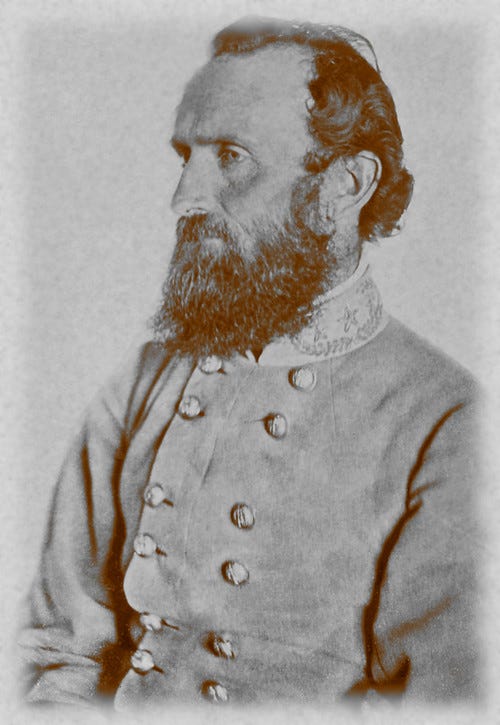
The American Civil War produced no figure more enigmatic or more central to the “Lost Cause” hagiography than Thomas Johnathan Jackson. In the heat of the Battle of First Bull Run in July 1861, as Confederate lines wavered under a Union onslaught, General Barnard Bee famously rallied his broken brigade by pointing to a silent line of Virginians. His cry, “There is Jackson standing like a stone wall!” did more than just name a man. It birthed a legend that would loom over the South long after the guns fell silent. Yet, the moniker “Stonewall” is somewhat of a misnomer for a general whose greatest contributions were defined not by static defense, but by fluid, aggressive movement and a relentless operational tempo. General Jackson is a study in contradictions. He was a tactical genius of the first order who was, at times, an operationally flawed commander. His career was a tapestry of remarkable speed, audacity, and an uncanny ability to outmaneuver numerically superior Union forces. However, these brilliant campaigns were frequently mirrored by a pathological intolerance for human weakness, episodes of inexplicable lethargy, and significant lapses in coordination with his peers. Ultimately, Jackson’s successes were rarely the result of a singular, isolated brilliance. Rather, they were deeply contingent upon favorable circumstances, the desperate initiative of his subordinates, and the frequent, glaring miscalculations of his Union opponents. To understand Jackson is to look past the proverbial “stone wall” and examine a commander whose effectiveness was inextricably linked to the context of this environment.
The Making of a Zealot
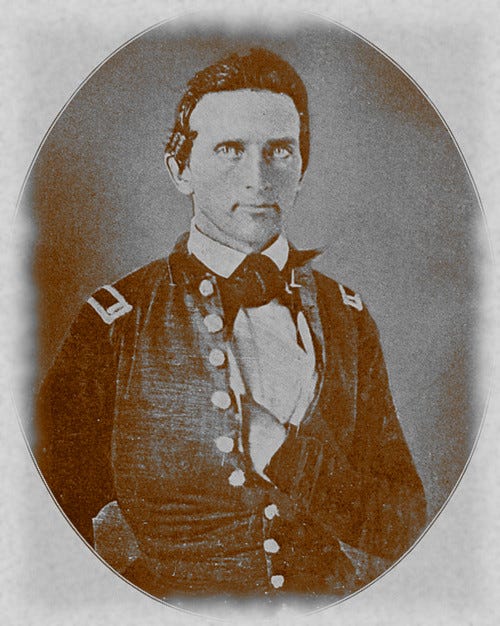
The transformation of the First Virginia Brigade into a cohesive fighting force was less an act of military instruction and more one of spiritual and physical forging. Jackson came to the command fresh from the classrooms of the Virginia Military Institute, where he had been known more for his eccentricities and rigid adherence to syllabus than for any spark of charismatic leadership. To his men, he was “Old Jack”—a humorless, secretive, and stern disciplinarian. However, this lack of levity was rooted in a profound, almost Cromwellian, Presbyterian zeal. Jackson did not merely view the war as a political struggle. Instead, he saw it as a divine crusade. In his worldview, the Yankee was not just an ideological opponent but a manifestation of evil that must be exorcised, while Confederate victory was a gift to be earned through absolute devotion and the purging of all personal weakness. This religious framework provided the moral justification for a leadership style that many of his contemporaries viewed as bordering on the sadistic. Jackson’s doctrine of the killing pace was predicated on the belief that speed was a form of protection, and that a soldier’s fatigue was a small price to pay for the tactical surprise that would save lives in the long run. He famously possessed no patience for the weaknesses of the flesh. To Jackson, the physical toll of a thirty-mile march was a secondary concern. He viewed the straggler or the exhausted soldier not with empathy, but with a cold, moral judgment. He famously classed those who fainted as men “wanting in patriotism.” This utter disregard for the physiological limits of the human body created a culture of extreme resilience, but it was a resilience bought at a staggering cost to the individual soldier’s well-being. The infectious, and dangerous nature of this zeal is best seen in the behavior of his subordinates, such as Richard Ewell. Initially baffled by Jackson’s eccentricities, Ewell eventually caught the spirit, adopting a Spartan minimalism that stripped marching columns of all but food and ammunition. Ewell’s declaration that “the road to glory cannot be followed with much baggage” reflected the Jacksonian ideal of an army reduced to its most lethal, mobile essence. This stripping away of comforts allowed for the legendary maneuvers that baffled Union generals, but it also removed the logistical safety nets required for sustained operations. The duality of this approach reached a breaking point during the transition from the high-altitude, crisp air of the Shenandoah Valley to the humid, debilitating lowlands of the Virginia Peninsula. By the time of the Seven Days’ Battles, the “Foot Cavalry” were no longer merely tired. They were broken. The men had endured the jarring discomfort of railroad travel followed by forced marches in unfamiliar heat, all without a moment for recovery from their previous exertions in the Valley. Crucially, this intolerance for weakness eventually ensnared Jackson himself. Historical evidence suggests that Jackson was a man who required significantly more sleep than the average officer in order to remain functional. This was a biological necessity that clashed violently with his self-imposed image of the tireless sentinel. After six weeks of relentless mental and physical strain, Jackson succumbed to what was known as stress fatigue. This was not simple tiredness, but a full cognitive collapse. The commander who demanded his men ignore their own fatigue found himself reeling from the same physiological debt. Consequently, the very discipline that made his brigade a “stone wall” at Bull Run became a liability when the human machinery simply ceased to function. Jackson’s leadership style was a high-stakes gamble. By pushing his troops, and himself, beyond the threshold of human endurance, he achieved results that redefined the limits of infantry movement. Yet, by refusing to acknowledge the reality of exhaustion, he introduced a systemic fragility into his command. His successes were brilliant, but they were balanced on a razor’s edge where heroic endurance and operational vulnerability were two sides of the same coin.
The Theology of the March
The military reputation of General Jackson rests primarily upon his mastery of maneuver warfare—a doctrine that substituted rapid movement for sheer mass. While the “Stonewall” moniker implied a static, defensive nature, Jackson’s true brilliance lay in his ability to use the march as an offensive weapon. By leveraging the physical endurance of his foot cavalry and a sophisticated understanding of terrain, he consistently achieved the ultimate goal of the outnumbered commander, which was to create local numerical superiority at the point of contact against a strategically larger foe. This ability to manipulate the theater of war was most vividly displayed during the 1862 Valley Campaign. Jackson’s force of roughly 17,000 men successfully neutralized three separate Union commands totaling 33,000 soldiers. His success was not merely a product of aggression, but of a deliberate, intellectual engagement with the landscape. Working closely with his topographical engineer, Jedediah Hotchkiss, Jackson spent hours agonizing over maps to identify choke points and hidden routes that his opponents overlooked. At Harrisonburg, for example, Jackson utilized the Massanutten Mountain, which was a fifty-mile ridge that bisects the valley, as a massive physical screen. By feigning a direct pursuit of Nathaniel Banks toward Strasburg and then suddenly swerving eastward across the mountain at New Market he effectively vanished from Union sightlines only where he was least expected. Jackson’s maneuvers were often designed to induce psychological paralysis in the Union high command. His move across the Blue Ridge in early May 1862 remains a masterclass in operational deception. By marching his troops east—appearing to head toward the Richmond front—he deceived both Federal scouts and his own men. The subsequent use of trains to pivot back west to Staunton allowed him to strike John C. Frémont’s advance guard at the Battle of McDowell. This victory was more than a tactical win. It disrupted Frémont’s entire strategic movement toward Knoxville and forced President Lincoln to divert 60,000 troops to hunt a phantom. As one Confederate private dryly observed, Jackson “got the drop on them in the start and kept it.” The physical manifestation of this genius reached its zenith in the Second Bull Run campaign. In August, Jackson’s corps executed one of the most audacious flank marches in American history, covering fifty-four miles in thirty-six hours. By slipping northwest along the Rappahannock and then cutting east behind John Pope’s army, Jackson struck the massive Union supply depot at Manassas Junction. The sight of threadbare, hungry Confederate troops consuming and then torching millions of dollars in Federal supplies was a devastating blow to Union morale and logistics. More importantly, it forced Pope into a confused, reactive posture, setting the stage for a decisive Confederate victory on the same ground where Jackson had earned his nickname the year prior. It is essential, however, to distinguish between the legend of the “Stonewall” and the reality of his tactical application. At the First Battle of Bull Run, his brigade did indeed stand fast, absorbing more casualties than any other Confederate unit that day.
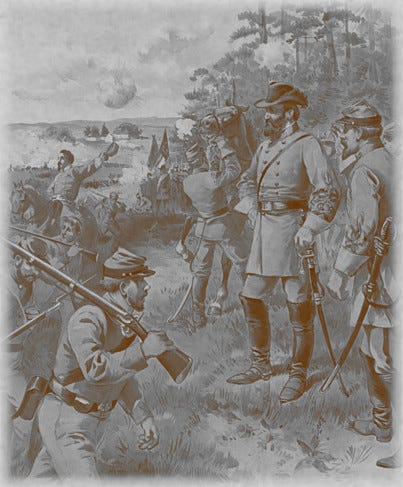
Yet, Jackson’s subsequent career proved that he viewed standing as a last resort. For Jackson, the defensive was merely a platform for the counterattack. He converted numerical inferiority into success by ensuring that, at the moment the rifles were leveled, his men were the ones with the advantage of position and surprise. Through this combination of rapid movement and disciplined engagement, he effectively rewrote the rules of engagement in the Eastern Theater, proving that a mobile, well-led minority could dictate the terms of war to a sluggish majority.
The Limits of Stonewall Jackson
To view Stonewall Jackson solely through the lens of his victories is to ignore the operational inertia that occasionally paralyzed his command.