

The Calculated Commander
Grant’s Operational Art and the End of the Butcher Myth

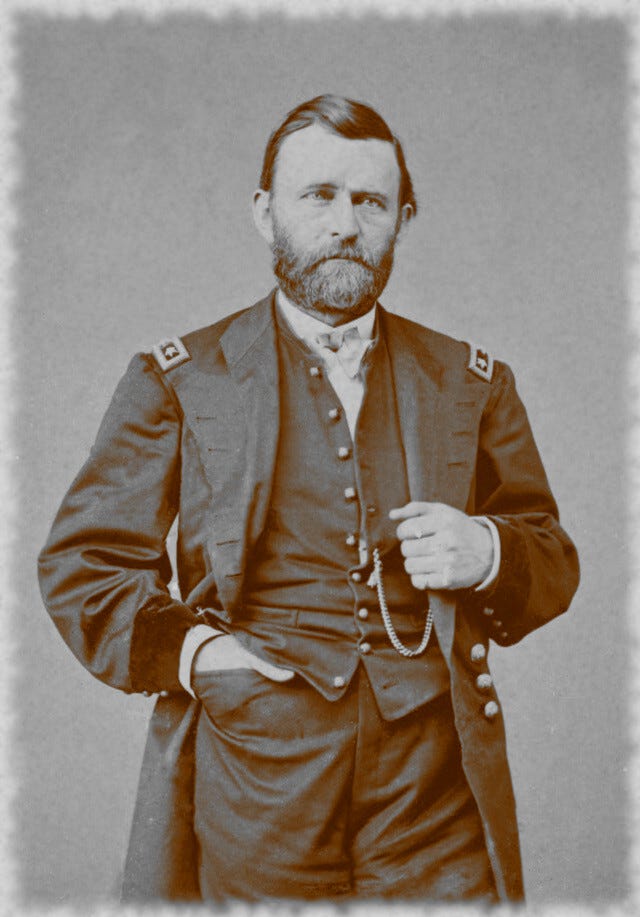
The campaign for Vicksburg represents one of the most complex operational puzzles in the history of North American warfare. In the early months of 1863, the strategic landscape of the American Civil War was defined by a frustrating stalemate in the East and a precarious, muddy uncertainty in the West. The fortress of Vicksburg stood as the essential pivot point of the entire Confederate defensive line. It was a citadel perched upon high bluffs that commanded a sharp bend in the Mississippi River. This geography allowed Confederate batteries to halt all Union commerce and military transit along the most vital artery of the continent. For the Lincoln administration, the capture of this position was not merely a military objective. It was a political and economic necessity that would determine the viability of the Union cause in the Western theater.
The road to Vicksburg was not a single march of triumph, but a chain of failures, gambles, and reversals that would have broken most commanders before they ever reached the Mississippi bluffs. The history of the campaign is often obscured by the eventual success of the Union. Many observers look at the final surrender on the fourth of July as an inevitability of Northern industrial might. This perspective ignores the profound friction and the sheer physical resistance of the landscape that nearly derailed the Union effort on several occasions. The Mississippi River was not a passive feature of the terrain. Rather, it was a volatile and shifting obstacle that dictated the limits of logistics and movement. To command an army in this environment required more than a knowledge of Napoleonic maneuvers. It required a temperament capable of enduring repeated operational disappointment without losing the will to innovate.
Ulysses S. Grant entered this theater of operations under a cloud of skepticism from his superiors and the Northern press. His previous victories at Fort Donelson and Shiloh had established him as a fighter, yet the peculiar demands of the Vicksburg defenses tested a different set of military virtues. The campaign began not with a brilliant stroke of genius, but with a series of abortive and often desperate attempts to bypass the Confederate batteries. These efforts involved digging canals and navigating through choked bayous where the line between land and water seemed to vanish. Each of these failures provided ammunition for the detractors of Grant in Washington, who viewed his persistence as a sign of intellectual limitations or a lack of strategic imagination.
Nonetheless, a close examination of the record suggests a more sophisticated reality. Grant’s conduct during the Vicksburg campaign reveals a form of generalship defined not by tactical brilliance alone, nor by reckless attrition, but by a relentless operational adaptability. This quality allowed him to convert early failure, logistical fragility, and calculated risk into a coordinated campaign of maneuver, isolation, and destruction. His approach eventually minimized losses relative to its strategic results. This was a significant departure from the bloody frontal assaults that characterized so much of the fighting in the Virginia theater. Grant was not seeking a simple clash of arms in the traditional sense. He was seeking to dismantle the functional capacity of the Confederate army to hold the river.
The historiography of the American Civil War frequently grapples with the image of Grant as a butcher who simply used the superior numbers of the North to grind down his opponents. The Vicksburg campaign stands as the most potent refutation of this characterization. It was a masterpiece of movement and deception, where the greatest victories were won before the first shot was fired in a major engagement. The record reveals a commander who possessed the rare ability to learn from his own errors. Grant did not double down on flawed plans out of stubbornness. He absorbed the lessons of the mud and the raids on his supply lines to forge a new style of Western generalship.
This generalship was rooted in a profound understanding of the relationship between time and political will. Grant recognized that a prolonged siege, or a retreat to Memphis, would be interpreted as a defeat by a fragile Northern public. He understood that the risks of cutting loose from his base of supplies were high, yet he also calculated that the risk of inaction was higher. The campaign, therefore, serves as a study in the psychological burden of command. It demonstrates how a leader manages the tension between the cautious advice of subordinates and a personal sense of strategic urgency. The ability of Grant to maintain his composure while his army was scattered across a hostile landscape remains one of the most remarkable features of the conflict.
The ultimate success at Vicksburg did more than just open the Mississippi River. It proved that the Union possessed a commander who could integrate naval power, infantry maneuver, and psychological warfare into a singular operational whole. Vicksburg remains the preeminent example of a commander who outgrew his own mistakes. Grant did not merely overpower his opponent through the arithmetic of the census bureau. He out-thought the very landscape of the South. The campaign stands as a testament to a military intellect that was as fluid as the river it sought to conquer. It was a victory of the mind over the mud and the bayou. It was a triumph of a man who understood that war is not a series of static problems but a living struggle of wills. The generalship of Grant at Vicksburg represents the arrival of a modern operational art on the American continent.
The Winter of Failure and the Birth of Operational Adaptation
The initial phase of the Vicksburg campaign was characterized by a profound struggle against the elemental forces of the North American continent. During the late winter and early spring of 1863, the military situation for the Union in the West appeared to have reached a state of terminal stasis. The Mississippi River was a chaotic environment of shifting currents and seasonal floods. Heavy rains saturated the soil until it possessed the consistency of a viscous trap. These conditions rendered traditional overland movement nearly impossible for an army encumbered by the heavy material of nineteenth-century warfare. Grant found himself presiding over a force that was literally sinking into the landscape. The environment acted as a more formidable opponent than the Confederate infantry.
The defensive geography of the region presented a structural problem that defied conventional military solutions of the era. Confederate engineers had skillfully utilized the natural advantages of the high ground. They established a formidable line of fortifications that stretched from Haynes’ Bluff on the Yazoo River to Grand Gulf at the mouth of the Big Black River. This fifty-mile defensive curtain allowed the Southern forces to monitor and contest any movement along the river while remaining protected by the sheer elevation of the bluffs. The Union navy could provide support, yet it could not seize the heights. The army could attempt to land, but it would be forced to climb into the mouths of waiting cannons. It was a tactical nightmare that required a mastery of both land and water operations.
Grant initially attempted to resolve this through a combined land and water expedition between December 1862 and January 1863. This effort represented a traditional application of force. Grant coordinated with General William T. Sherman to launch a dual-pronged strike. Sherman moved downriver from Memphis with a significant contingent of troops while Grant attempted to pressure the interior. The logic of the plan was sound according to the prevailing military doctrines. However, the execution was shattered by the fragility of Union logistics. The reliance on a 200-mile line of communications proved to be a critical vulnerability that the Confederate command was quick to exploit.
The raids conducted by Earl Van Dorn and Nathan Bedford Forrest served as a harsh education for the Union commander. These Confederate cavalry leaders struck deep into the rear of the Union advance and effectively severed the flow of supplies. The destruction of the Holly Springs depot was a particularly stinging blow that demonstrated the impossibility of maintaining a conventional supply line in a hostile and sparsely populated interior. These reversals forced Grant to reconsider the very nature of operational security. He realized that as long as his army was tethered to a fixed base by a long and vulnerable thread of rail and road, he would remain at the mercy of mobile enemy detachments. This logistical failure was the catalyst for the eventual abandonment of traditional, Jominian lines of operation.
The subsequent efforts to bypass the Confederate strongholds involved a series of four distinct attempts to reach the high ground east of the city. These undertakings were remarkable for their sheer physical labor and their consistent lack of success. Union soldiers spent months attempting to carve canals through the muddy neck of the river and navigating through the labyrinthine Yazoo Pass and Steele’s Bayou. These maneuvers were conducted in flooded forests and cypress swamps where the progress of the army was measured in inches. Sherman, himself, became bogged down in these efforts. The sight of sophisticated infantry and naval units struggling against the weight of the mud and the density of the undergrowth underscored the difficulty of the campaign. These were not the actions of an incompetent command, but rather the experiments of a professional army searching for a weakness in an unforgiving landscape.
The repetitive nature of these failures established a pattern of operational frustration that would have induced paralysis in a more rigid mind. Each attempt confirmed that the direct approaches were either geographically impossible or tactically suicidal. The Confederate resistance was not the only obstacle. The high water levels and the continuous rains acted as a constant brake on Union initiative. By the time the spring floods began to recede, it was clear that the existing strategy had reached its natural limit. The army had expended immense energy without significantly altering the strategic balance of the theater. The press and the politicians in the North viewed these months as a period of aimless drifting. In reality, they were a period of intense and painful learning.
Grant used these setbacks to refine his understanding of the Vicksburg problem. He recognized that the strength of the Confederate position lay in its ability to force the Union into predictable and restricted avenues of approach. As long as he played by the established rules of engagement, he would remain trapped in the mud. The transition from these failed winter expeditions to a new form of maneuver was a conscious intellectual leap. It required a willingness to discard the safety of established military precedent in favor of a radical and dangerous solution. These early failures did not produce stagnation. Instead, they acted as a crucible that forged a more flexible and daring command style. Grant began to look beyond the immediate tactical obstacles to envision a campaign that ignored the traditional requirements of a base of operations. He prepared to trade security for the possibility of a decisive strategic result.
The culmination of this period of frustration was the decision to move the army south of Vicksburg and cross the Mississippi River into the heart of the enemy territory. This was not a move born of desperation, but a choice born of an exhausted list of alternatives. The lessons of the raids on his communications and the failure of the combined land and water attacks were integrated into a new operational concept. Grant saw that the only way to defeat the fortress was to isolate it from the resources of the interior. This would require a level of risk that few of his contemporaries would have found acceptable. The move southward was a deliberate rejection of the safety of the Memphis base. It marked the moment when Grant stepped out from the shadow of conventional failure and began the most audacious movement of the entire war.
The first phase of the Vicksburg campaign thus stands as an essential prologue to the eventual Union victory. It provides the necessary context for understanding the shift in Grant’s generalship. Without the experience of the winter mud and the logistical disasters of the previous year, the daring inland march would likely never have been conceived. The failures exposed the limits of the traditional direct approach and compelled a complete transformation in the conception of the campaign. Grant emerged from the swamps of the Yazoo not as a defeated man, but as a commander who had found the key to the lock. He had learned that victory would not come from the river or the roads but from a willingness to risk everything on a single, coordinated maneuver into the unknown.
Cutting Loose: Grant’s Gamble and the Rejection of Military Orthodoxy
The decision to sever the umbilical cord of an established supply base represents one of the most profound moments of command in the history of the American Civil War. This was not a choice born of a desperate or unthinking impulse, but a manifestation of a deeply considered operational philosophy. To understand the generalship of Grant during this period, one must appreciate the sheer weight of the conventional military wisdom that he chose to defy. Most commanders of the nineteenth-century viewed a secure line of communications as a physical and psychological necessity for the survival of an army in the field. To operate without one was to invite a tactical defeat along with the total dissolution of the force. Grant recognized this danger with perfect clarity, yet he concluded that the existing military situation demanded a radical departure from these established norms.
The plan formulated in the spring of 1863 involved a series of interlocking risks that could have ended the career of any officer. By moving his army south of the city and preparing to cross the Mississippi River, Grant was placing his entire force in a position where retreat was practically impossible. The success of the movement depended upon the ability of the gunboat fleet to survive the passage of the Vicksburg batteries. If these vessels were destroyed or even significantly crippled, the army would be stranded on the wrong side of the river in hostile territory. Grant was effectively wagering the existence of the primary Union strike force in the West on a single operational sequence. This was a level of responsibility that few men could carry without flinching.
The opposition to this plan from within his own inner circle highlights the unconventional nature of his thought. William T. Sherman and James B. McPherson were the most trusted and capable subordinates of Grant, yet both men were vocal in their dissent. They viewed the proposal as a violation of the fundamental principles of war. Sherman, in particular, was a man of high intellect and rigorous training who believed that an army must always maintain a secure base of operations. The fact that Grant was willing to override the counsel of his closest advisors suggests a commander who possessed an immense confidence in his own strategic intuition. He did not ignore their concerns out of arrogance. He simply operated on a different plane of risk assessment. He saw that the conventional path offered only a slow and certain failure, whereas the unconventional path offered a dangerous but genuine opportunity for total victory.
The intellectual foundation for this decision was rooted in the bitter experience of the previous December. When the cavalry of Earl Van Dorn destroyed the supply depot at Holly Springs, Grant discovered that his army was capable of sustaining itself on the resources of the surrounding countryside for a limited duration. This realization altered his perception of logistical requirements. He understood that a mobile army could find the necessary calories to survive if it remained in motion. While the civilians of Mississippi were already beginning to feel the pangs of hunger due to the disruptions of the war, Grant maintained a cold and professional confidence in the ability of his soldiers to secure provisions. He reasoned that a powerful and disciplined army could seize the livestock and grain that impoverished non combatants could not protect. This was a harsh reality of total war that Grant accepted with the pragmatism of a man who prioritized the destruction of the enemy army above all other considerations.
The strategic imperative for this advance was further articulated in a direct reply to the concerns of Sherman. Grant argued that the Northern public was profoundly disheartened by the lack of progress in the Western theater. He recognized that the Union cause was not merely a matter of winning battles, but of also maintaining the political will of the people. A retreat to the safety of Memphis might have been the soundest choice from a purely logistical standpoint, yet it would have been interpreted as a catastrophic defeat by the voters and the administration in Washington. Grant understood that such a withdrawal would discourage the Northern people to such a degree that even the most secure bases and abundant supplies would become useless. The war was at a tipping point where inaction or perceived failure could lead to the loss of the entire cause. In the mind of Grant, the need for a decisive victory outweighed the professional desire for a secure rear.
To characterize this decision as blind aggression is to ignore the meticulous efforts Grant made to mitigate the very risks he was embracing. The move was not a reckless charge into the dark. It was a tightly orchestrated gamble that relied on a sophisticated system of synchronized movement and deception. To distract the Confederate commander, John C. Pemberton, Grant arranged for a daring cavalry raid led by Benjamin Grierson. This raid was designed to strike deep into the rear of the Confederate lines and disrupt their internal communications. Simultaneously, Grant ordered an infantry feint north of Vicksburg to keep the attention of the enemy fixed on the wrong sector. These diversions were essential components of the overall command style. They demonstrate that Grant used maneuver and psychological pressure as tools to protect his army during its most vulnerable phase.
The transition from a fixed supply line to a mobile and independent force required a shift in the internal culture of the Union army. Soldiers had to learn to travel light and move with a speed that was previously uncommon for such large formations. This operational tempo was a direct reflection of the urgency felt by the commander. Grant was not merely leading an army. He was managing a complex machine that had to function perfectly in a vacuum of traditional support. Every mile the army moved further into the interior increased the pressure on the command structure to deliver a victory before the localized supplies were exhausted. This created a sense of momentum that Grant would use to his advantage in the subsequent weeks.
Ultimately, the decision to cut loose from the base reveals a commander who was capable of a profound level of calculated risk. Grant possessed the rare ability to distinguish between a gamble based on hope and a gamble based on an analysis of the possible. He knew that the Confederate forces were scattered and that their command structure was plagued by internal friction. By seizing the initiative and moving into the heart of the state, he forced his opponents to react to his movements rather than dictate the terms of the engagement. What appeared to his critics as a reckless disregard for the lives of his men was in practice a brilliant maneuver designed to shorten the war and achieve a result that a more cautious approach could never deliver. This phase of the campaign proved that Grant had moved beyond the limits of nineteenth century military doctrine and had begun to practice an operational art that would eventually define the modern era of conflict. He had traded the comfort of a supply line for the freedom of maneuver, and in doing so, he had fundamentally altered the strategic landscape of the entire continent.
Dislocation and Deception: The Operational Unmaking of Confederate Power
The success of the Vicksburg campaign depended less on the direct destruction of the enemy on the battlefield than on the ability of Grant to dislocate the Confederate forces through coordinated movements. This dislocation was achieved across multiple domains of conflict and involved a sophisticated integration of land and naval power. The operational art displayed during the final weeks of April 1863 suggests a commander who had moved beyond the simple attrition of his earlier battles. He was now operating with a level of finesse that sought to win the campaign by shaping the perceptions of his opponent before a single rifle was leveled in a major engagement.
The foundational act of this movement was the daring passage of the river batteries by the fleet of David D. Porter. Grant understood that his strategic options were entirely dependent on the cooperation of the navy. On the night of 16 April, Porter led his ironclads and transports past the Vicksburg bluffs in a spectacle of fire and iron. The Confederate defenders discovered the movement and utilized every available gun to illuminate the darkness with an eerie and relentless bombardment. Despite the intensity of the fire, the naval force survived the gauntlet with remarkably low casualties. All but one transport made it safely through the ordeal. This success provided Grant with the essential logistical tools for a river crossing and signaled a shift in the center of gravity for the entire Union effort.
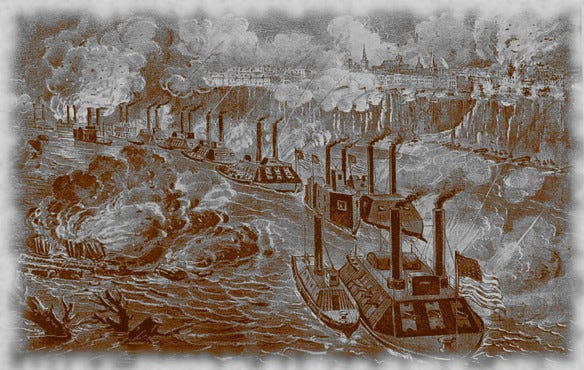
While the naval preparations were underway, Grant initiated a series of diversions that were intended to fracture the defensive focus of John C. Pemberton. The most significant of these was the cavalry raid conducted by Benjamin Grierson. Grant ordered Grierson to strike deep into the heart of Mississippi to disrupt Confederate communications and draw their mobile forces away from the river. The raid was a masterpiece of light cavalry work. It lured the majority of the depleted Confederate cavalry, as well as a full infantry division, into a futile and exhausting pursuit. By removing these assets from the main theater of operations, Grant effectively blinded the Confederate command at a moment when accurate intelligence was of the highest value.
The intellectual flexibility of the Union command was further demonstrated by the feigned attack orchestrated by William T. Sherman. Landing a division near the site of his previous repulse at Chickasaw Bayou, Sherman utilized his artillery, and a small flotilla of light gunboats, to shell the defensive works. His infantry deployed with the deliberate pageantry of a major assault for two full days. This ruse exploited the existing anxieties of Pemberton regarding the northern approaches to the city. The Confederate general took the bait and recalled 3,000 troops who had been on their way to challenge the movements of Grant to the south. This movement further diluted the Confederate strength away from the Vicksburg center of gravity.
By the end of April, the cumulative effect of these synchronized maneuvers had created a profound operational advantage. Grant had successfully concentrated a powerful fleet and two of his three infantry corps at a point thirty miles south of Vicksburg. This concentration was achieved while the Confederate leadership remained distracted by the multiple threats appearing on their periphery. The result of this coordination was seen on 30 April, when the Union army began its crossing of the Mississippi River. The movement was entirely unopposed. This achievement stands as one of the most remarkable instances of operational maneuver in the history of the conflict. It was a victory of coordination over concentration.
The command style of Grant during this phase was characterized by a calm and calculated management of multiple moving parts. He was not merely a leader of men in the tactical sense, but a conductor of a grand operational orchestra. He balanced the risks of the naval passage with the rewards of the cavalry raid and the benefits of the infantry feints. Each of these actions was designed to produce a specific psychological effect on the enemy commander. By the time the first Union soldiers stepped onto the eastern bank of the river, Grant had already won a critical phase of the campaign. He had achieved this not through the traditional methods of attrition or frontal assault, but by shaping the position and the perception of the enemy to his own advantage.
The lack of resistance during the river crossing was the direct result of this sophisticated shaping of the battlefield. The Confederate forces were scattered and confused while their commander was preoccupied with ghosts in the north and shadows in the east. Grant had utilized the sheer scale of the landscape and the diversity of his military assets to create a vacuum where the enemy had expected a wall. This ability to integrate disparate tactical events into a singular strategic purpose remains the defining feature of his generalship at Vicksburg. He had moved his army into the heart of the enemy territory without suffering the losses that a more direct approach would have necessitated.
The events of late April proved that Grant was a master of the operational art. He had successfully navigated the friction of a joint army and navy operation while managing a series of complex deceptions across hundreds of miles. This was a triumph of the mind over the geography of the Mississippi. By avoiding a direct battle until he had secured a favorable position, Grant demonstrated a level of strategic maturity that contradicted his reputation as a blunt instrument of war. He had positioned his army for success through maneuver and coordination, and in doing so he had already ensured that the subsequent battles would be fought on his own terms. The crossing of the river was not just a change of location, but a fundamental shift in the strategic balance of the Western theater.
The Race Inland: Fragmenting the Confederacy Before It Could Unite
The moment the Union army established its footing on the eastern bank of the Mississippi, the nature of the campaign shifted from a struggle against geography to a race against time. Grant recognized that the window of opportunity provided by his successful river crossing was exceptionally narrow. His primary concern was the prevention of a concentration of Confederate forces that might overwhelm his isolated army before it could achieve a secure position. He knew from dispatches that General Nathaniel Banks was occupied in Louisiana and would not return to a position of support until well into May. Simultaneously, intelligence reports indicated that General Joseph E. Johnston was moving toward Jackson with a steady stream of reinforcements. Grant understood that any delay would allow these disparate Southern elements to unite and create a force superior to his own. The operational necessity for rapid movement was therefore absolute. Success would provide the ultimate justification for a maneuver that many of his contemporaries would have deemed a violation of every known military maxim.
The strategic decision of Grant to drive eastward toward Jackson before turning back toward Vicksburg was a masterstroke of operational fragmentation. By prioritizing the threat posed by Johnston, Grant ensured that the rail hub and political center of the state were neutralized before he committed to a final confrontation with John C. Pemberton. This move placed the Union army between the two primary Confederate forces in the region and effectively prevented them from coordinating their movements. This was a classic application of the principle of interior lines, executed with a velocity that caught the Confederate leadership in a state of terminal indecision. Pemberton remained focused on his defensive lines while Grant dismantled the very support structure that made those lines viable. The decision to ignore Vicksburg initially, in favor of the interior, demonstrated a commander who could distinguish between a geographic objective and a strategic threat.
The assault on Jackson on 14 May, by the corps of Sherman and McPherson was a demonstration of the momentum that the Union army had achieved. The 6,000 Confederate defenders were unable to withstand the pressure of the superior Federal numbers and the resulting rout sent the Southern troops fleeing through the streets of the capital. This engagement secured the eastern flank of the Union operations and cut the primary line of communication between Vicksburg and the rest of the Confederacy. Grant did not linger in the captured city to enjoy the spoils of a state capital. He immediately turned his attention back to the west where Pemberton was finally beginning to realize the gravity of his situation. The speed of this pivot was essential as it ensured that the Confederate forces remained divided and confused about the true intentions of the Union command.
The engagement at Champion’s Hill on 16 May represented the tactical climax of this inland maneuver. Grant managed to bring approximately 29,000 men from the corps of McPherson and McClernand into contact with 20,000 Confederates under Pemberton. The fighting was among the bloodiest of the entire campaign and tested the resilience of the Midwestern infantry to the limit. The outcome was decided by the superior coordination of the Union attacks on the Confederate left. The troops of McPherson eventually crumpled the flank of the enemy and forced a disorganized retreat toward the Big Black River. The Union victory at Champion’s Hill was more than just a matter of casualties. It effectively cut off an entire Confederate division from the main body of the army and shattered the cohesion of the forces of Pemberton. Grant had successfully transitioned from a war of maneuver to a battle of tactical destruction at the precise moment of his own choosing.
The pursuit of the retreating Confederates led to a final engagement at the Big Black River Bridge on 17 May. The speed of the Union advance had created a sense of panic among the Southern ranks that bypassed the normal channels of command. An impetuous brigade under the command of McClernand launched an assault without formal orders and swept through the Confederate defenses with startling ease. The resulting collapse was nearly total as the Confederates lost over 1,700 men with the vast majority being taken as prisoners. The Union casualties were remarkably low at only 200. This disparity in losses highlighted the psychological and physical exhaustion of the Confederate force. They were no longer a cohesive fighting unit capable of defending the open field. They were an army in flight seeking the only refuge left to them behind the heavy guns of the Vicksburg works.
The statistics of this seventeen-day campaign provide a clear picture of the operational efficiency of Grant. His army marched 180 miles and won five distinct engagements against separate enemy forces. If these Southern elements had been combined, they would have been nearly equal in size to the army of Grant. Instead, Grant ensured that each battle was fought on favorable terms. The Union inflicted 7,200 casualties at a cost of only 4,300 of their own. This was not the work of a commander who relied on brute force. It was the result of a superior operational tempo that kept the enemy in a constant state of reaction. Grant had used his army as a precision instrument to dissect the Confederate defense of the Mississippi.
The inland campaign succeeded because it denied the enemy the ability to utilize their numbers effectively. By moving with such speed, Grant ensured that he was always the stronger party at the point of contact. He lived off the country and ignored the traditional requirements of a base of operations, which allowed him to maintain a level of mobility that the Confederate command could not match. The result was the complete isolation of the Vicksburg garrison from any hope of external relief. By the time the Union army reached the outer works of the city, the army of Pemberton was demoralized and cooped up within its own defenses. Grant had achieved the primary objective of his campaign through a series of manageable engagements rather than a single and costly master battle on the scale of Gettysburg or Shiloh.
Grant’s generalship displayed during these two weeks remains a study in the effective use of time as a weapon. Grant understood that the speed of his movement served as a substitute for the mass he would have otherwise required to defeat a concentrated enemy. He took the calculated risk of operating in the interior and turned it into a decisive strategic advantage. Each movement and each engagement was part of a larger plan to fragment the Confederate resistance. Rather than grinding down a unified enemy, Grant dismantled it piecemeal and ensured that each engagement was fought on favorable terms. This was the work of a commander who understood the relationship between maneuver and destruction in the modern age. He had won the campaign in the field before he even began the investment of the city itself.
Assault, Repulse, and Restraint
The arrival of the Union army before the landward defenses of Vicksburg marked the transition from a war of fluid maneuver to a war of static position. After eighteen days of relentless marching and repeated victories in the field, the Federal troops possessed a high degree of confidence in their own invincibility. Grant shared this sense of momentum. He believed that the demoralized remnants of the army of Pemberton might lack the will to hold their fortifications against a determined rush. This was a rational calculation based on the recent collapse of the Confederate lines at the Big Black River Bridge. The decision to launch immediate assaults on the city was not an act of mindless aggression, but instead a gamble intended to avoid the lethargy and the immense logistical burden of a formal siege. Grant hoped to secure a total victory before the oppressive heat of a Mississippi summer and the threat of disease could degrade the strength of his ranks.
The first major assault took place on 19 May. The Union divisions moved forward against the northeastern face of the Vicksburg defenses. The reality of the Confederate position soon became apparent. The rebel line came alive with sheets of fire that stopped the Union columns in their tracks. The defenders were ensconced behind the most formidable earthworks constructed during the war. These fortifications were situated on high ridges and were protected by deep ravines that broke the cohesion of the attacking formations. The Midwestern infantry found themselves struggling through tangled abatis and steep slopes while being subjected to a murderous fire that they could not effectively return. The failure of the 19 May assault provided the first clear evidence that the spirit of the Confederate soldier had been revived by the safety of the trenches.
Despite this initial repulse, Grant remained convinced that a more coordinated effort might still carry the works. He was acutely aware that the political and military costs of a prolonged investment would be staggering. On 22 May, he ordered a general assault along the entire three-mile front. This operation was characterized by a higher degree of planning and synchronization. The Union troops surged forward against a hail of lead and managed to secure lodgments at several points along the Confederate line. Small groups of Federal soldiers actually reached the parapets and planted their colors on the enemy works. However, the strength of the defensive layout allowed the Confederates to shift reinforcements rapidly to threatened sectors. The Union lodgments were eventually cleared by fierce counterattacks that drove the attackers back into the ravines. The cost of these two days of fighting was high, and the results were negligible in terms of territory gained.
The failure of the 22 May assault served as a definitive boundary for the tolerance of Grant for human loss. While he has often been characterized by his critics as a commander who was indifferent to casualties, his actions following these repulses suggest a very different temperament. A truly reckless leader would have continued to hurl his divisions against the walls in the hope of a breakthrough, in the style of Burnside at Fredericksburg. Instead, Grant demonstrated a remarkable capacity for professional adjustment. He recognized that the tactical problem of the Vicksburg works could not be solved by infantry alone. He immediately abandoned the method of direct assault in favor of the systematic reduction of the city. This shift underscores a fundamental flexibility in his command style. He was willing to discard his own preference for rapid victory the moment he realized that the cost had become disproportionate to the potential gain.
The transition to siege warfare was a triumph of engineering and organizational discipline. Grant ordered his army to dig their own elaborate network of trenches and rifle pits to parallel the Confederate lines. The Federals, who had spent weeks as mobile raiders, now became miners and laborers. This transformation was overseen by a commander who understood that the shovel was now as important as the rifle. Grant also ordered powerful batteries of heavy artillery to be brought forward to command the enemy positions. The Union lines gradually tightened their grip on the city until the movement of a single Confederate soldier was a perilous undertaking. This was not a move born of frustration, but a calculated application of industrial and technical superiority. By choosing method over momentum, Grant ensured that the eventual capture of the city would be a certainty rather than a gamble.
The psychological shift within the Union command was as significant as the physical labor of digging the trenches. Grant shifted from a state of urgent movement to a state of patient observation. He managed the siege with a cold efficiency that left no room for Confederate escape or relief. He maintained a watchful eye on the rear of his army to ensure that Joseph E. Johnston could not strike at his communications while he was occupied with Pemberton. This dual focus required a high degree of intellectual stamina. The ability of Grant to settle into a protracted investment after the adrenaline of the inland campaign speaks to a balanced and mature military intellect. He did not allow the frustration of the May repulses to cloud his judgment or lead him into a war of attrition for its own sake.
The siege operations also allowed Grant to preserve the core of his veteran army for future campaigns. By minimizing further casualties after 22 May, he kept his force intact while the garrison of Vicksburg slowly withered away from hunger and exhaustion. This was a form of strategic efficiency that prioritized the long term viability of the Union cause. The “butcher” narrative often fails to account for this period of careful preservation. Grant used the tools of modern war—the spade, the telegraph, and the heavy siege gun—to achieve his objective with a minimal expenditure of blood. He had tested the strength of the enemy and found it to be too great for a direct rush. His response was to change the rules of the engagement entirely.
The events of late May reveal a commander who possessed the rare ability to learn from tactical failure. Grant did not view the repulses as a personal defeat, but as a piece of intelligence that dictated a change in method. His willingness to transition from the most audacious maneuver of the war to the most tedious form of engineering speaks to a profound lack of ego. He was interested in the result rather than the glory of the charge. The assaults of 19 and 22 May mark the moment when Grant accepted the necessity of a siege, and in doing so he ensured that Vicksburg would fall without the need for another bloody battle in the open field. He had reached the limits of momentum and had found his way to a more certain victory through method and patience. This adaptability remains the hallmark of his generalship throughout the entire campaign.