

The Gettysburg Address
A Speech That Redefined the War, the Nation, and the Purpose of the Republic

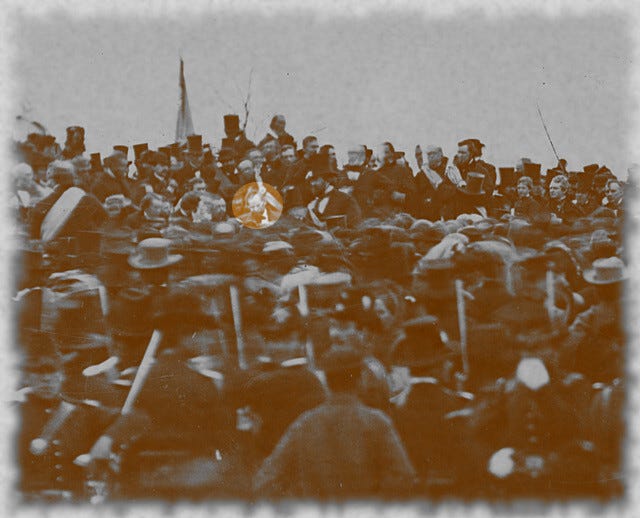
The ground at Gettysburg remained scarred by the violence of the previous July when the crowds gathered on 19 November 1863. Thousands of men had fallen across the ridges and orchards of that Pennsylvania landscape to halt the Confederate invasion of the North. This was no longer merely a site of tactical maneuver or operational necessity. It had become a vast graveyard that required a formal sanctification to match the scale of the sacrifice. The dedication of the National Cemetery served as a formal recognition that the war had moved beyond a simple struggle for territory. It was an acknowledgment that the lives of the infantrymen had purchased a new kind of political reality.
Edward Everett provided the expected performance of a nineteenth-century orator by speaking for two hours on the intricate details of the struggle. He reconstructed the movements of corps and the flow of the combat with practiced eloquence. When President Abraham Lincoln rose to speak, he offered a stark contrast in both duration and intent. He spoke for only two minutes. Within those few moments he managed to redefine the very nature of the American conflict. He moved the focus from the immediate preservation of the Union to a fundamental reimagining of the national purpose.
There is a certain futility in attempting to expand upon the words Lincoln delivered on that day. The address stands as one of the preeminent speeches in American history and it possesses a clarity that speaks for itself. I do not intend to delve too deeply into the specifics of the text because there is very little that any modern analysis could truly add to it. The brevity of the remarks remains their greatest strength. They offer a definitive statement on the sacrifice of the soldier and the survival of the republic. It brings me great pleasure to now present to you all the full text of President Abraham Lincoln's Gettysburg Address.
Lincoln’s Address
Four score and seven years ago our fathers brought forth on this continent a new nation, conceived in Liberty, and dedicated to the proposition that all men are created equal.
Now we are engaged in a great civil war, testing whether that nation, or any nation so conceived and so dedicated, can long endure. We are met on a great battlefield of that war. We have come to dedicate a portion of that field, as a final resting place for those who here gave their lives that that nation might live. It is altogether fitting and proper that we should do this.
But, in a larger sense, we can not dedicate, we can not consecrate, we can not hallow, this ground. The brave men, living and dead, who struggled here, have consecrated it, far above our poor power to add or detract. The world will little note, nor long remember what we say here, but it can never forget what they did here. It is for us the living, rather, to be dedicated here to the unfinished work which they who fought here have thus far so nobly advanced. It is rather for us to be here dedicated to the great task remaining before us—that from these honored dead we take increased devotion to that cause for which they gave the last full measure of devotion—that we here highly resolve that these dead shall not have died in vain—that this nation, under God, shall have a new birth of freedom, and that government of the people, by the people, for the people, shall not perish from the earth.


