


In the spring of 1862, the American Civil War reached a critical inflection point where the sheer weight of Northern industrial and numerical superiority appeared poised to crush the rebellion in a single, decisive stroke. While 100,000 Union troops under Major General George B. McClellan stood within earshot of Richmond’s church bells, and Confederate collapse seemed imminent, a lean, secretive general in a worn Mexican War coat marched his men up and down the Shenandoah Valley until the fate of Virginia shifted in his wake. This theater, often secondary in the minds of Federal planners, was transformed by Thomas J. “Stonewall” Jackson into a strategic fulcrum that tilted the entire Eastern Theater. The resulting Shenandoah Valley Campaign remains a seminal study in the application of asymmetric operational art against a conventionally superior force. The Shenandoah Campaign succeeded not because the Confederacy possessed superior numbers or material, but because Robert E. Lee and Stonewall Jackson employed interior lines, deception, mobility, and psychological pressure to fracture Union strategic cohesion. This success was not merely a product of Southern brilliance, but was fundamentally enabled by Federal systemic failures. Throughout the spring and early summer, Federal authorities undermined their own overwhelming numerical superiority through divided command structures, reactive decision-making in Washington, and recurring logistical miscalculations. By analyzing the campaign, it becomes evident that Jackson’s “foot cavalry” did more than win tactical engagements at places like Winchester and Port Republic, but achieved a masterpiece of strategic dislocation. By threatening the political center of gravity in Washington, Jackson compelled the Lincoln administration to withhold vital reinforcements from the gates of Richmond, thereby altering the trajectory of the war.
A Republic Ascendant, a Confederacy on the Brink
The Shenandoah Valley Campaign unfolded against a backdrop of existential crisis for the Confederate States, occurring at a moment when the structural integrity of the rebellion appeared to be fracturing across multiple theaters. By the spring of 1862, the strategic initiative rested almost entirely with the United States. In the Western Theater, Federal forces had successfully asserted control over the vast majority of the Mississippi Valley, systematically severing Confederate lateral communications and isolating the trans-Mississippi states. In Virginia, the situation was even more dire. Major General George B. McClellan’s Army of the Potomac, numbering some 100,000 men, had successfully executed a maritime flanking maneuver to the Virginia Peninsula and advanced to within earshot of the church bells of Richmond. This massive Federal concentration was not merely a tactical threat to the Confederate capital, but represented a consolidation of power that the Confederate commander, General Joseph E. Johnston, could not hope to match through conventional means. With Johnston commanding a force barely half the size of the Union juggernaut, the fall of Richmond—and with it, the likely end of the war—seemed only a matter of time. The gravity of this imbalance was compounded by the imminent arrival of Major General Irvin McDowell’s corps. Positioned near Fredericksburg to cover the overland approaches to Washington, McDowell’s 35,000 troops were poised to march south and link with McClellan’s right wing. Such a junction would have created a unified Federal front of approximately 135,000 men, effectively surrounding Richmond and rendering any Confederate defensive posture untenable. For the Confederate high command, the math of the campaign was bleak, as survival could not be achieved through a war of attrition or a static defense of the capital. Instead, Confederate survival depended upon a radical shift in the operational logic of the war. To save Richmond, they had to induce a strategic paralysis in Washington. This necessitated the identification of a geographic lever that could exert disproportionate psychological and political pressure on the Union leadership, thereby compelling them to prioritize the security of their own capital over the destruction of the Confederate one. The Shenandoah Valley provided exactly such a lever. Geographically, the Valley served as a natural back door to the North. Its northeast-southwest orientation acted as a protected corridor that shielded Confederate movements while threatening the Maryland border and the Baltimore & Ohio Railroad, which was the Union’s primary east-west logistical artery. Conversely, for a Union army advancing southward, the Valley led away from Richmond, meaning any Federal pursuit of a Valley force constituted a dilution of the primary effort on the Peninsula. Furthermore, the Valley was the breadbasket of the Confederacy, a vital source of agricultural provisions that sustained Southern armies in Virginia. However, its greatest value in 1862 was not logistical, but psychological. By maintaining a credible military presence in the Shenandoah, the Confederacy could exploit the Lincoln administration’s chronic anxiety regarding the safety of Washington. In this context, the Valley was transformed from a theater of secondary operations into a fulcrum point. If the Confederates could generate enough friction in the Shenandoah, they could force a dispersal of Federal strength, disrupting the planned concentration of McDowell and McClellan and buying the necessary time to reorganize the defense of Richmond.
The Back Door to Washington and the Pressure Point of the Eastern Theater
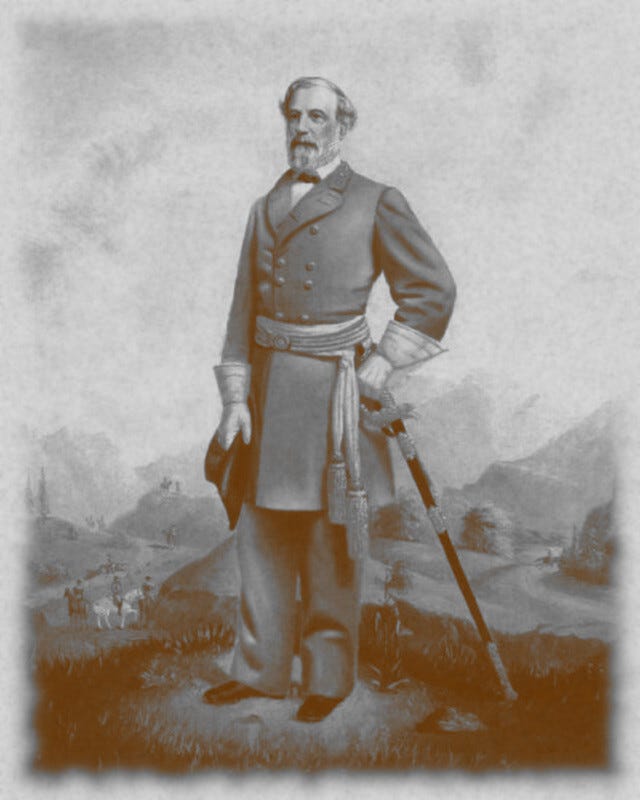
The strategic pivot of the 1862 campaign season was forged not in the field, but in the administrative centers of Richmond, where Robert E. Lee—recently appointed as military advisor to Confederate President Jefferson Davis—redefined the Confederate defensive posture. Lee’s elevation on 13 March 1862 marked the genesis of sophisticated “offensive-defensive” doctrine. He recognized that if the Confederacy attempted to match Union strength in a static defense of Richmond, the result would be a predictable, and likely fatal siege. Instead, Lee deduced that the Union’s superior numbers could be neutralized if they were sufficiently dispersed. His operational focus shifted toward the Shenandoah Valley as a mechanism to exploit Federal anxieties, specifically targeting the Lincoln administration’s reflexive concern for the safety of Washington D.C. By generating a credible threat in the Valley, Lee intended to transform a secondary theater into a strategic vacuum that would pull Union reinforcements away from McClellan’s decisive front. This conception was born of an environment characterized by extreme intelligence ambiguity. On 24 March, Lee received reports of massive Federal naval movements in the Chesapeake Bay, alongside telegrams from Brigadier General John B. Magruder at Yorktown warning of a rapidly ballooning Union presence. Faced with three plausible scenarios—a reinforcement of Burnside in North Carolina, a dual-pronged advance from Manassas to Norfolk, or a full-scale Peninsula invasion—Lee opted for a provisional reconcentration. This plan emphasized flexibility over fixed positions. While ordering Magruder to conduct a delaying action at Yorktown to buy tie, Lee utilized the Virginia railroad network to prepare for a rapid concentration of Joseph E. Johnston’s forces. However, the linchpin of this survival strategy remained the detachment of Thomas Jackson. Lee calculated that an aggressive mobile force in the Valley could act as a psychological “stay of execution” for Richmond, preventing the junction of McDowell’s corps with McClellans’ right wing. Lee’s reliance on interior lines allowed for a major Southern concentration east of Richmond, but its success was contingent upon the Valley force’s ability to mislead the Union army. The tactical setback at Kernstown in late March had already yielded a disproportionate strategic dividend by causing the Northern command to cancel the transfer of several divisions from the Valley to eastern Virginia. Seeing this, Lee doubled down on the diversion. He envisioned a campaign where speed and deception would serve as force multipliers, allowing a numerically inferior force to dictate the tempo of operations to an otherwise superior enemy. The execution of this plan, however, demanded more than mere competence. It required a commander whose personal temperament and tactical audacity could transform simple maneuver into a profound strategic effect. Lee found this instrument in Jackson, whose movement south toward Winchester on 12 March signaled the beginning of a campaign designed to fight the Union high command’s nerves as much as its soldiers.
Forging the Offensive‑Defensive and Recasting the Defense of Richmond
The successful translation of Lee’s strategic vision into operational reality required a commander whose psychological profile was uniquely suited to independent, asymmetric warfare. Major General Thomas J. “Stonewall” Jackson provided this through a command style defined by extreme secrecy, rigorous discipline, and an almost fanatical devotion to the principles of “mystifying, misleading, and surprising” of the enemy. This tactical philosophy was not merely and external doctrine, but an obsession that governed his interactions with his own staff and subordinates. Jackson’s taciturn and humorless nature often bordered on the eccentric, earning him the initial derision of his troops, who dubbed him “Old Tom Fool.” However, this pathological secrecy served an operational purpose. By keeping his own officers in the dark until the moment of execution, Jackson ensured that Federal intelligence networks, which relied heavily on captured soldiers, remained perpetually blind to his true objectives. His effectieness was further amplified by his relentless demands on the physical endurance of his infantry. He viewed weakness with disdain, often classifying soldiers who collapsed from exhaustion as lacking patriotism. This uncompromising standard transformed his command into the “Foot Cavalry,” a force capable of sustained, high-speed marches that defied the conventional military logic of the era. In one grueling two-week period, Jackson’s men covered 160 miles and fought two major engagements while surviving on minimal rations and often marching barefoot. This mobility allowed Jackson to achieve localized numerical superiority against a fragmented Union army that, while larger in the aggregate, could not match the Confederate tempo. The transformation of his men’s morale was a direct result of their realization that their legs were winning battles as effectively as their bayonets. The edge of Jackson’s maneuvers was honed by a sophisticated integration of terrain and intelligence. Jackson spent exhaustive hours studying the detailed topographical maps produced by his engineer, Jedediah Hotchkiss, which allowed him to exploit the mountains and hidden gaps to disappear and reappear at will. This mastery of the physical environment was augmented by an intelligence advantage provided by the local populace. Unlike Federal commanders who were operating in hostile territory, Jackson benefited from a network of local scouts and civilian spies, such as Belle Boyd, who provided real-time data on Union dispositions. This shifted the conflict from a purely military engagement into a “war of peoples,” where the civilian environment acted as a force multiplier for the Confederacy. This culture of aggressive mobility was institutionalized through key subordinates like Major General Richard S. Ewell. Despite his own eccentricities and initial skepticism of Jackson’s sanity, Ewell embraced the “stripped-down” logistical model necessary for rapid maneuvers. By ordering his columns to abandon all but the most essential ammunition and food, Ewell ensured that the Confederate response remained nimble. “The road to glory,” Ewell remarked, “could not be followed with much baggage.” Together, Jackson’s temperament and Ewell’s logistical adaptations created a command climate where speed was prioritized over comfort, allowing the Confederate forces to maintain a relentless operational tempo that systematically unraveled Union plans.
Secrecy, Mobility, and the Making of the Foot Cavalry
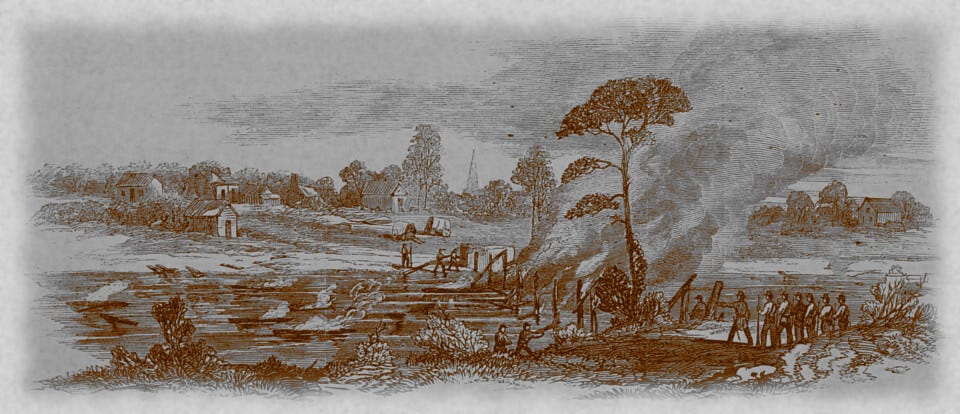
The tactical execution of the 1862 Valley Campaign serves as a definitive study in how a mobile force can utilize geography and tempo to nullify an opponent’s numerical superiority. Jackson’s operational method was not merely about the speed of march, but was a systematic exploitation of Federal administrative delays and the inherent friction of coordinating disparate commands. This process was initiated by a tactical repulse that yielded disproportionate strategic dividends, which was the Battle of Kernstown on 23 March 1862. Jackson, commanding 3,500 men, aggressively assaulted a Union force of 9,000 under General James Shields—a political appointee. While the Confederates were driven from the field after suffering 718 casualties compared to 590 for the Federals, the audacity of the strike profoundly unsettled the Northern high command. Convinced that such an attack could only be the vanguard of a much larger force threatening Washington, the Lincoln administration immediately canceled the transfer of a division to the Virginia Peninsula. Kernstown proved that in the Valley, a tactical defeat could serve as a strategic reconnaissance by fire, freezing 35,000 Union reinforcements under General McDowell that McClellan required for the investment of Richmond. Following the withdrawal from Kernstown, Jackson’s maneuvers in early May demonstrated a sophisticated integration of rail-borne mobility and deceptive counter-marching. Faced with a potential pincer from Major General John C. Frémont’s 25,000-man Mountain Department in West Virginia, Jackson executed a classic operational feint. He marched a portion of his army east across the Blue Ridge toward Charlottesville, purposely allowing Federal scouts to believe he was abandoning the Valley to reinforce the Richmond front. This movement was a calculated deception. Upon reaching the Virginia Central Railroad, Jackson pivoted his force back west through the Blue Ridge gaps to Staunton. From this position, he launched a lightning strike over the mountain passes to the village of McDowell. On 8 May, Jackson achieved a two-to-one local numerical advantage over Frémont’s vanguard. By defeating this isolated element, Jackson effectively decapitated the Union’s planned 250-mile offensive toward Knoxville and secured his western flank, allowing him to pivot back into the main Valley to confront Major General Nathaniel Banks. The middle phase of the campaign—the “Luray Maneuver”—showcased Jackson’s mastery of the Valley’s unique topography. Utilizing the fifty-mile-long Massanutten Mountain as a physical screen, Jackson left a detachment of Turner Ashby’s cavalry to feign an advance along the main Valley pike toward Strasburg, fixing Banks’s attention. Simultaneously, Jackson moved his main body through the parallel Luray Valley to the east. On 23 May, Jackson and Ewell achieved total operational surprise at Front Royal, overwhelming a small Union outpost and placing 16,000 Confederates squarely on the flank and rear of Banks’s 6,000-man division. This maneuver forced Banks into a desperate, northward race toward Winchester. On 24 and 25 May, the pursuit toward Winchester highlighted the logistical fruits of Jackson’s aggressive tempo. The Confederate foot cavalry pressed the Union wagons so relentlessly that the retreat disintegrated into a rout. At Winchester, the Confederates assaulted Union positions on the hills south of town, driving the Federals back toward the Potomac River. The spoils of this victory were immense. Jackson captured 2,000 prisoners and 9,000 rifles, alongside a vast quantity of medical and food stores so significant that the Confederates derisively referred to their Union opponents as Commissary Banks. While the lack of discipline in Ashby’s cavalry prevented the total annihilation of Banks’s force, the strategic objective was absolute. The North was in a state of panic. The Department of the Shenandoah had collapsed, and the threat to Washington seemed more imminent than at any point since the war’s inception. To maximize this psychological pressure, Jackson marched his exhausted men to within sight of Harper’s Ferry by 30 May, creating the illusion of an impending Potomac crossing. This compelled Lincoln to devise a massive pincer movement to trap Jackson, ordering Frémont from the west and Shields (under McDowell’s command) from the east to converge at Strasburg. Jackson, positioned twice as far from the escape point as his pursuers, executed a grueling forced march that saw his columns slip through the bottleneck at Strasburg just hours before the Union pincers closed. For the next week, Jackson conducted a masterful fighting retreat southward, while Ashby’s cavalry burned four critical bridges to delay the Federal pursuit. Frémont, frustrated by blocked passes, was forced to march forty miles northward to find a crossing, a delay that Lincoln viewed with mounting fury as it allowed Jackson’s army to escape the convergence of 25,000 Union troops. The climax of the campaign occurred on 8 and 9 June at Cross Keys and Port Republic, representing the pinnacle of the use of interior lines. Jackson was positioned between the uncoordinated columns of Frémont and Shields, which were separated by the flooded, unfordable South Fork of the Shenandoah River. Controlling the only bridge at Port Republic, Jackson could strike each opponent in detail. On 8 June at Cross Keys, Ewell’s division held a defensive line against Frémont’s tentative advance. Despite outnumbering Ewell 11,000 to 6,000, Frémont committed only a fraction of his infantry and was easily repulsed. The following morning, Jackson executed a rapid nocturnal shift, moving the bulk of his army across the bridge to assault Shields’s two isolated bridges at Port Republic. The fighting at Port Republic on 9 June was the bloodiest of the campaign. For three hours, 3,000 Federal troops offered a stubborn resistance that nearly upended Jackson’s plan. However, the weight of numbers eventually favored the Confederates, who brought 8,000 men into the fray. By the time Frémont reached the opposite bank of the river to support Shields, Jackson had withdrawn his men and burned the bridge, leaving Frémont a helpless spectator to the defeat of his comrades. In forty-eight days, Jackson’s men had outmaneuvered three separate Union commands totaling 33,000 men and won five battles. Most importantly, this operational sequence diverted 60,000 Union soldiers from the Peninsula and forced the total abandonment of McDowell’s march on Richmond. The Valley became a strategic sinkhole that swallowed Federal strength, granting Richmond the reprieve it needed to survive the summer of 1862.
Speed, Deception, and the Systematic Unraveling of Union Plans
The Federal failure in the Shenandoah Valley illustrates the inherent perils of attempting to exercise centralized strategic control over a theater characterized by rapid maneuver and geographical complexity. While the Confederacy benefited from a streamlined command structure that allowed Lee and Jackson to operate with a shared intent, the Union effort collapsed under the weight of administrative fragmentation. On paper, the Federal high command possessed the equivalent of several divisions—nearly 60,000 men in the broader theater—dedicated to neutralizing Jackson. However, these forces were partitioned into independent departments that rarely synchronized their operations. This structural rot was exacerbated by the Lincoln administration’s attempt to manage the campaign through telegraphic micromanagement, a method that prioritized civilian oversight over the fluid, localized decision-making required to counter a commander of Jackson’s caliber. At the core of the Union failure was a fundamental misunderstanding of operational friction. Operating from the War Department telegraph office, President Abraham Lincoln and Secretary of War Edwin Stanton attempted to move separate commands—Frémont’s, Banks’s, and McDowell’s—as if they were “knights and bishops on a military chessboard.” This approach neglected the physical realities of 1862 warfare, which included the variables of road conditions, mountain terrain, and the unreliability of nineteenth-century communications. Directives issued from Washington often reached field commanders hours after the tactical situation had shifted, yet the political weight of these orders stifled the initiative of the generals on the ground. When Lincoln ordered Frémont to push eastward toward Harrisonburg while simultaneously diverting McDowell’s divisions from their southward march toward Richmond, he was attempting a complex pincer movement without a unified field commander to oversee its execution. The result was a series of reactive, uncoordinated lunges that Jackson easily exploited. The diversion of Irvin McDowell’s corps stands as the most catastrophic strategic error of the campaign. McDowell’s 35,000 men were the intended “hammer” meant to join McClellan’s “anvil” before Richmond. By freezing this movement and ordering McDowell to send two divisions back into the Valley to intercept Jackson’s flank, Lincoln fell directly into the Confederate trap. Both McClellan and McDowell recognized the error immediately. McDowell wired the President that the order was a “crushing blow” that would gain nothing in the Valley while losing everything near the Confederate capital. McDowell’s protest identified the central strategic flaw of the Union trading a decisive concentration of force at the war’s center of gravity for a secondary tactical pursuit in the mountains. This lack of prioritization allowed Jackson’s 17,000 men to effectively paralyze a Union force totaling 135,000. Furthermore, the Union’s operational lethargy was deepened by a profound susceptibility to Confederate deception, both in the Valley and on the Peninsula. While Jackson was “mystifying” his opponents, Brigadier General John B. Magruder was conducting a “theatrical” defense before Richmond that successfully fixed the Army of the Potomac. Magruder’s ruses—including marching a single column in a continuous circle within view of Federal outposts—convinced McClellan that he faced a vastly superior force. This psychological overestimation led McClellan to adopt a slow siege at Yorktown. This caution, coupled with the drain of troops to the Valley, meant the Union never applied its full weight at the decisive point. Federal leadership was essentially fighting a phantom army, allowing Magruder and Jackson to leverage the impression of strength to offset the reality of their numerical inferiority. Ultimately, the Federal response in the Shenandoah revealed that material superiority is a hollow advantage without a unified command architecture. The Union troops did not fail due to a lack of individual courage. At Port Republic and Winchester, Federal brigades offered stubborn, often heroic resistance. Rather, they were victims of a system that lacked a locally unified command capable of integrating time, distance, and logistics. While Jackson and Ewell could confer in person to adjust plans in minutes, Union generals like Frémont and Shields moved with a characteristic slowness, hindered by directives from Washington that were disconnected from the topographical realities of the Blue Ridge. By the time the Union “trap” was supposed to close at Strasburg, the lack of synchronization had left the path of escape wide open. The Union failure was a failure of the center, demonstrating that superior strength, when dispersed and micromanaged by a distant authority, will inevitably be outpaced by a unified, mobile inferior force.
The Strategic Legacy of the Valley Campaign
The Shenandoah Valley Campaign of 1862 stands as a definitive testament to the principle that military outcomes are dictated less by the aggregate sum of resources than by the efficiency with which those resources are directed. It demonstrated that disciplined maneuver, the judicious use of interior lines, and the application of psychological warfare could fracture a numerically superior enemy, provided that enemy is structurally prone to hesitation. Jackson’s operations were not merely an exercise in tactical aggression, but were a surgical application of force against the Union’s strategic center of gravity, which was the political stability of Washington D.C. By transforming the Valley into a credible threat to the Northern capital, the Confederacy forced the Lincoln administration to fight on Southern terms, effectively trading space for time and maneuver for mass. The disproportionate effect of the campaign was the result of a rare alignment of Confederate leadership and environmental advantages. Lee’s strategic diversion provided the framework, while Jackson’s relentless mobility and Ewell’s logistical adaptations provided the kinetic energy. These elements were reinforced by a civilian intelligence network that granted the Confederates a transparency of the battlefield their opponents never achieved. Opposite this unified effort stood a Union military apparatus hampered by telegraphic micromanagement and a cautious, almost obsessive, adherence to siege warfare on the Peninsula. The Federal failure was systemic, characterized by uncoordinated columns that were physically powerful but operationally blind. Consequently, the Valley became less a traditional battlefield than a table upon which the entire balance of the war in Virginia briefly turned. In the broader context of military history, the campaign remains a seminal study in how speed, deception, and unity of command can magnify limited means into profound strategic consequence. Jackson’s ability to “mystify, mislead, and surprise” allowed a force of 17,000 to dictate the movements of 60,000, illustrating the concept that mobility itself is a form of combat power. Conversely, the Union experience provides a sobering lesson in how superior strength, when dispersed across multiple commands and left uncertain of its primary purpose, can be compelled to fight shadows. By the time the campaign concluded at Port Republic, the Union’s numerical advantage had been squandered through reactive decision-making, allowing the decisive theater at Richmond to slip from its grasp. Ultimately, the Shenandoah Campaign altered the psychological landscape of the American Civil War. It created a legend of Confederate invincibility that would influence Federal operational caution for the next two years. It proved that a dedicated commander, utilizing the natural “back door” of the Shenandoah, could paralyze the machinery of a much larger state. For the Confederacy, the campaign was a masterpiece of the “offensive-defensive” strategy, while for the Union, it was a costly education in the necessity of unified field command. The ghosts of Jackson’s “Foot Cavalry” would continue to haunt the Valley long after the spring of 1862, serving as a permanent reminder that in war, the initiative is the most valuable terrain of all.
See Also


Further Reading
Hattaway, Herman, and Archer Jones. How the North Won: A Military History of the Civil War. University of Illinois Press, 1983.
Hattaway, Herman, and Archer Jones. Why the South Lost the Civil War. Edited by Richard E. Beringer. University of Georgia Press, 1986.
McPherson, James M. Battle Cry of Freedom: The Civil War Era. The Oxford History of the United States, v. 6. Oxford University Press, 1988.
Stewart, Richard W., ed. American Military History : The United States Army and the Forging of a Nation, 1775-1917. Vol. 1. Center of Military History, United States Army, 2010.
A bit reminiscent of Napoleon's early campaigns. The Coalitions often had the numbers on the French, but local commanders at times lacked initiative and were managed from distant capitals, and the French often also simply outmarched their opponents defeating them in detail. I think it was in the Ulm campaign that the French soldiers joked the Emperor found a new way to wage war, using their feet instead of their bayonets.