

"This Will Be a Fighting Ship"
A Commander’s Vow, a Destroyer’s Stand, and the Courage to Turn Into the Fire

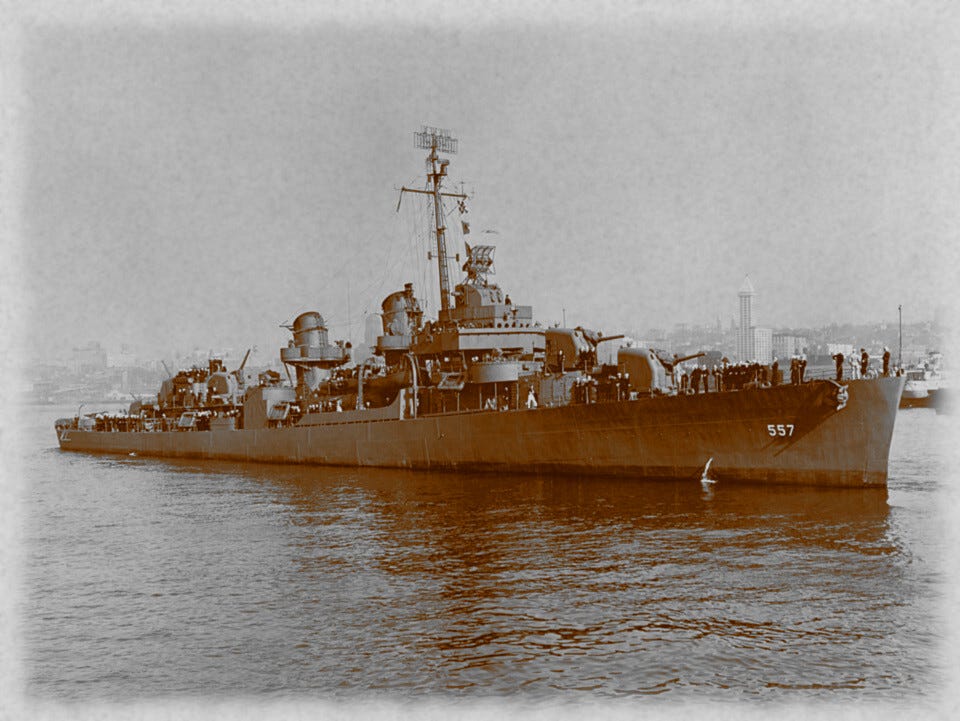
As the first light of dawn broke over the Philippine Sea on 25 October 1944, the radar screens of American escort carriers in Task Unit Taffy 3 flickered with ominous contacts, revealing the masts of Admiral Takeo Kurita’s powerful Center Force emerging from San Bernadino Strait to threaten the Leyte Gulf landings. The Battle off Samar unfolded in a tense sequence of maneuvers and engagements, beginning with the Japanese surprise appearance, escalating through desperate American destroyer charges spearheaded by Commander Ernest Evans on the USS Johnston, and culminating in the actions of supporting destroyers and destroyer escorts that contributed to the Japanese withdrawal.
The Back Door Opens
The Japanese naval plan under Sho-1 directed multiple forces to converge on Leyte Gulf, with Kurita’s Center Force reversing its initial retreat to advance through the San Bernadino Strait undetected as Admiral Halsey pursued decoy carriers northward. Imperial headquarters launched this complex, diversionary offensive as a desperate gamble against the American Third and Seventh Fleets. The hope was to achieve a decisive battle—a Kantai Kessen—at sea, in much the same way Japan had defeated the Russian navy at Tsushima in 1905. The strategy relied on Admiral Jisaburo Ozawa’s carriers to lure Halsey’s powerful Third Fleet away from the beaches, while a pincer of battleships and heavy cruisers, divided into the First and Second Attack Forces, and Force C, approached through the San Bernadino Strait to the north and Surigao Strait to the south. Admiral Kurita commanded the Center Force, a formidable juggernaut consisting of five battleships, including the super-battleships Yamato and Musashi, ten heavy cruisers, two light cruisers, and fifteen destroyers.
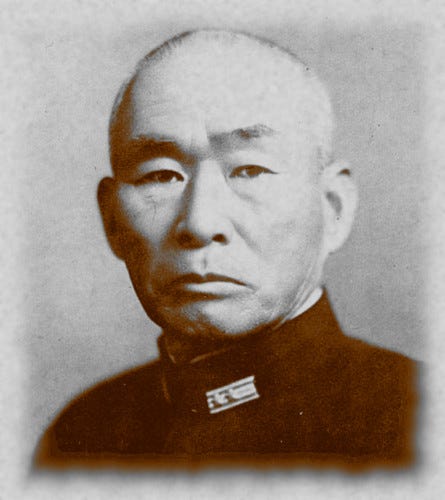
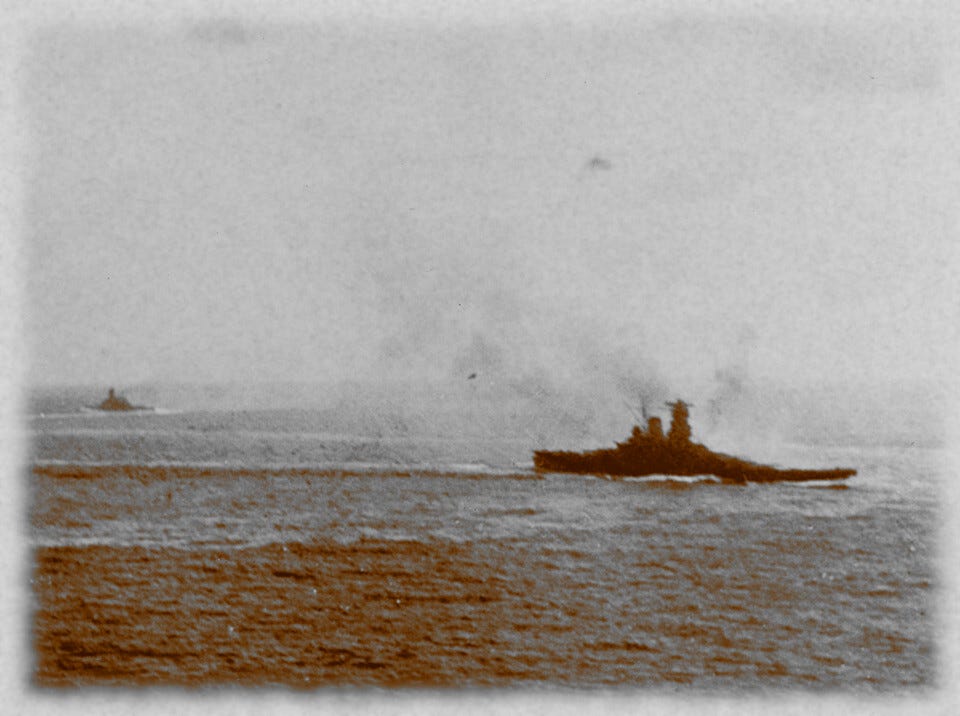
Kurita’s objective was to breach the San Bernadino Strait at the tip of Samar Island and drive south to annihilate the vulnerable American troop transports and landing craft. The realization of this plan, however, was nearly thwarted by the brutal attrition of the previous day. On 24 October, during the Battle of the Sibuyan Sea, Musashi absorbed nearly all the damage from American aircraft attacks, falling behind the main force with her bow submerged and her turrets jutting out from the churning sea. Witnessing this carnage and deeming a further advance without air cover to be suicidal, Kurita ordered a retreat at 3:30 p.m. As the Center Force reversed course, they passed the dying Musashi, which had endured seventeen bomber hits and nineteen torpedoes. Yet, the battleship remained stubbornly afloat until capsizing at 7:30 p.m. This display of raw resilience, coupled with intense pressure from the Combined Fleet that retreat was not an option, encouraged Kurita to reverse course and reengage the battle. While Kurita’s Center Force proceeded back toward the strait on the night of 24-25 October, a critical command vacuum opened. Admiral Halsey, encouraged by reports that Ozawa’s decoy carriers had finally been located, made the controversial decision not to detach Task Force 34 to cover the strait. Instead, he carried the ships north in the pursuit, leaving the “back door” to the Leyte landings undefended by heavy surface units. As Kurita’s force emerged from the strait and approached Leyte Gulf from the east, they were shadowed only by the dark, oblivious to the fact that the primary American shield had vanished. With Kurita’s battleships and cruisers now in sight of the American escort carriers, the lightly armed Taffy 3 shifted from routine patrols to urgent defensive actions, marking the transition to direct confrontation.
The Unprotected Approach
At approximately 6:45 a.m. on 25 October, units of Taffy 3 detected the approaching Japanese masts on the horizon, prompting Admiral Clifton Sprague to order his escort carriers to turn eastward, launch all available aircraft, and call for support while the screening destroyers prepared to engage. Admiral Sprague commanded three task forces north of the Leyte Gulf landing beaches. These forces were comprised of eighteen Casablanca-class escort carriers, designated as CVEs, which were a far cry from the formidable Essex-class and Yorktown-class fleet carriers, lacking armor and watertight compartments. These “Jeep carriers” could be constructed in a mere five months at a cost of $6 million each, but they were limited by their modest capabilities, carrying only twenty-eight aircraft and reaching speeds of only nineteen knots. Admiral Sprague organized these vessels into three task forces of six carriers each, operating under the radio call signs Taffy 1, Taffy 2, and Taffy 3. While Taffy 1 remained nearest the landing beaches and Taffy 2 sat further north, Taffy 3 was positioned off Samar Island’s northern tip. Originally intended for anti-submarine patrols and ground support, these units had been operating under the assumption that larger fleets to the north and south provided an impenetrable shield. When that shield vanished, the reality of their vulnerability became absolute. All ships in Taffy 3 accelerated to flank speed in a desperate attempt to flee eastward into the wind to launch their planes, yet they held no possibility of outrunning the thirty-knot Japanese cruisers and battleships bearing down on them.
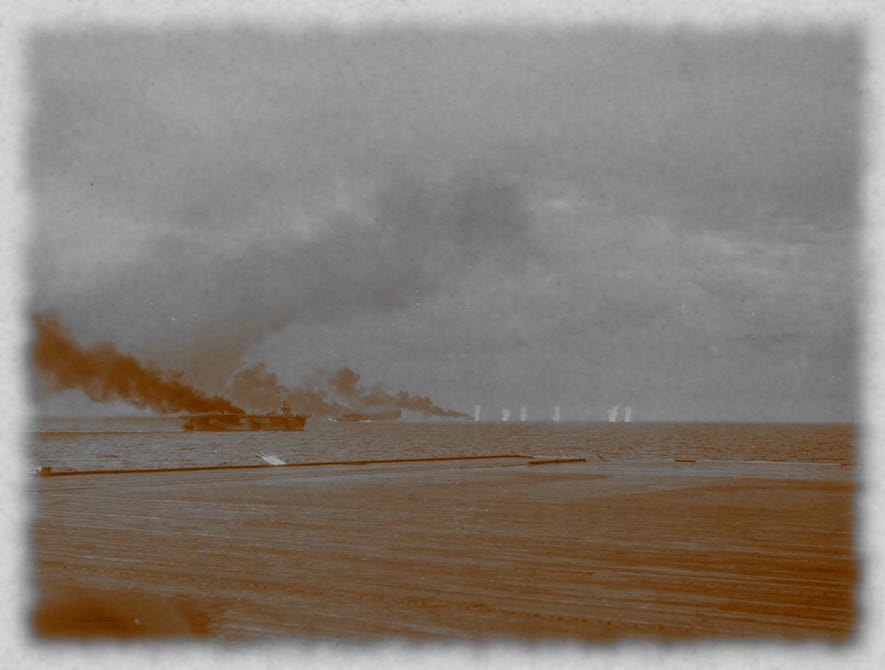
Despite the impossible odds, the resilience of the unit began to manifest in the minutes following the first salvos. By 7:15 a.m., Taffy 3 had engaged and evaded for fifteen minutes, already tripling Sprague’s grim five-minute survival estimate. Six of the seven escorts maintained a tight anti-aircraft defensive circle around the carriers as the sea around them erupted with splashes from Japanese ranging shots. At 7:16 a.m., Sprague realized flight alone was futile and ordered the escorts to execute a torpedo attack. This command was a relief to Commander Leon Kintberger aboard the USS Hoel—a Fletcher-class destroyer—who had been forced to watch the Japanese fleet close the distance while his ship idled at half speed to stay with the carriers. Kintberger noted the freight train-like sound of the massive incoming sixteen and eighteen-inch shells as they began to strike the burning CVEs. Responding to the order, Kintberger commanded a hard turn to port and flank speed, a maneuver that coincided with Commander Ernest Evans firing his first spread of torpedoes from miles astern. As shells began to bracket the fleeing carriers, Sprague’s order for the escorts to commence their attacks initiated the offensive phase, drawing the focus to the bold maneuvers of the destroyers.
Left Full Rudder
Commander Ernest E. Evans—a Cherokee and Creek warrior from Pawnee, Oklahoma—recognizing the threat to the carriers, turned the USS Johnston toward the Japanese battle line at flank speed, weaving through shell fire to close for a torpedo attack against the leading cruisers. On the morning of 25 October 1944, Evans stepped onto the open-air bridge walkway, realizing that a standard stern chase would inevitably lead to the systematic destruction of the escort carriers. Upon reentering the pilot house, his demeanor struck his gunnery officer, Lieutenant Robert Hogan, with a sense of certainty. Hogan observed a face that delivered a combat announcement with an assurance that suggested a lifelong rehearsal of this very moment. With a calm, absolute resolve, Evans directed all hands to general quarters and ordered all engines ahead flank, pivoting his Fletcher-class destroyer into a hard turn to port. As dense, black smoke billowed from the stacks, the Johnston accelerated to her maximum speed of thirty-five knots.
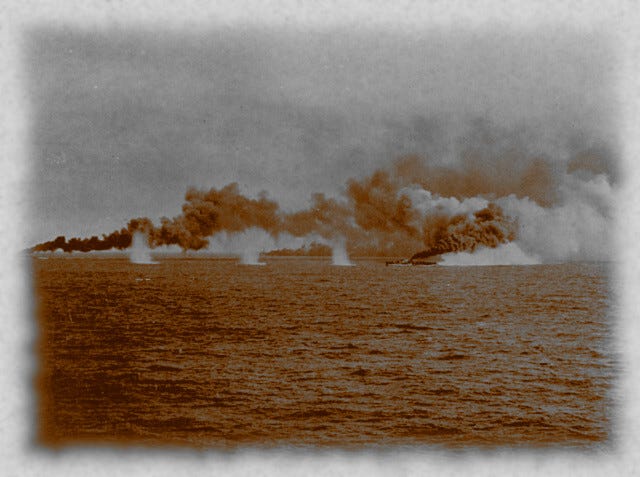
The lone vessel was charging toward a concentrated force of twenty-nine warships—the most powerful surface fleet ever engaged by a single American ship. The tactical reality of this charge was staggering. Lieutenant Hogan mentally calculated that while the Japanese were twenty miles away, his five-inch guns required closure to ten miles to even harass the enemy’s unarmored superstructures, while an effective torpedo run demanded closing to within five miles under the concentrated fire of the entire Japanese Center Force. As Hogan whispered a silent prayer, Evans maneuvered the Johnston through a lethal rain of shell fire. He utilized the tactic of “chasing the splashes,” steering the ship toward the last point of impact to evade corrected fire from battleships thirty-five times the Johnston’s displacement. Despite being doused in seawater from near misses, Evans closed the distance, landing forty rounds on the heavy cruiser Kumano. At less than 10,000 yards, Torpedo Officer Jack Bechdel launched ten Mark-15 torpedoes, all running “hot, straight, and normal.” At 7:24 a.m., Bechdel’s stopwatch confirmed the success of the run as three underwater explosions severed Kumano’s bow, forcing the Japanese heavy cruiser out of the battle. The triumph was short lived. The Johnston was suddenly struck by a devastating salvo that nearly rattled the rivets loose. Three 1,500-pound shells from a battleship—likely the Kongo—tore into the ship’s interior. One detonated against the port propeller shaft, another severed critical electrical cables, and a third exploded in the aft boiler room. This final strike vaporized crew members instantly and scalded survivors with 840-degree steam, leaving them with sagging, boiled skin. A second salvo of 6-inch shells shredded the bridge, severing two fingers from Commander Evans’s left hand and peppering his torso with shrapnel. Despite his injuries, Evans waved off medical aid and directed them to the more seriously wounded. He tended to his own wounds and bound his hand with a handkerchief. Crippled to half speed and forced to steer the rudder manually, Evans refused to retreat. Instead, he maneuvered his battered destroyer directly between the Japanese giants and the fleeing carriers of Taffy 3, his face set in an expression Hogan could only describe as his “heart grinning.” The Johnston’s torpedoes and gunfire disrupted the Japanese formation, buying time for Taffy 3 and prompting the other escorts to follow suit in a coordinated effort to further delay the enemy.
The Tin‑Cans Follow the Leader
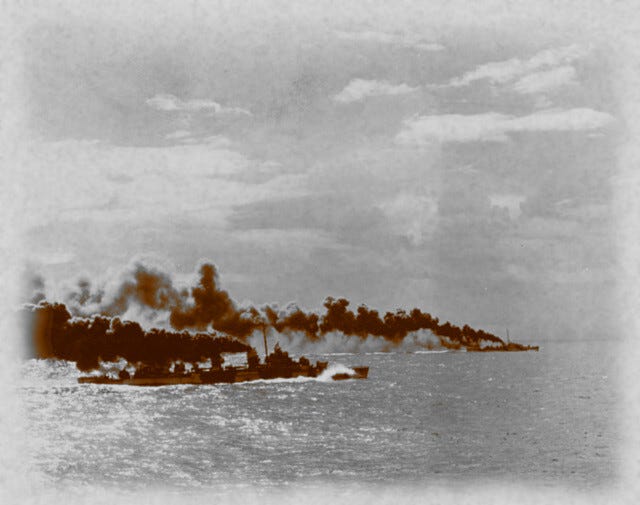
Inspired by the Johnston’s example, the USS Heermann, USS Hoel, and destroyer escort USS Samuel B. Roberts advanced in turn, launching torpedoes and drawing fire to cover the carriers’ retreat. Commander Leon Kintberger guided the Hoel through intense shell fire toward the Japanese battleship Yamato, his five-inch guns firing in unison while maneuvering through the splashes falling all around them. The visibility was hauntingly clear. Kintberger and his crew could see the enormous shells arcing from the enemy battleships before one struck the pilot house, instantly vaporizing four men and wounding the skipper. Despite the carnage, the Hoel launched her torpedoes at the enemy cruiser line before withdrawing, later enduring even heavier shelling than the Johnston. Behind her, the Heermann and the smaller Samuel B. Roberts strained to match the pace. Commander Robert Copeland of the Roberts—a small destroyer escort never intended for this kind of combat—briefly surveyed the scene before ordering his chief engineer to disable the boiler safety valves so that the little ship could gain enough speed to keep up with the destroyers. As the Sammy B turned into the battle, the Heermann charged the Japanese line, initially unscathed, though she would later take a salvo of eight-inch shells that would submerge her bow up to the anchors. Simultaneously, the battered Johnston emerged from a rain squall, her decks covered in dead and wounded. Seeing the three other escorts charging Kurita’s Center Force, Commander Evans—despite lacking torpedoes and bleeding from his wounds—directed his two manual rudder operators to steer back into the peril to provide fire support. This second wave of surface attacks coincided with the arrival of Taffy 3’s pilots, who had been launched as the carriers turned into the wind. In a display of courage, and a desperate bluff, the Grumman TBF Avenger aircraft initiated suicidally dangerous feint attacks. Lacking torpedoes, they maintained fixed headings at fifty-feet in a false torpedo run while strafing the Japanese vessels, forcing the Japanese commanders into evasive maneuvers. When their ammunition was depleted, the Avenger pilots continued to execute mock torpedo runs to draw fire. Meanwhile, the USS Johnston re-emerged from her smokescreen to find the Japanese cruisers alarmingly close to the escort carriers, with the USS Gambier Bay already severely listing and under heavy fire.
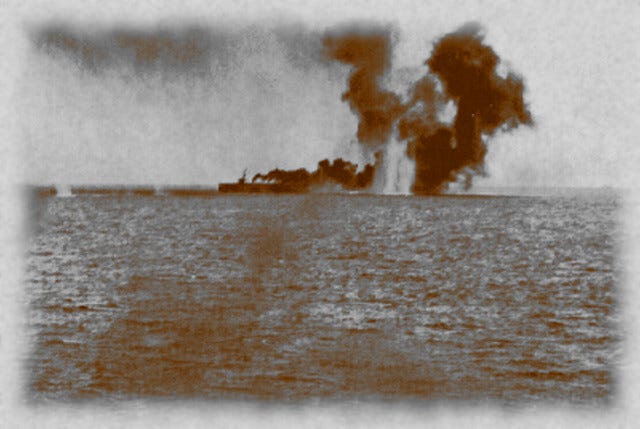
Evans ordered Lieutenant Hogan to commence firing on the lead cruiser to divert its attention away from the beleaguered escort carrier. The Johnston drove directly at the cruiser, landing hits from her five-inch deck guns that the Japanese inexplicably ignored as they focused their attention on the Gambier Bay. Hogan later recalled that the Japanese seemed like fools for disregarding the lethal persistence of the Johnston. Amid mounting losses, including hits that slowed and sank several escorts, these attacks forced Kurita’s ships to evade repeatedly, shifting the battle’s momentum toward confusion and hesitation on the Japanese side.
Confusion in the Chrysanthemum Fleet
By 9:00 a.m., as American aircraft and remaining guns continued to harass the Japanese, Admiral Kurita, exhausted and perceiving stronger opposition, ordered his force to disengage and head north. The Admiral had been deprived of sleep for two days and was still reeling from the previous day’s trauma, which included swimming for his life from his sunken flagship and witnessing the demise of the Musashi. Influenced by a harrowing ten-minute torpedo evasion aboard the Yamato, Kurita mistakenly concluded he was facing Halsey’s formidable fleet carriers rather than Sprague’s escort carriers. As dive bombers from Taffy 2 hammered the heavy cruiser Chokai with 500-pound bombs, Kurita reached his breaking point. At 9:11 a.m., he transmitted a directive for the Center Force to rendezvous on a northerly course. The massive Yamato, adorned with the Imperial Golden Chrysanthemum on her bow, pivoted slowly to port, trailing a wake that marked the end of the Japanese surface threat to Leyte. Aboard the USS Fanshaw Bay, a stunned Admiral Sprague watched the retreat, confirming with his officers that the enemy was indeed withdrawing. The cost of the miracle off Samar was etched in the wreckage left behind. The USS Hoel, the first of Taffy 3’s vessels to fall, lay dead in the water after absorbing over forty rounds of heavy-caliber fire. The Fletcher-class destroyer rolled to port and sank by the stern, taking 253 crewmen with her. At 9:35 a.m., Commander Robert Copeland was forced to order the abandonment of the USS Samuel B. Roberts. The little destroyer escort that fought like a battleship slipped beneath the waves thirty minutes later, claiming ninety lives, including the heroic Chief Engineer, Herbert William Trowbridge. Survivors from the Hoel, Sammy B, and Gambier Bay soon found themselves bobbing in the shark-infested waters of the Philippine Sea, awaiting a rescue that remained uncertain in the chaotic aftermath of the engagement. The final moments of the USS Johnston provided a poignant conclusion to the battle’s ferocity. Japanese destroyers encircled the burning, defiant vessel, firing into her wreckage in a display of not only frustration, but also of admiration of the destroyer’s tenacity. At 10:10 a.m., the Johnston capsized and sank by the bow as the crew of the Japanese destroyer Yukikaze rendered a salute. Her skipper, Commander Ernest E. Evans, the man who placed his ship in harms way with such singular resolve, entered the water with his men but was never seen again. In this gallant and desperate action, small and lightly armed destroyers and escort carriers had suffered heavy losses, yet they succeeded in turning back the most powerful battleships ever constructed to protect the landing forces. The Japanese ships’ turn away left the surviving American vessels to assess their damages and begin rescue operations, bringing the intense morning battle to a close.
The Measure of Defiance
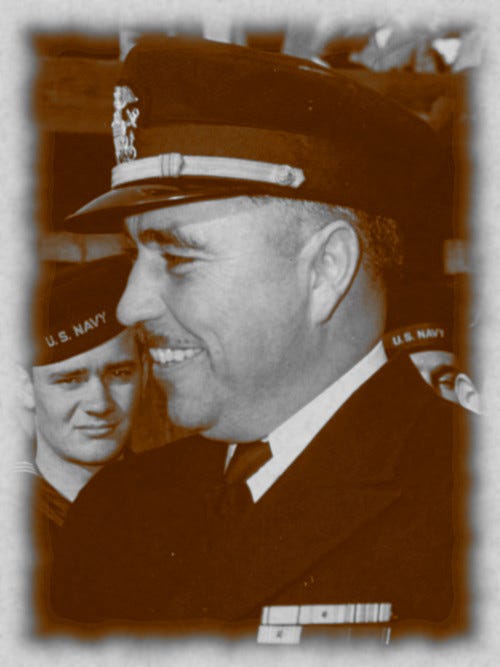
In this manner, the events off Samar progressed from an unforeseen Japanese advance to a series of valiant American counterstrikes centered on Evans’s USS Johnston and the accompanying escorts. The daring charges, smoke screens, and torpedo runs created a chaotic environment that masked the Americans’ vulnerability, ultimately compelling Kurita to abandon his objective despite his superior strength. Through the smoke and thunder of that desperate morning, Commander Ernest Evans and the men of the Johnston embodied a promise made less than a year earlier. On 27 October 1943, Evans had assembled his crew aft of the number five turret for the ship’s commissioning. There, he issued an ultimatum.
This is going to be a fighting ship. I intend to go in harm’s way, and anyone who doesn’t want to go along had better get off right now. Now that I have a fighting ship, I will never retreat from an enemy force.
He was true to his word. Commander Evans didn’t deal in hyperbole. His career was defined by an aggressive proximity to the enemy. During the Guam landings, he had maneuvered the Johnston so close to the shore that his sailors retrieved rifles from the armory to fire from the decks. That same relentless spirit permeated the entire screen at Samar. While Commander Robert Copeland survived to receive the Navy Cross and later retire as a Rear Admiral, many of his men were left behind. Among them was Paul Henry Carr, the twenty-year-old Gunner’s Mate who received a posthumous Silver Star after firing 324 rounds from the Sammy B. Their collective defiance ensured that while commanders like Amos T. Hathaway of the Heermann survived the war to witness peace, the cost of that peace was written in the blood of the small, “tin-can” escorts who refused to flinch. The legacy of the battle is anchored in the “indomitable courage and brilliant professional skill,” as cited in Ernest Evans’s posthumous Congressional Medal of Honor.
Though seriously wounded early in the fight, Commander Evans aided materially in the turning back of the enemy during a critical phase of the action. His valiant fighting spirit throughout this historic battle will serve as an inspiration to all who served with him.
The Johnston had been commissioned to find harm’s way, and in doing so, she found immortality. Evans and his crew never turned away. Instead, they turned left full rudder into the heart of the enemy, even as the sea closed over them, leaving behind a story of raw human defiance that remains the deepest testament to the American naval spirit.
See Also


Further Reading
Keegan, John. The Second World War. Penguin Books, 2005.
Stewart, Richard W., ed. American Military History : The United States Army in a Global Era, 1917-2010. Vol. 2. Center of Military History, United States Army, 2010.
Whittle, Bill. “Ernest Evans Orders Left Full Rudder.” America’s Forgotten Heroes, July 5, 2021. Podcast, website, 01:04:09 https://podcasts.apple.com/us/podcast/ernest-evans-orders-left-full-rudder/id1553324105?i=1000618804796