

The Final Offensive
The American Drive That Collapsed Germany’s Western Front

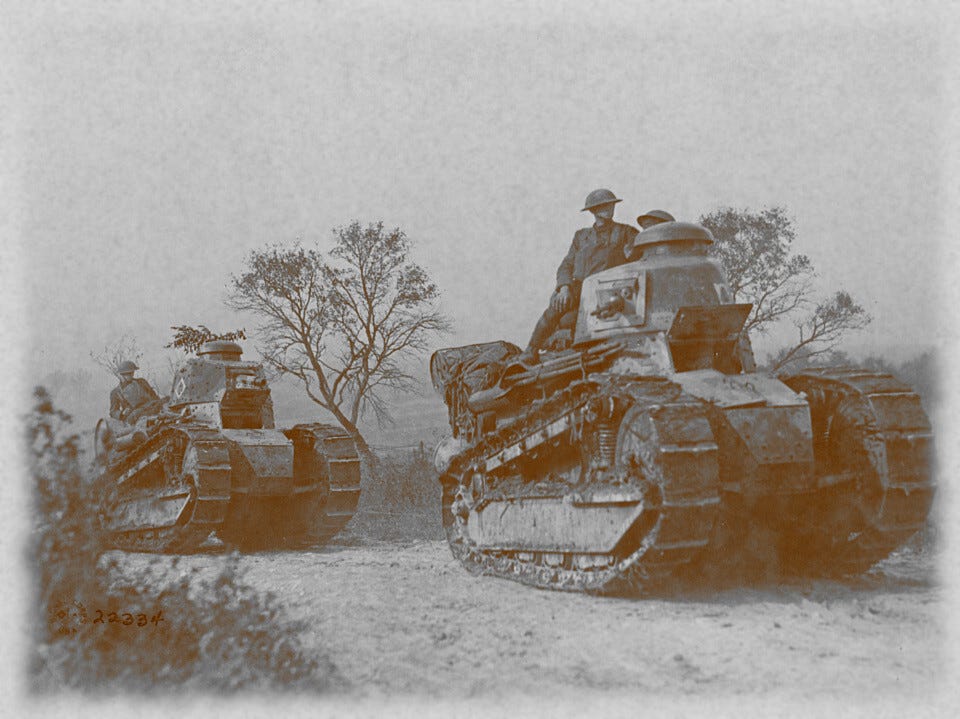
In the thick fog of dawn on 26 September 1918, American doughboys charged forward amid the roar of artillery, overrunning German forward positions in a landscape scarred by wires and craters, setting the stage for a grueling campaign where determination clashed with unforgiving terrain. The Meuse-Argonne Offensive emerged from the convergence of Allied strategic pressures, American logistical ambitions, and the harsh realities of entrenched warfare, evolving through initial over-ambition into a hard-won breakthrough as leadership adaptations, tactical refinements, and relentless assaults overcame German defenses and environmental obstacles to force a decisive retreat.
Into the Hogback
As part of Marshal Foch’s broader offensive in late 1918, the American First Army positioned itself to strike northward in the rugged Meuse-Argonne sector, where the interplay of ambitious goals and formidable German preparations foreshadowed the campaign’s challenges. The Meuse-Argonne thrust was not an isolated maneuver, but a vital spoke in Foch’s “Grand Design”—a concentric, broad-front offensive involving 220 divisions. By directing the British toward Mons and the Americans toward the Mézières rail hub, Foch sought to leverage the sheer mass of forty-two oversized American divisions to pin the German army against its own frontier. This strategic causation was rooted in the necessity of severing the lateral rail lines that served as Germany’s main military lifeline. By threatening these arteries, the Allies aimed to collapse the entire defensive posture of the Western Front before the winter of 1918. The geographic theater for this American debut was a logistical and tactical nightmare, defined by a sector fifteen to twenty miles wide that was hemmed in by the unfordable Meuse river to the east and the suffocating canopy of the Argonne Forest to the west. Within these boundaries, General Pershing’s staff envisioned a rapid, two-stage penetration of the German lines.
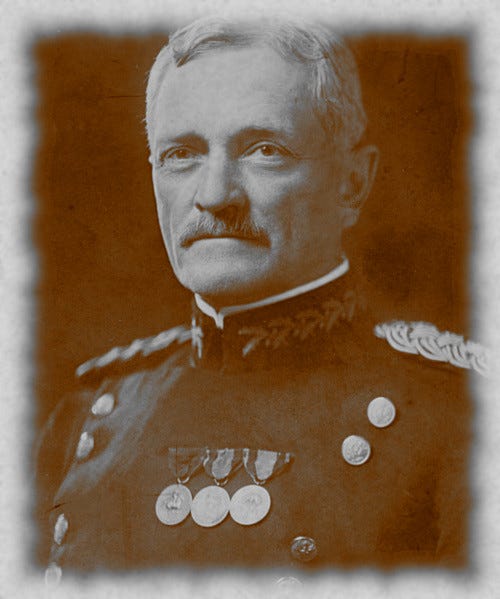
The initial phase demanded a ten-mile surge to clear the Argonne and link with the French Fourth Army at Grandpré, while the second phase aimed for a further ten-mile leap to outflank the Aisne positions. However, this planning underestimated the “hogback” ridges running from Montfaucon through Cunel, which provided the German defenders with natural bastions that dominated the valley of the Aire River. German defenses turned this difficult terrain into a lethal architecture. Having occupied the sector for years, they constructed four distinct fortified lines reaching fifteen miles in depth, characterized by interlocking fields of machine-gun fire, concrete bunkers, and dense wire entanglements. The high ground on the flanks offered German observers a panoramic view of any American movement, allowing for precise artillery concentrations. The strength of these positions was so legendary that Marshal Pétain skeptically remarked that the Americans would be fortunate to even reach the second line at Montfaucon before the onset of winter. To overcome these obstacles, the First Army mustered 600,000 men, organized into three corps, with General Robert Bullard’s III Corps on the east, General George Cameron’s V Corps in the center, and General Hunter Liggett’s I Corps on the west. This massive concentration of manpower was supported by 2,700 artillery pieces, 189 tanks, and 821 aircraft, representing the peak of American military and industrial mobilization. Yet, as the nine divisions prepared to jump off from the line east of Verdun, the sophisticated command structure and overwhelming fire support masked a deeper tension. This friction arose between Pershing’s optimistic, phased timelines and the reality of an enemy that had spent years perfecting the art of the defensive. These foundational elements set a course where early momentum would soon collide with the realities of combat, leading to the offensive’s opening assaults where initial successes were quickly complicated by a growing discord between command expectations and the chaos of the front.
Fog and Fire
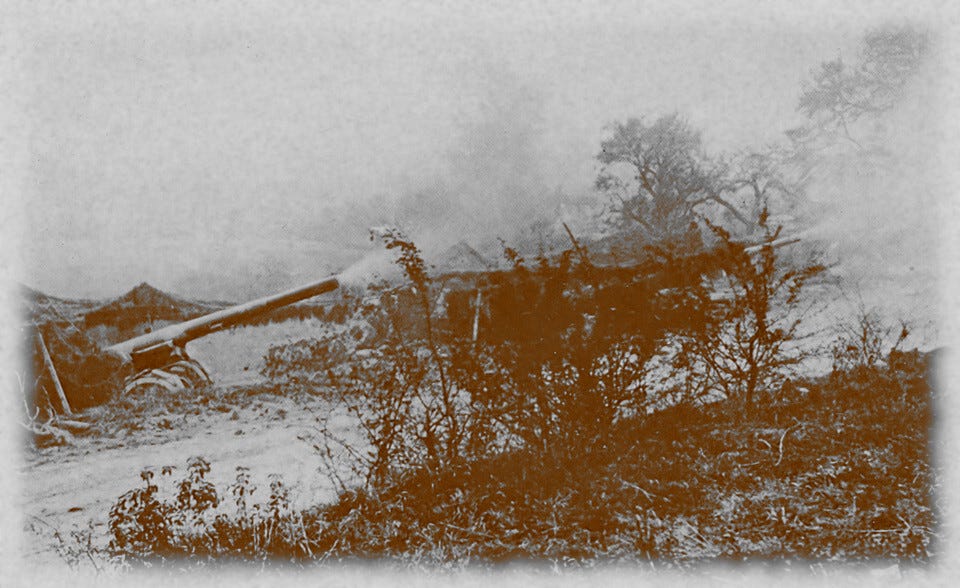
Launched amid heavy bombardment and fog, the initial attacks by the I, III, and V Corps penetrated German forward lines through sheer weight and coordination, yet the interaction of terrain, weather, and resistance began to reveal the campaign’s costly dynamics. The offensive began not with a frantic dash, but with a display of industrial-scale lethality by the veteran 28th Division on 25 September. By positioning fourteen machine-gun companies to deliver complex, concentrated enfilade and direct fire volleys on the German strongholds, the American command demonstrated early mastery of technical preparation. This heavy machine-gun fire, synchronized with an immense artillery barrage at 2:30 a.m. on the 26th, allowed the 28th Division to pierce the German defenses, taking Varennes and pushing up the Aire valley despite the resistance along the forest edge.
This initial success validated Pershing’s belief that sheer weight and pre-planned suppression could shatter even the most entrenched positions. The broader assault on 26 September expanded this momentum, as the three American corps surged forward under a blanket of heavy fog that masked their movements but complicated their coordination. The strategic intent relied on a pincer maneuver around the height of Montfaucon. The V Corps was tasked with the central penetration while the I and II Corps guarded the flanks. On the eastern edge, the 33rd Division executed a brilliant tactical deception against the Bois de Forges. By using concentrated machine-gun fires to simulate a phantom southern attack, the division’s 66th Brigade swept in from the southwest, capturing 1,400 prisoners at the low cost of 250 casualties. This outcome suggested that when terrain factors and tactical theory—such as echeloned advances—were properly aligned, the American First Army could achieve decisive results with surgical efficiency. The fragility of these early gains was most evident in the local struggles for high ground, where the presence or absence of coordinated fire support meant the difference between slaughter and success. On 27 September, a rifle battalion attempting an unsupported thrust toward le Chéne Tondu was decimated by German machine-gun fires, proving that raw courage was no match for the German defensive architecture. Continuity was only restored when the division machine-gun officer rapidly improvised a plan to employ twenty-four guns in a direct overhead volley. This coordination swept the wooded ridges and silenced the German nests, allowing the infantry to advance without resistance. While these assaults secured initial objectives, mounting German counter-attacks and internal American strains soon transformed the offensive into a protracted struggle, necessitating pauses and reorganizations.
The Advance Stalls
As rains turned roads to mud and German reinforcements bolstered strong-points, the American advance slowed, with inexperience, supply issues, and fierce resistance intertwining to demand evolving tactics and patrols that gradually wore down enemy positions. The onset of heavy rains on 27-28 September acted as a force multiplier for German resistance, transforming the pockmarked landscape into a quagmire that paralyzed American mobility. The few tanks that had survived mechanical failures became bogged down in the sludge, while the artillery, which was essential for suppressing the German machine-guns, could not be moved forward over congested, swampy roads. This paralysis granted the Germans a critical window to rush local reserves into the center of the line south of Cunel and Romagne.
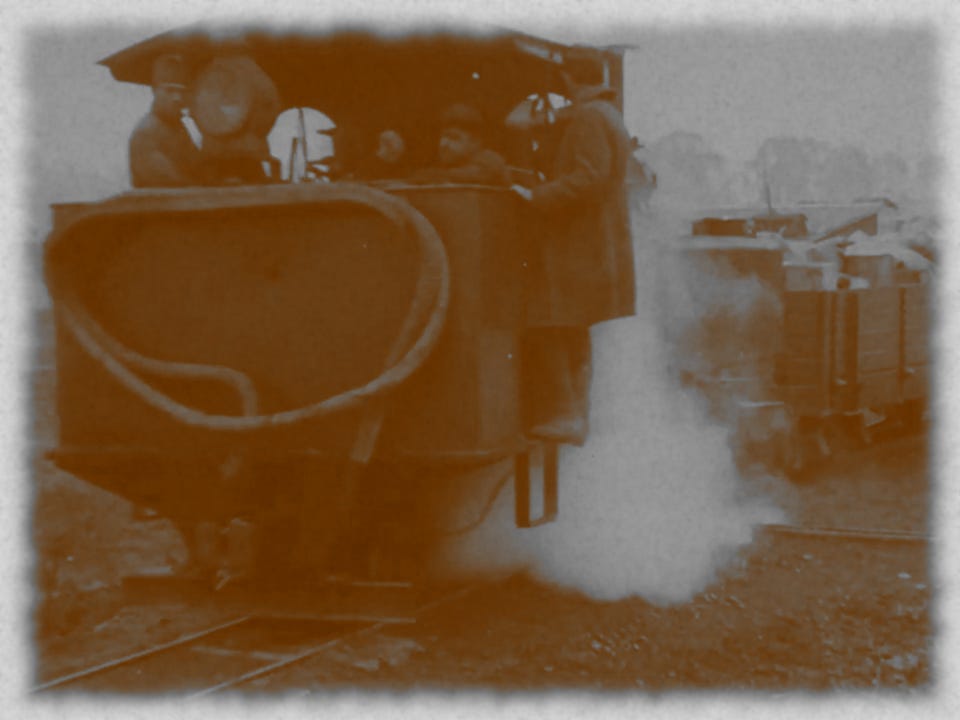
Consequently, once the Americans silenced forward positions, they were met with fresh depth in the enemy’s defense, enduring devastating enfilade fires from German batteries positioned on the high ground of the Meuse and the Argonne Forest. By the end of September, the First Army had carved and eight-mile salient into the German lines, but the cost of this penetration necessitated a tactical pause. The intermingling of units in the twisted “hogback” terrain had shattered cohesive command, forcing Pershing to halt and reorganize. This disorientation was acutely felt on the front lines. For instance, the 2nd Battalion of the 305th Infantry reached Naza Ridge on 30 September to find a landscape so featureless and shell-blasted that map-reading became impossible. Officers could not agree on their location, forcing the battalion commander to abandon the map entirely, instead favoring reconnaissance. Even when positions were established, the internal friction of the First Army became apparent. Inspections revealed wide gaps between divisions and a startling lack of tactical synergy. Machine-guns were often placed on extreme flanks without regard for fields of fire or infantry protection, sometimes positioned as far as fifty yards from the nearest infantry and dug in at useless angles, having failed to consult machine-gun officers. These structural failures were compounded by a significant experience gap. Only three of the nine attacking divisions possessed combat experience, while critical objectives like Montfaucon were assigned to green units like the 79th Division, which had been in country for less than two months. The resulting lack of liaison and awkward teamwork between infantry and artillery—often using borrowed brigades from other divisions—meant that American weight was frequently applied blindly. To resolve this fog of war, command began to rely on reconnaissance missions. On 2 October, based on faulty French reports of a German withdrawal, combat patrols were ordered to penetrate the enemy screen. One such patrol of seventy men from the 305th Infantry advanced in a tactical column through thick fog, trailing a telephone wire to keep in contact with the rear guard, only to be ambushed by machine-guns in the Montrebeau Wood and Exermont Ravine. The ensuing engagement illustrated the brutal small-unit reality of the campaign’s stagnation. The patrol was pinned by fires from the left, rear, and front, losing the patrol leader and numerous men in desperate rushes against camouflaged defensive nests. Though they managed to kill several defenders and silence a few machine-guns, the survivors were forced to entrench under a hail of fire. Yet, the persistence of these patrols provided the vital intelligence that the higher command lacked. By cutting in a telephone line from the middle of the slaughter, officers could report that the woods were heavily defended, rather than the initial reports of being abandoned. Major Barnwall Legge of the 26th Infantry Regiment later affirmed that though the cost of the reconnaissance was high, these drives through the enemy screen provided the data necessary to lay accurate barrages for subsequent attacks. These mid-campaign hurdles underscored the need for command shifts and retraining, paving the way for General Liggett’s reforms that reinvigorated the offensive’s momentum.
Liggett Takes the Line
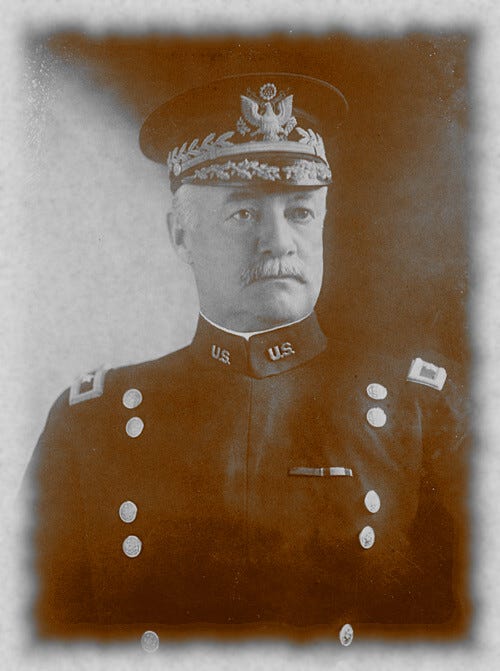
Under Liggett’s command, the First Army’s retraining, logistical improvements, and targeted assaults interacted with weakening German lines to drive forward, capturing key ridges and forests through enhanced coordination and bypassing tactics. This phase was set against a massive strategic shift. While the Americans were bogged down in the Argonne mud, Field Marshal Haig’s British armies, bolstered by the AEF’s II Corps (27th and 30th Divisions), had successfully shattered the Hindenburg Line along the Somme. This penetration created a cavernous gap in the German fortifications, forcing a broad-front crisis that Pershing sought to exploit with a renewed general offensive at 5:30 a.m. on 4 October. The mission was a brutal trifecta. The II Corps struck for the heights of Cunel, the V Corps targeted the Romagne ridges, and the I Corps fought to neutralize the flanking fire from the Argonne to gain maneuver room. This was a turning point where the AEF transitioned from raw frontal waves to sophisticated exploitation of German exposed flanks. The 1st Division’s struggle for the heights of Hills 212 and 272 during this period serves as the definitive microcosm of this tactical evolution. On 4 October, the 26th Infantry’s 1st Battalion seized Hill 212, but the true test of American resilience and coordination arrived on 6 October during the 3rd Battalion’s assault on the strongly held Hill 272. As K and M Companies clawed up the slopes, a crisis erupted. Hundreds of Germans launched a counter-attack in close formation, surging southwest down the valley east of the hill. The American response was a masterpiece of improvised combined-arms defense. Despite telephone lines being severed by artillery fire, the battalion commander established an advanced command post at the end of the wire and utilized a relay of runners to bypass the communication blackout. One runner reached an artillery liaison officer who was literally perched in a tree south of the hill with a telephone line to his batteries. By requesting a pre-sighted concentration of fire and coordinating with the 3rd Machine-Gun Battalion on Hill 212 to pour accurate fires into the valley below, the Americans broke the counter-attack and forced a withdrawal in total confusion. The technical precision of these assaults reached a new height by 9 October when the 1st Battalion, 16th Infantry, took its turn against the German protective fires on Hill 272. To succeed where previous attacks had failed, the battalion moved behind a creeping barrage and a specialized thermite concentration from the 1st Gas Regiment, which blinded German machine-gun nests on the left flank. In the thick fog, the battalion commander expertly managed the companies under his charge, wheeling elements to protect exposed flanks while driving the main mission toward the crest. When the companies finally converged at the foot of the steep slope, the commander issued oral orders for small groups to maneuver their way between machine-gun positions, infiltrating and enlarging footholds until the position was captured at 11:00 a.m. This was followed by the 3rd Battalion, 26th Infantry, passing through lines to continue the push. They waited forty-five minutes under a hailstorm of enfilade fire from Bois de Moncy, refusing to move until their scheduled artillery barrage stood and then rolled forward—a display of discipline that allowed an accompanying liaison officer to use direct telephone communication to destroy German batteries and machine guns as they appeared. This hard-won tactical maturity was formalized on 16 October when General Hunter Liggett assumed command, allowing Pershing to focus on theater-level strategy. Liggett inherited an army that was functionally broken. Weeks of bitter fighting had left divisions at quarter strength, with over 100,000 stragglers draining the ranks and a lack of draft animals immobilizing the artillery. Liggett didn’t just reorganize. He retooled the First Army’s operational DNA. He prioritized the retraining of infantry in bypassing techniques, teaching them to treat German strong-points as isolated islands, and reorganized the artillery to use interdicting fires that physically severed German infantry from their support. While logistical stockpiles were replenished and roads were repaired, Liggett executed a flanking operation with the I Corps. By sending the 77th Division north while pushing the 82nd Division west into the German rear, he forced a total German withdrawal from the Argonne Forest by 10 October. The bloodiest local operation remained the ten-day capture of Grandpré, a grueling struggle that finally secured a clean line of departure for the final breakthrough. The culmination of these reforms arrived with the 1 November assault, where the First Army finally functioned as a sophisticated, modern instrument of war. Under Liggett’s tutelage, the AEF had developed into a well-trained, flexible fighting force. General Charles Summerall’s V Corps shattered the central ridgelines in a single day, while General John Hines’s III Corps raced toward the Meuse. The coordination between specialized assault troops and support batteries was now so superb—and the German lines so hollowed by continuous pressure—that the American advance, at one point, outran the maps provided by AEF headquarters. By displacing supplies and guns forward with newfound speed, American forces pushed through the third German line and reached the Meuse River, effectively severing the enemy’s vital Carignan-Sedan-Mézières rail link. This revitalized phase culminated in reaching the Meuse and disrupting German logistics, bringing the offensive to a close as broader Allied pressures forced the armistice on 11 November.
The Forty‑Seven Days
Through the intricate weave of strategic imperatives, environmental hardships, and adaptive command decisions, the Meuse-Argonne Offensive progressed from faltering beginnings to a pivotal rupture in German defenses, where American persistence and tactical growth ultimately compelled enemy concessions. The campaign’s phases—from the strategic causation of Foch’s Grand Design and Pershing’s ambitious initial thrusts, through a period of grinding stagnation mitigated by high-stakes patrols and desperate reorganizations, to Liggett’s profound operational reforms—reveal a fundamental metamorphosis. This was not merely an advance of distance, but an evolution of intellect and execution. It demonstrated how command reforms and combined arms integration, specifically the synergy between infantry and artillery, could interact to dismantle a defense-in-depth that had been built up over four years of industrial slaughter. The transition of the American Expeditionary Forces from a raw, oversized mass into a sophisticated, flexible instrument of war was forged in the blood-soaked ravines of the Aire valley and the impenetrable thickets of the Argonne. Beyond its staggering toll of over 117,000 American casualties, the offensive underscores the broader, transformative implications of World War I’s endgame. It was here that the fusion of industrial-scale warfare, human endurance, and strategic flexibility first reached its modern equilibrium. By severing the vital rail lifelines, the AEF did more than force a German retreat. It heralded the United States’ emergence as a global military power capable of sustaining high-intensity, multi-unit operations. The lessons learned in the hogback ridges, that of bypassing strong-points, isolating objectives with fire superiority, and maintaining cohesion amidst the fog of war, would form the bedrock of American military doctrine, influencing the conduct of future conflicts through a newfound mastery of adaptability, coordination, and overwhelming force.
See Also


Further Reading
Lanham, C. T. Infantry in Battle. The Infantry Journal, 1939. Reprint, Reprinted by the Marine Corps Association, 2000.
Stewart, Richard W., ed. American Military History : The United States Army in a Global Era, 1917-2010. Vol. 2. Center of Military History, United States Army, 2010.
US army in WW1???, must be Propaganda!!!