

Blueprint For Disaster
A Case Study in the Perils of Ignoring the Timeless Principles of War

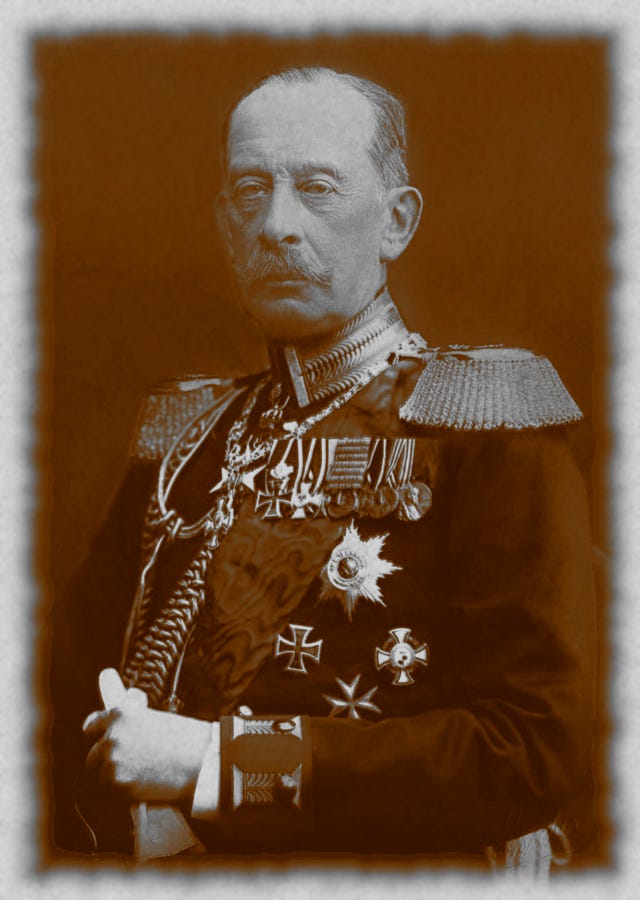
At the dawn of the twentieth century, Europe sat perched atop a powder keg—the appearance of stability merely an illusion. Into this calm before the storm stepped Count Alfred von Schlieffen with his Great Memorandum; a blueprint for a lightning six-week envelopment of France through Belgium, followed by a rapid remobilization eastward to crush Russia before it could mass its immense army against the hinterland of East Prussia and Silesia. The plan promised the holy grail of modern strategy—a short, decisive war on multiple fronts. Yet, under the surface there were cracks in the foundation that would ultimately cause the entire plan to collapse under the weight of its own logistical impossibilities.
Schlieffen and his successor, Helmuth von Moltke the Younger, did not invent this grand scheme of the offensive in a vacuum. They were the direct intellectual heirs of two titanic, post-Napoleonic military theorists whose competing visions still define, to this very day, the Western understanding of warfare. From Carl von Clausewitz, a Prussian General and military philosopher—a literal warrior-scholar—they inherited the conviction that only the offensive could seize and retain the initiative, that protracted defensive campaigns must be avoided at all costs, and that victory belonged to the side willing to take calculated risks in the pursuit of a decisive effort against the enemy’s center of gravity. From Antoine-Henri Jomini, French general and celebrated military theorist, they took the obsession with geometric precision—interior lines, concentrations of force, and the systematic orchestration of marching columns along predetermined routes. The selectively applied Clausewitzian and Jominian principles fused into the Great Memorandum a doctrine that exalted offensive and mass above all other considerations, even as it collapsed under the strain of the equally vital principles of simplicity, security, and unity of command.


Although Schlieffen and Moltke demonstrated clear adherence to the principles of offensive and mass by staking the survival of the Kaiserreich on a rapid, overwhelming, and immense concentration of force against France, they fatally violated simplicity, security, and unity of command through complicated logistics, unrealistic assumptions about enemy behavior, and a culture of military secrecy divorced from the political aims of the German state—most dramatically illustrated through the exclusion of Chancellor Bethmann Hollweg from the designs of the Schlieffen Plan until 1912. The Great Memorandum was therefore not merely ambitious; it was a tragically unbalanced application of the very principles of war that had formed the bedrock of German military success.
Embracing the Offensive: A Whirlwind Assault
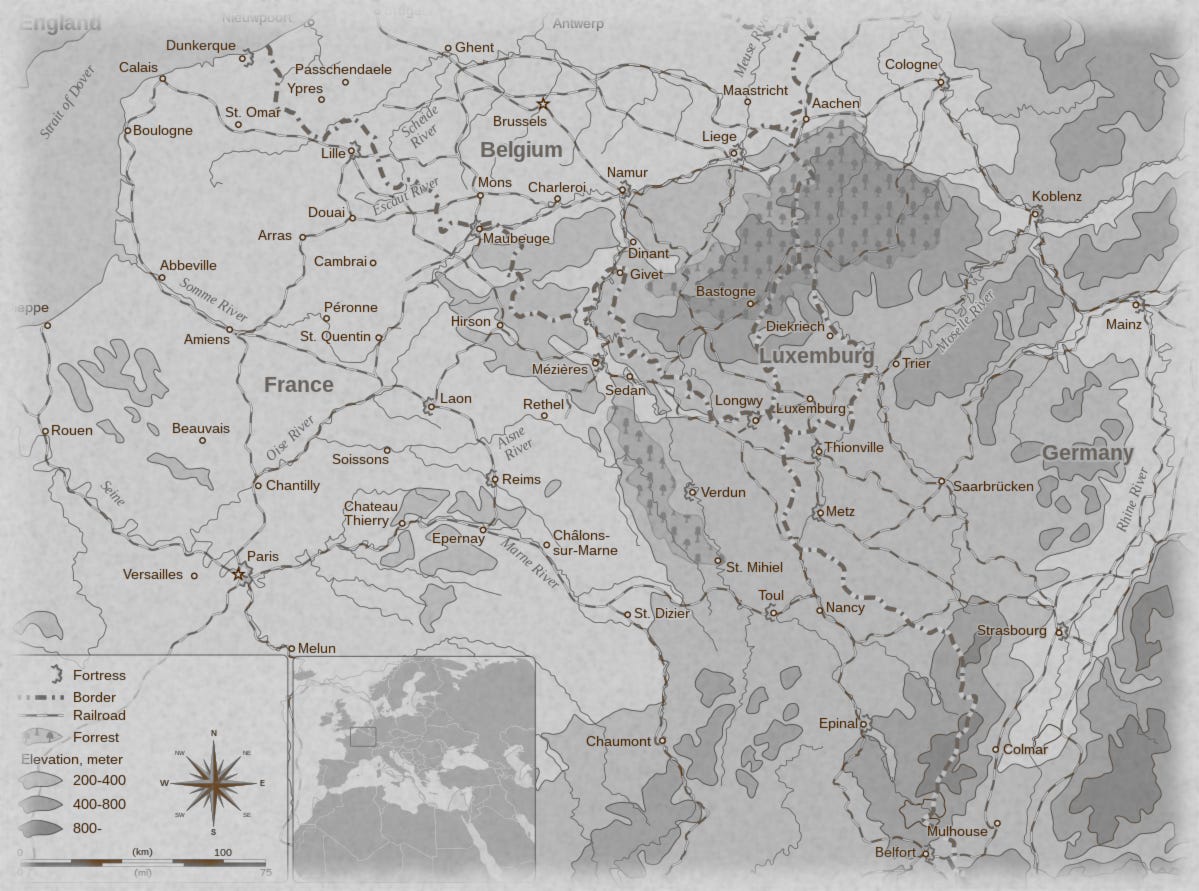
Schlieffen and Moltke firmly adhered to the principle of the offensive by designing the Great Memorandum around a whirlwind assault on France, rejecting a defensive posture that would cede the initiative, emphasizing, instead, to impose Germany’s will through overwhelming force. The principle of the offensive, defined by Clausewitz, achieves the most decisive results and, when properly applied, secures victory in war.1 Offensive operations force the enemy to react and keeps them off balance. It was the offensive that had won Prussia a decisive victory in the Franco-Prussian War and unified the German Empire a mere four decades prior to the Great War. It was for this reason that Clausewitz had determined the offensive to be the primary objective, deeming occupation of territory and control of resources as secondary priorities.2 It was the principle of offensive that Schlieffen prioritized when drafting his plan. He envisioned a rapid assault through Belgium—despite its neutrality having been guaranteed by Britain, France, and Prussia since 1839—that swept down on Paris from the northern plain. The meticulous Schlieffen continued to modify his plan until his retirement in December 1905, at which point his replacement, Helmuth von Moltke the Younger—nephew of the Chief of Staff behind Prussia’s victories over Austria in 1866 and France in 1870-71—assumed maintenance of the scheme.3 Though Moltke discussed the possibilities of a defensive strategy in the event of war with France, arguing that an entrenched, defensive posture would prevent engagement on ground favorable to the enemy, the Clausewitzian principle of the offensive carried the day (Clausewitz, himself, emphasized the importance of time and despised the thought of a protracted defensive campaign). The Great General Staff concurred that prudence dictated the necessity of a rapid offensive against France. This provided the justification for violating Belgian neutrality through the premise of a quick victory being the best way to defend the Vaterland.4 While the offensive focus of the Schlieffen Plan aligned with the principles of warfare by promising a decisive victory, it was rife with vulnerabilities when paired with mass concentration that strained the logistical realities of the early twentieth century, highlighting only a partial adherence to Clausewitz’s timeless principles amid emerging flaws.
Mass Over Precision: A Broad and Risky Sweep
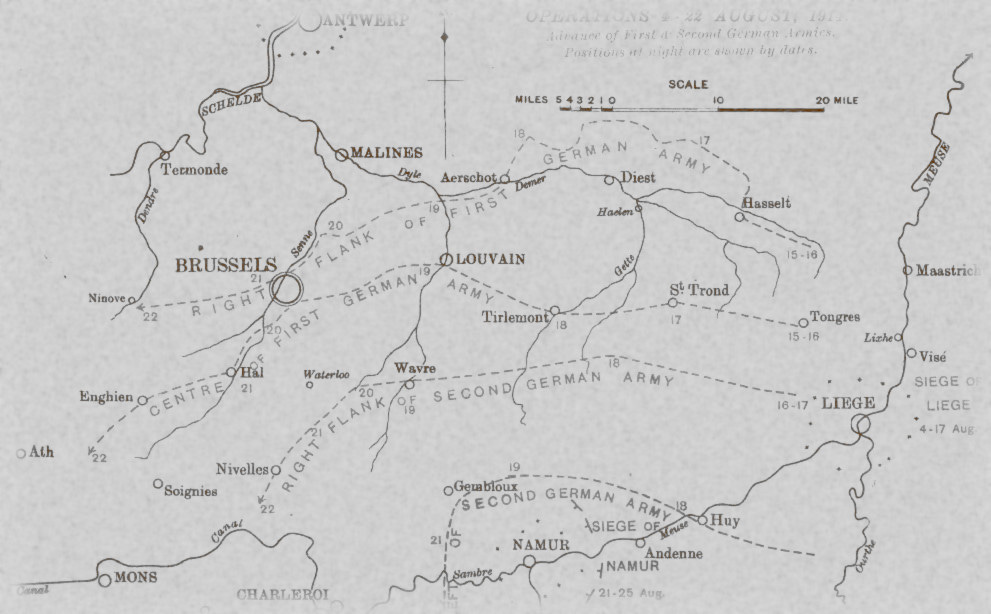
In crafting the Great Memorandum, Schlieffen and Moltke followed the principle of mass, to a certain degree, by advocating the concentration of German military assets against France via Belgium, aiming to counter potential French deployments through superior numbers and infrastructure exploitation. I say partially because the application of mass, in regards to the Schlieffen Plan, requires nuance. Schlieffen, and later Moltke, emphasized numbers, but the principle of mass is not simply a game of numbers. Rather, it requires the appropriate concentration of power against both a decisive place and correct time, and against a specific target.5 Instead of determining a critical point, like the later German Sichelschnitt Plan of the Second World War, Schlieffen’s plan, with its focus on Belgium as a whole, was too broad in scope despite the enormity of force. History is filled with examples of the misapplication of the principle of mass, sometimes even perpetuated by the same commander. General Eisenhower, Supreme Commander of Allied Expeditionary Forces during the Second World War, masterfully applied the principle of mass during Operation Overlord, where all elements of combat power were concentrated at a decisive time and place. Yet, after the Normandy invasion, he advocated an advance across a continuous broad front rather than a major thrust deep into Germany—a controversial decision by a commander that had, only a few months earlier, demonstrated brilliance.6 Like Eisenhower’s broad front strategy of September 1944, Schlieffen’s strategy was equally broad in scope, treating Paris as the French center of gravity. Instead of focusing his available force on a critical point of the French defenses, the Schlieffen plan called for a semi-circular pincer spanning nearly 200 miles, extending to the channel coast before turning to sweep downward towards the objective of Paris. This broad front strategy is where the Schlieffen Plan begins to collapse, causing its architect many sleepless nights trying to solve the logistical problems presented by the sheer number of troops compared to the limited infrastructure available to transport and supply such a force.7 As a result, his focus, and Moltke’s, became bogged down in the mathematics of railroad timetables and marching speeds, diverting attention away from the primary objective. This misapplication of the principle of mass was compounded further by violating the principle of simplicity, as the complexities of large troop movements across vast expanses of disparate terrain revealed additional weaknesses.
Fatal Complexity: Logistics Undermine the Vision
Exacerbating the issues inherent in the Schlieffen Plan was the failure of adherence to the principle of simplicity. By embedding the Great Memorandum with intricate logistical demands and presumptions of enemy behavior, it left the plan overly complex and fraught with uncertainty. The principle of simplicity, exponentially increasing in difficulty above the battalion level, requires clear, uncomplicated plans and concise orders to reduce confusion and ensure completion of the objective. Simplicity is perhaps the most important principle devised by both Clausewitz and Jomini, as the breakdown of simplicity can cause a cascade failure of the other principles of war. It is for this reason that operations which become overly complicated lead to failure. For example, General Washington, during the American Revolution, energetic from victories at Trenton and Princeton, formulated an overly complicated attack against the British at Germantown in 1777. The intent was to assault a British outpost by way of a coordinated effort of four columns of force—comprised of inexperienced troops—under cover of darkness. The result was disastrous. The columns became disordered, lost, and confused. Because of this, Washington lost the initiative, failed to concentrate his effort, and was forced to retreat from the offensive.8 Immensely more convoluted, the Schlieffen Plan’s broad sweep through the whole of Belgium added unnecessary over-complication, committing 16 corps, comprising approximately 700,000 troops, to the massive wheeling movement—seven-eighths of Germany’s military strength.9
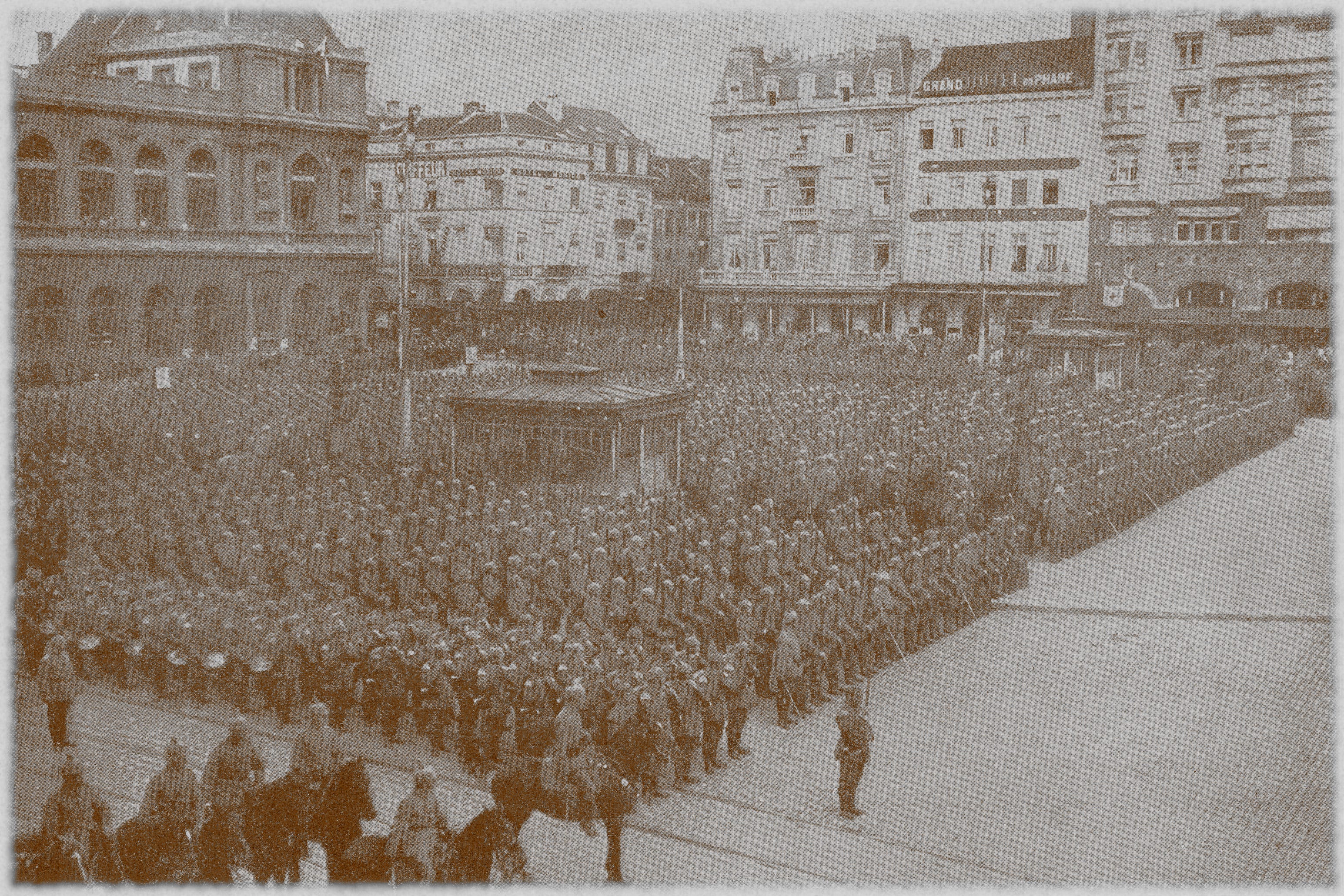
This initial thrust was to be followed by eight additional corps, which would have to march farther and faster per day than the advance units, along routes already occupied by existing forces, despite Schlieffen’s own calculations of armies being only able to traverse twelve miles per day under force march (notably, simplicity and economy of force are closely linked: properly applied simplicity inherently ensures economy of force, and for this reason, the latter principle has been excluded from this analysis.)10 Further complicating the German war plan was the uncertainty surrounding Belgian resistance and well-defended fortifications along the German route of advance, with resistance predicted to be minimal. The Great General Staff’s attempt to justify these uncertainties was the (not altogether incorrect) assumption of Russia’s immense size and the slow mobilization speed of the Russian army hampering any attempt of a meaningful counter-offensive in the east before the defeat of France had been accomplished.11 Nevertheless, the unknown variables compounded, weakening the feasibility of the plan’s success. The problems inherent in the German plan for a quick victory over France were intensified by further failures in security and unity of command. Secretive planning, isolated and divorced from political objectives, all but guaranteed the disastrous result that played out on the Western front for five bloody autumns.
The Peril of Secrecy and Centrality
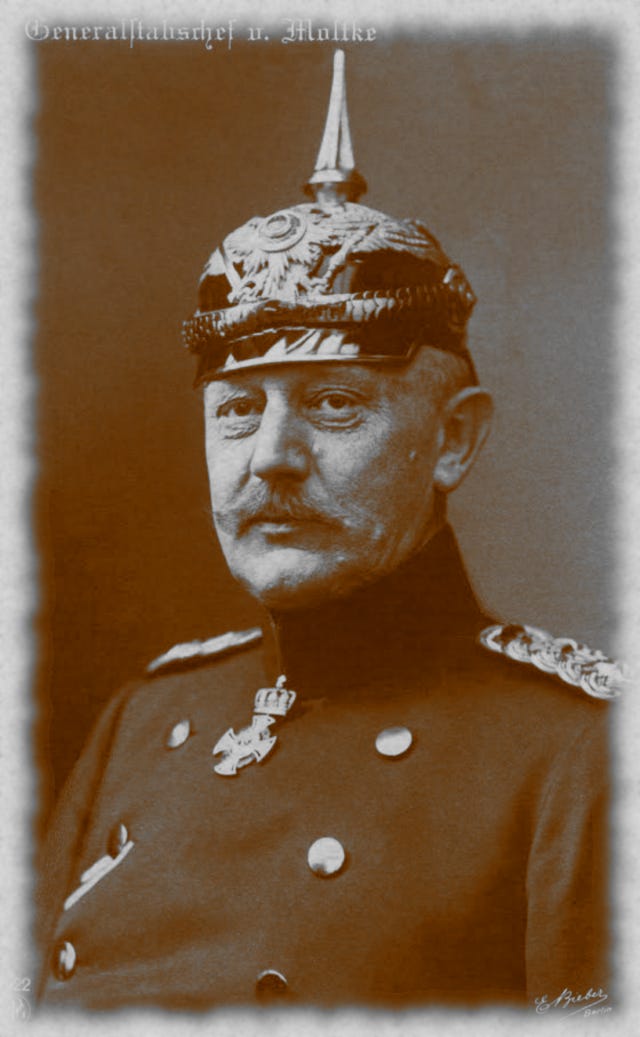
By shrouding the Great Memorandum in extreme military secrecy, depriving the civilian government of oversight, Schlieffen and Moltke breached the important principles of security and unity of command, creating vulnerabilities in coordinated effort and broader strategic predictability. Warfare is not merely a tool of generals and chieftains, but also functions as a political tool. For an operation to be successful, planning and preparation cannot be conducted in isolation from national policy and the political goals of the state. It is imperative that commanders comprehend both the military and political objectives of the nation they serve in order to focus their elements on tasks and responsibilities suitable to the objective.12 Though Prussia was an autocratic state, centralized authority does not preclude a synthesis of the military-civilian coordination. During the Second World War, after early purges had weakened the Soviet Union, nearly costing its very existence, Stalin quickly adapted, holding regular conferences with his staff officers, as well as including the Politburo in military planning.13 In contrast, the Prussian state did not share war plans with the civilian government—the Kaiser, along with the army chiefs, excluded the Minister of War, Chancellor, and parliament from foreign policy decisions. The violation of unity of command didn’t end there, as other military departments, particularly admirals of the Kriegsmarine, were only fed bits of information, and only when deemed necessary. Such exclusions serve to hamper diplomatic and coordinated military efforts in pursuit of a common objective. It is important to note that this is not merely a failure of the Prussian system in isolation, nor is it limited to autocratic states. In the late eighteenth and early nineteenth centuries, even nations existing under the principles of liberty failed to uphold the unity of command. Britain’s Royal Navy, the physical manifestation of their imperial dominance, was often uninvolved and excluded from the strategizing and deliberations of the Imperial Defense Committee.14 Complimenting the failure of unity of command was a mischaracterization of the principle of security. This led war planners to equate security with secrecy, compounding the breakdown of unity. The Schlieffen Plan was considered top secret to a fault. The Kaiser, after meetings with the Great General Staff, would only disseminate information as he saw fit, and was further exacerbated by internal communication among the disparate military branches, plagued by secretiveness, withholding machinations from one another.15 These breaches in security and unity of command underscored the shortcomings of the Great Memorandum, setting the stage for Germany’s strategic missteps during the course of the Great War.
Lessons From Disaster
In retrospect, Schlieffen and Moltke’s Great Memorandum embodied a bold, if not misguided, adherence to offensive aggression and a partial understanding of the principle of mass to dominate France quickly. Yet, it faltered through critical violations of simplicity, security, and unity of command that over-complicated logistics, blurred strategic objectives, and underestimated alliance dynamics. Drawing together these elements, the strengths of the Schlieffen Plan in offensive principles were undermined by its complexities, reflecting a broader European military culture where rigid plans clashed with unpredictable, dynamic battlefield realities, as evidenced by the two-front inevitability and logistical strains that foreshadowed the stalemate of the First World War.
The failure of the Schlieffen Plan to adhere to the timeless principles of war underscores the implication that even visionary strategies must balance these principles against battlefield and objective realities. Selective adherence—prioritizing the offensive at the expense of other elements—invites a chain of failure that is difficult to recover from and leads to unnecessary attrition, leaving forces to bleed white in a protracted struggle with no clear goals. Schlieffen and Moltke’s partial compliance serves as a cautionary tale for modern military planners: their over-reliance on the principle of offensive, applied across a broad scope, underpinned by precise yet fragile logistical calculations and assumptions of enemy reactions, transformed an audacious gamble on rapid victory into the long, bloody stalemate of the Western Front. By violating simplicity through convoluted mobilization schedules and unrealistic timetables for advance, and by breaching security and unity of command through a culture of secrecy that excluded civilian oversight, they ensured that strategic planning remained disconnected from national policy and adaptable political and diplomatic realities. In the multi-front or coalition conflicts of today, this legacy underlines the imperative for integrated, flexible command structures that temper ambition with clear, achievable objectives, logistical feasibility, and seamless alignment between military leadership and civilian oversight. Failure to do so risks converting tactical superiority into strategic exhaustion, as Germany’s experience in 1914 tragically demonstrated.
See Also


Richard W. Stewart, ed., American Military History: The United States Army and the Forging of a Nation, 1775 - 1917 (Center of Military History, United States Army, 2005), 1:10.
Barbara Tuchman, The Guns of August, 1st Ballantine Books Edition (Ballantine, 1994), 17.
John Keegan, The First World War, First Vintage Books Edition (Random House, 2000), 30–31.
Tuchman, The Guns of August, 26.
Stewart, American Military History: The United States Army and the Forging of a Nation, 1775 - 1917, 1:7.
Stewart, American Military History: The United States Army and the Forging of a Nation, 1775 - 1917, 1:10.
Keegan, The First World War, 33.
Stewart, American Military History: The United States Army and the Forging of a Nation, 1775 - 1917, 1:11.
Tuchman, The Guns of August, 26; Keegan, The First World War, 30 Both notes enumerate the forces involved in the righ wheel enveloping maneuver.
Keegan, The First World War, 35–36.
Tuchman, The Guns of August, 25, 40.
Stewart, American Military History: The United States Army and the Forging of a Nation, 1775 - 1917, 1:7–9, 14.
John Keegan, The Second World War (Penguin Books, 2005), 454.
Keegan, The First World War, 28.
Keegan, The First World War, 46–47.
This is a brilliant read, and goes to the heart of the matter in much of current Defence planning: ignoring (& ignorance of) Principles of War. A classic current example being the UKs Commando Force abandoning a "Sustainable" force posture for one that is "available".