

Treeing the Desert Fox
Rommel’s Gambles, Allied Resilience, and the Logistics War That Decided North Africa

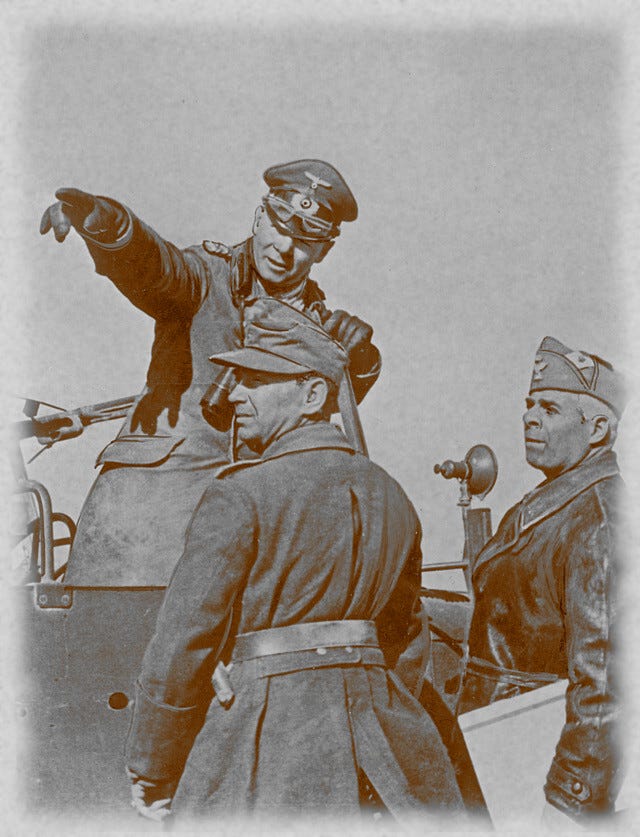
In the swirling sands of North Africa, where Italian ambitions first faltered and German ingenuity briefly flourished, the thunderous artillery barrage at El Alamein in October 1942 marked the turning point of the battle over the dunes. North Africa exposed the vulnerabilities of Axis conquests, setting the stage for a multifaceted Allied strategy that would culminate in the entrapment of over a quarter-million enemy troops in Tunisia. The Allied victory in North Africa unfolded through the interplay of initial Italian setbacks that necessitated German reinforcements and British resilience and reorganization that halted Axis advances, culminating in an Anglo-American amphibious assault. These coordinated offensives on the Western Front of Africa exploited Axis overextension, command disunity, and supply vulnerabilities to compel total surrender by May 1943.
When Rome Stumbled and Berlin Stepped In
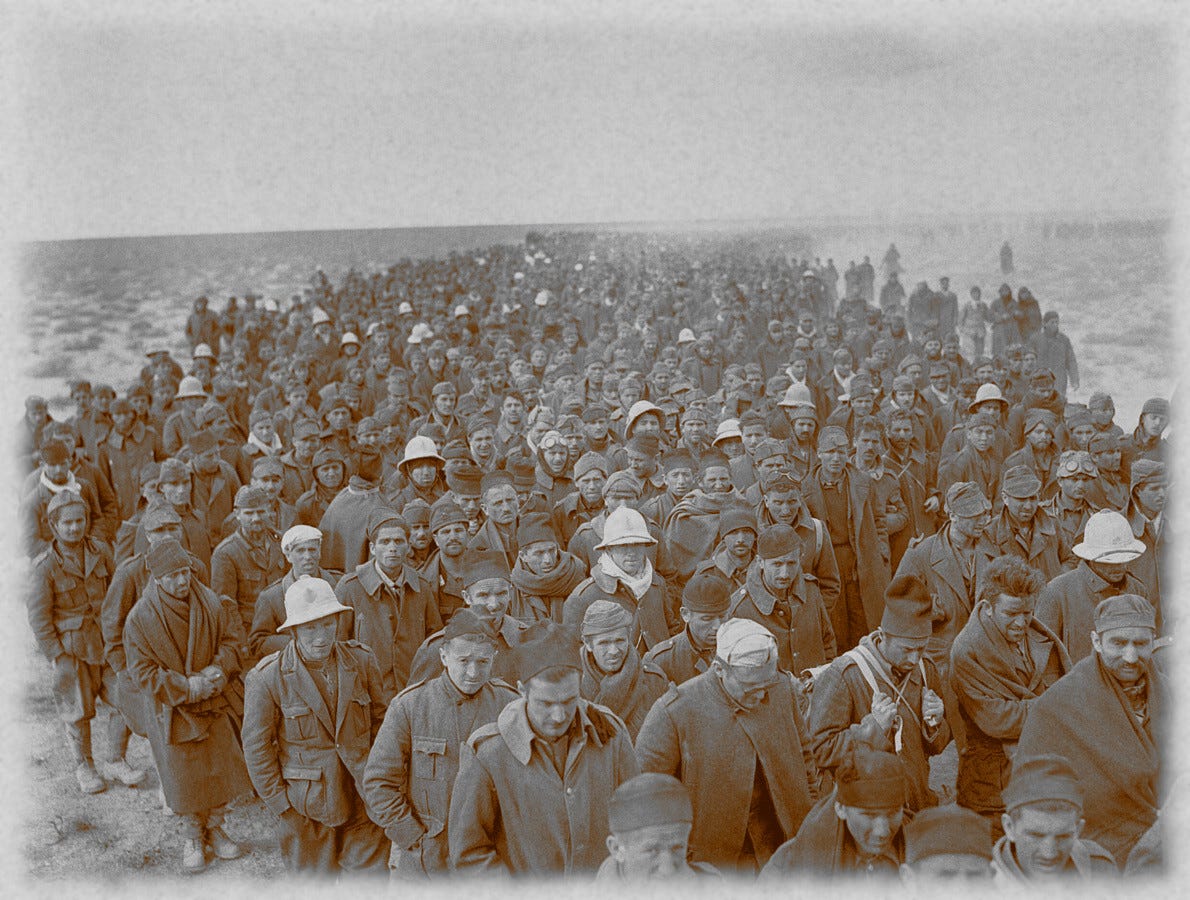
Italy’s ill-fated campaign in Africa revealed fundamental weaknesses in Mussolini’s forces, prompting German intervention with the Afrikakorps and setting off a chain of escalations that stretched Axis resources across the theater. Italian stumbles in 1940 led Hitler to consider intervention in North Africa on behalf of the Italians. He dispatched General Ritter von Thoma to Libya to study the potential of an Afrikakorps deployment, despite Mussolini’s refusal of assistance. After the catastrophic failure of the Italian thrust into Egypt, in the face of Operation Compass—a relentless counterattack that drove Italy out of Egypt and hundreds of miles across Libya—Hitler made up his mind to send the Afrikakorps to spare his fellow dictator further embarrassment. In February 1941, Hitler chose Rommel to command the Afrikakorps, leveraging Rommel’s renown from the Sichelschnitt campaign in 1940, to convince Mussolini of Germany’s commitment and to boost the morale of the Italian troops. With a vanguard of the German 5th Light and 15th Panzer Divisions, Rommel arrived at Tripoli, Libya in February 1941, bringing Axis forces to roughly one-hundred thousand in strength. Germany’s timing was impeccable, as it coincided with an Allied redeployment of forces from Africa to Greece in support of the Balkan defense, allowing Rommel to set to work on counteroffensives, with the recapture of Benghazi occurring on 03 April. By 11 April, Rommel’s forces had reached the launch point of Compass, putting Tobruk under siege. This marked a major reversal of success by the Axis. These foundational commitments transitioned the conflict from an Italian sideshow to a major Axis endeavor, where early victories concealed the mounting pressures of distance and dependence on vulnerable sea lanes.
The First Claws of the Hunt
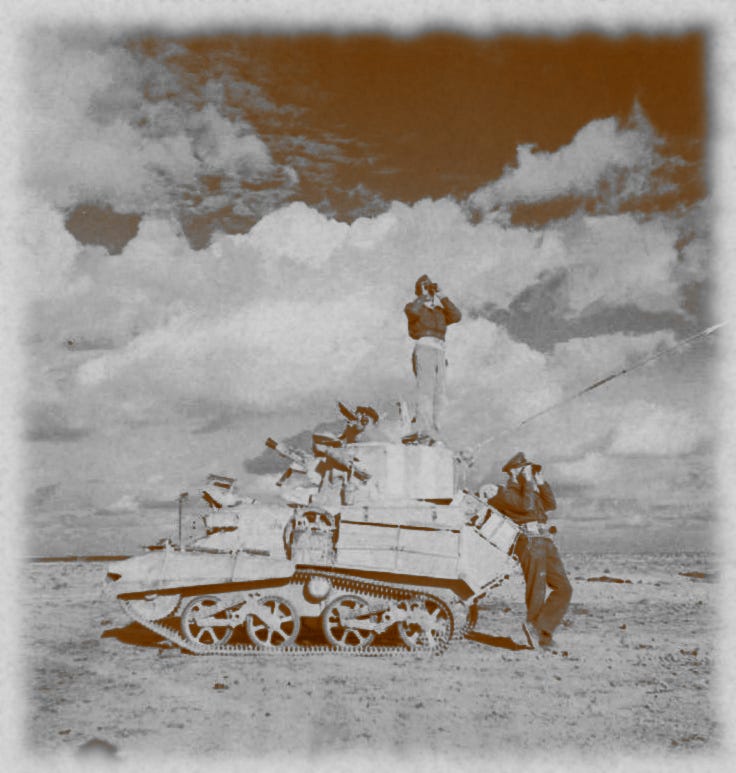
British attempts in 1941 to reclaim initiative through reinforced operations like Battleaxe and Crusader exposed Axis vulnerabilities in supply and manpower, as Rommel’s advances strained logistics amid command upheavals and tactical setbacks. In the face of Rommel’s advances, and with control of the Mediterranean being hotly contested between the Luftwaffe and the Royal Navy, North Africa became prime real estate for turning the tide in the Mediterranean tug-of-war. To reinforce the Allies in North Africa, the Royal Navy ran a convoy from Gibraltar to Alexandria, by way of the stronghold of Malta. The convoy brought significant tank reinforcements to the Allied Western Desert Force. Now reinforced, British General Archibald Wavell launched a counteroffensive in June 1941, with the objective of driving Rommel out of his advanced position. The counterattack—codenamed Battleaxe—was a disaster. The open terrain of the desert left Wavell’s tanks exposed to devastating anti-tank battery fire from the fearsome German 88mm artillery. The failure of the operation caused Wavell to fall out of favor with Churchill, and in July he was sent to India and replaced with General Claude Auchinleck. As commander-in-chief of Middle East forces, Auchinleck launched Operation Crusader on 18 November, looking to break the siege of Tobruk and drive Rommel and the Italians out of Libya. The first attempt failed, with heavy losses and a German counterattack—Rommel’s mad dash to the wire—causing General Alan Cunningham to be relieved of command of the Eighth Army. The siege was finally lifted on 10 December 1941, forcing an Axis retreat to El Agheila. Rommel launched a retaliatory counterattack on 21 January 1942, pushing the Allies back to the Gazala line. British losses in Crusader totaled roughly 18,000 men and some 440 tanks, while the Axis lost 38,000 men and 340 tanks. The battle was exhausting for both forces, which paused to recuperate and resupply over the early spring. These engagements, marked by logistical gambles and leadership flux, inflicted cumulative wear on Axis forces without yielding decisive gains, paving the way for intensified confrontations in 1942, where overextension would become more pronounced.
Rommel’s Dash and the Limits of Genius
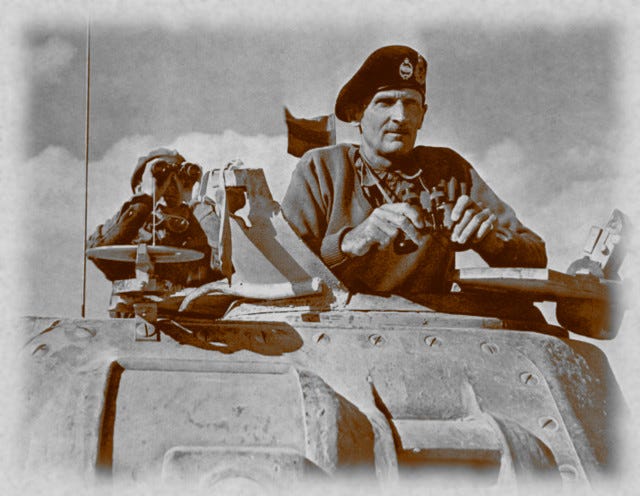
As the conflict intensified in 1942, Rommel’s tactical innovations at sites like Sidi Rezegh and Gazala prolonged the Axis advance but amplified logistical strains, culminating in failures at Alam Halfa and the decisive British offensive at El Alamein that shattered Axis momentum. Over the course of the North Africa campaign, Rommel, the “Desert Fox,” perfected the technique of baiting enemy tanks with his own, drawing them into anti-tank artillery screens—a tactic he learned from Arras in May 1940. Rommel employed this deadly strategy when he attacked the British defensive positions at Gazala on 27 May 1942. Leading the charge himself, Rommel directed his Panzers into the British lines, using their own minefield defenses as flank and rear protection, to isolate sections of the Allied lines and destroy them piecemeal. Rather than concentrating against Rommel’s forces, the British launched uncoordinated attacks against German forces, who would retreat to the 88mm anti-tank positions, which would massacre the counterattacking Allied force. The battle was one of the most costly of the North Africa campaign. By 10 June, Rommel’s forces had surrounded Bir Hacheim, prompting Auchinleck to withdraw from the Gazala position to Alam Halfa. Tobruk fell on 21 June 1942. The loss prompted a series of command reorganizations. Though Auchinleck had halted Rommel’s advance at the first Battle of El Alamein, on a visit to Cairo in early August, Churchill relieved him from duty and replaced him with General Harold Alexander. Montgomery was appointed commander of the Eighth Army shortly after. Montgomery immediately set to work strengthening the Allied defensive positions. He ended the practice of disordered counterattacks—a direct counter to Rommel’s anti-tank trap tactics—and implemented a no retreat order on the defensive forces. The strategy worked. Rommel’s offensive at Alam Halfa on 31 August failed, despite Rommel enjoying an advantage in force of ten to seven, losing fifty tanks in the dense minefields, withdrawing to his original position by 02 September. Montgomery set to work preparing a massive counterattack, retraining veteran divisions and reorganizing his forces. By October, Montgomery’s Eighth Army had eleven divisions in its order of battle, including four armored divisions fielding 1,030 tanks. His tanks were supported by 900 artillery pieces and 530 aircraft. At midnight on 23 October, Montgomery launched an offensive against Rommel’s Afrikakorps at El Alamein. The offensive opened with a bombardment of 456 guns in support of an infantry thrust on the northern coast road, and a diversionary thrust through the southern desert, though the diversion failed to draw Axis forces away from the primary objective. Rommel, who was ill in Germany at the time of the attack, was hastily flown back to his Afrikakorps headquarters on 25 October while the battle of Alamein was raging. The next day, Montgomery reinforced his main assault force with more tanks. By 02 November, Montgomery had broken through two corridors in the northern sector, threatening a total breakthrough of Axis lines, prompting Rommel to prepare a retreat. Rommel set to work reinforcing the northern corridor to screen the retreating forces. However, Montgomery committed the bulk of his armor to the southern corridor, which destroyed the Italian 132nd Armored Division, with British tanks pouring into the rear of Rommel’s Panzers. Rommel, against Hitler’s stand fast order, directed retreating units westward along the coast road. The retreating force was nearly outflanked and destroyed by the 2nd New Zealand Division, but heavy rainfall prevented an off-road advance, allowing Rommel’s army to escape. The El Alamein victory not only halted Axis eastward expansion but also drained their reserves, creating opportunities for the Allies to open a second front in the west and further strain overextended Axis supply lines.
When the Allies Closed the Desert Gate
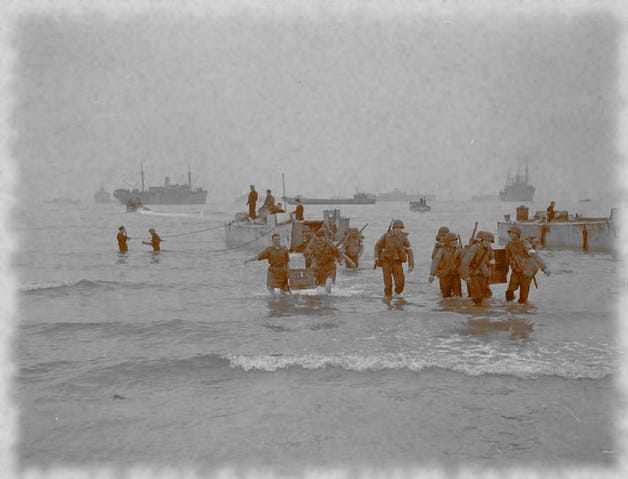
The Anglo-American landings in Morocco and Algeria introduced fresh forces that threatened Axis flanks, forcing a defensive reorientation and exposing command fractures as Rommel’s army retreated into Tunisia. Operation Torch, coinciding with the final stages of the Alamein offensive, landed British and American forces, simultaneously, at Oran and Algiers in Algeria, and Casablanca, Morocco in November 1942. The German forces were now caught between the Allied landings to the west and the British forces engaged in the east that had driven Rommel’s forces from Egypt, setting the stage for operations in Tunisia. In a hasty effort to keep the Afrikakorps from collapsing, the Germans mustered forces stationed in France to reinforce Rommel’s forces, with the 10th Panzer, Hermann Göering Panzer Parachute, and 334th division arriving in Tunisia in mid-November—about a week after the Torch landings. These troops were deployed westward to halt the advance of the Torch armies. An allied column began the trek toward Tunisia shortly after the landings to cut off the Germans, but arrived too late. After the defeat of El Alamein, Rommel withdrew his forces to the old French fortifications near the southern border of Tunisia, known as the Mareth Line, where they arrived in January of 1943. He confessed misjudgment to Kesselring, lamenting his inability to widen the attack swiftly enough to exploit the gains made by his offensives, while stating his need to use the Mareth Line to defend against the offensive being prepared by Montgomery. The Torch landings transformed the campaign into a vise, with western advances compounding Axis vulnerabilities.
The Fox’s Last Lunge
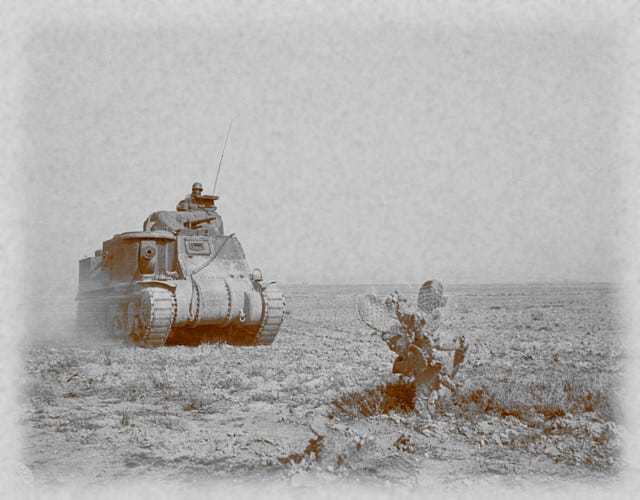
Axis counterattacks in Tunisia, such as those at Faïd and Kasserine Passes, revealed temporary tactical advantages enjoyed by the reinforced Afrikakorps—now designated Army Group Africa—but underscored the chronic overextension that had plagued the Axis throughout the North African campaign, enabling Allied regrouping and eventual encirclement in Tunisia. The Kasserine episode, in particular, exposed American inexperience while also highlighting the Axis inability to exploit battlefield success due to fuel shortages and persistent inter-command disputes. By mid-February 1943, Rommel’s troops had fully occupied and refurbished the Mareth Line, providing a fortified rear guard against Montgomery’s westward advance while the Dorsal Mountain operations secured the southern flank against a direct Torch thrust from Algeria. In support of a broader defensive reorientation, the Fifth Panzer Army, under General Hans-Jürgen von Arnim, launched a series of spoiling attacks in the Dorsal Mountains at Fondouk, Bou Arada, and Faïd, intended to delay and disrupt advancing British and American forces. The 10th and 21st Panzer divisions advanced into the American II Corps—commanded by Major General Lloyd Fredendall—at Faïd Pass, aimed at Sidi Bou Zid at the western edge of the pass, panicking the green American troops. The thrust threatened to roll-up the Allied forces from the south and drive them to the north. After annihilating a hastily organized counterattack by the Americans and enveloping two battalions of the 168th Infantry Regiment—compelling their surrender—the Panzer divisions proceeded westward towards Sbeïtla. After a day of intense combat, the Germans overcame the defense at Sbeïtla and continued the advance, threatening the critical supply depot at Tebessa. Rommel’s plan was to push through Kasserine Pass and head for the Tunisian coast in order to trap the Allies. The threat was averted when the British 6th Armored Division established a blocking position astride the vital northern road. On 22 February, in the narrow valleys outside Thala, which confined Rommel’s Panzers from maneuver warfare, a small band of British tanks and the massed firepower of the American 9th Artillery Division brought the German thrust to a halt. Realizing his momentum was spent in the face growing Allied superiority, Rommel withdrew from Kasserine the following day. The Kasserine engagements, while demonstrating Axis tactical prowess, underscored the limits of German advances in the face of increasing Allied forces, revealing internal fractures that prevented unified thrusts and doomed wider offensives.
Running Out of Desert
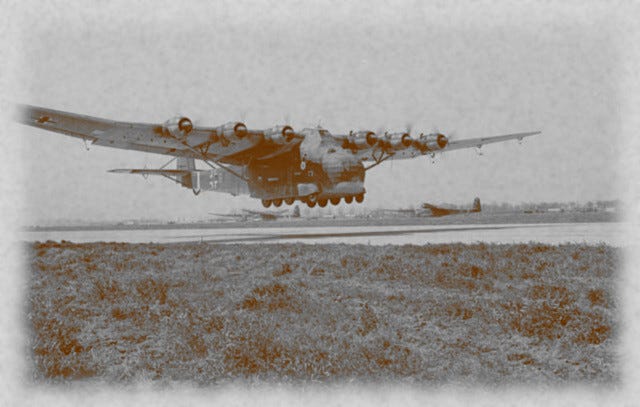
Internal Axis command rivalries and loose oversight undermined the potential of spoiling attacks along the Dorsal Mountains, as refusals to coordinate and collapsing supplies turned aggressive offensives into unsustainable drains that The Allied victory in North Africa emerged from interacting pressures: Italian collapse drawing in German forces, British resilience at Alamein reversing Axis momentum, and the Torch landings splitting an already overextended defense, all converging to force surrender by May 1943. Battles such as First Alamein and Kasserine revealed that while Axis forces retained tactical effectiveness and localized operational initiative, persistent strained logistics and fractured command structures, exacerbated by widening operational fronts, prevented those successes from being translated into decisive results. In the end, the Africa campaign demonstrated that coalition warfare conducted across expansive theaters cannot rely on tactical brilliance alone. Rather, sustained logistical depth, unified command structures, and strategic adaptability are necessary for successful operations. Axis defeat was not the result of a single battlefield reversal, but of cumulative erosion—where distance magnified shortages, rival commands diluted effort, and every attempted counterstroke further drained irreplaceable resources. As the ‘end of the beginning,’ North Africa thus stands as a cautionary example of how peripheral commitments can become liabilities, and how wars are ultimately won by the capacity to sustain efforts, coordinate, and exploit an enemy’s structural weaknesses over time.failed to dislodge Allied positions. The Axis failure to establish a unified command contributed to Axis failures in the Africa Campaign, particularly after the arrival of von Arnim’s Fifth Army. The Italian high command had technical authority over both Rommel and von Arnim’s forces, yet exercised its authority loosely, leading to disputes between von Arnim and Rommel, as each general attempted to exercise authority independently. This resulted in diluted advances at critical moments. During Rommel’s thrust aimed at Tebessa, Rommel requested von Arnim’s 10th Panzer Division in order to concentrate the effort. However, von Arnim was planning an attack of his own and refused to release the division. This command rivalry hampered what had the potential to be an effective effort at Kasserine, despite supply and logistical shortfalls. Had the Axis broken through and seized the supply depot at Tebessa, following a coordinated rather than dispersed effort, resupplying their forces with valuable resources to sustain a deeper penetration, it would have presented a much more desperate situation to the Torch forces. The northward thrust to cut them off by way of the coast had the potential for success, yet the personal ambitions of each commander, rather than a clearly defined objective from higher up the chain of command, contributed to the failed offensive. The supply depot remained in Allied control. Further hampering Axis efforts was the complete collapse of Axis supply to Tunisia by early 1943. Water route supply lines were broken by January, with 22 of 51 ships sunk that month alone, forcing Germany to leverage the Luftwaffe for airlift resupply. German commanders estimated 80,000 tons were required to sustain their efforts in North Africa. Although the Germans poured planes over the narrow stretch of water between Sicily and North Africa, the February airlift only delivered 25,000 tons. The airlift effort came under further pressure from increasingly effective Allied air cover, with allied fighters shooting sixteen out of twenty-one Messerschmitt Me323 Gigant transports in April 1943, resulting in the loss of the precious cargo within, including the much-needed replacement tank parts that were to repair combat losses. By the end of April 1943, von Arnim had only seventy-six operational tanks, despite his best efforts to fuel them with distilled wines and spirits. In the face of Allied air cover—4,500 combat aircraft by May 1943—the Luftwaffe abandoned Tunisia altogether. These command and supply failures squandered tactical opportunities and exacerbated Axis exhaustion, enabling the Allies to regroup and launch the offensives that would compress enemy forces into the final defeat.
Cornering the Beast
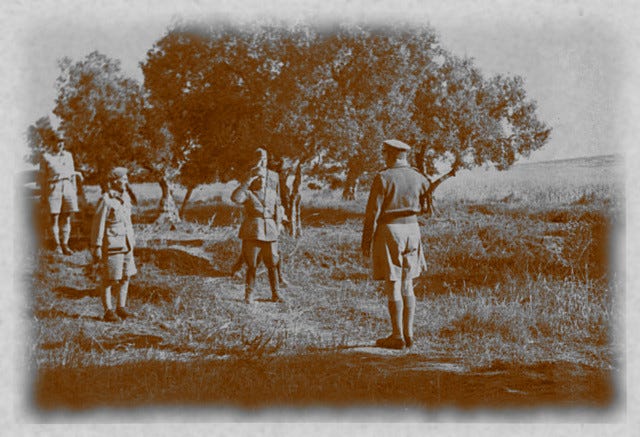
In the campaign’s climax, Allied numerical superiority and multi-front assaults overwhelmed the compressed Axis pocket in Tunisia, culminating in massive surrenders that ended the German-Italian presence in Africa. Following the collapse of the Kasserine offensive and Axis retreat, the Allies opened a broad offensive. On 20 March 1943, Montgomery’s Eighth Army breached the Mareth Line after a flanking maneuver that followed a failed direct assault. The Eighth Army drove the remainder of Panzer Army Africa back to the tail of the Eastern Dorsal by 31 March, while Patton—now commanding the American II Corps, General Fredendall having been relieved after the poor performance and slow counterattack following Kasserine—attacked the rear of Army Group Africa. By the first week of April, the American II Corps linked with Montgomery’s Eight Army in preparation for the final offensive thrust. Within the month of May 1943, they captured the ports of Bizerte and Tunis (General Omar Bradley now commanding II Corps, as Patton was called away to prepare the Sicily invasion), and tightened the Axis pocket into a small bridgehead covering the Cape Bon peninsula in northeast Tunisia. In the face of the final thrust and surrounded, Axis forces, totaling some 275,000 troops, surrendered on 13 May. This included German General von Arnim and Italian General Giovanni Messe—only promoted to Field Marshall the day prior. The bulk of the captured troops were the surviving elements of Panzer Army Africa and reinforcements from over eleven divisions. Italian captives amounted to over 350,000 since the start of the campaign in East Africa in 1941. The number of Italian prisoners exceeded the number that had originally been garrisoned in Africa by Mussolini at the war’s start. The Tunisia collapse sealed the Allied victory, with Axis overextension fully realized in irreversible attrition and isolation.
“The End of the Beginning”
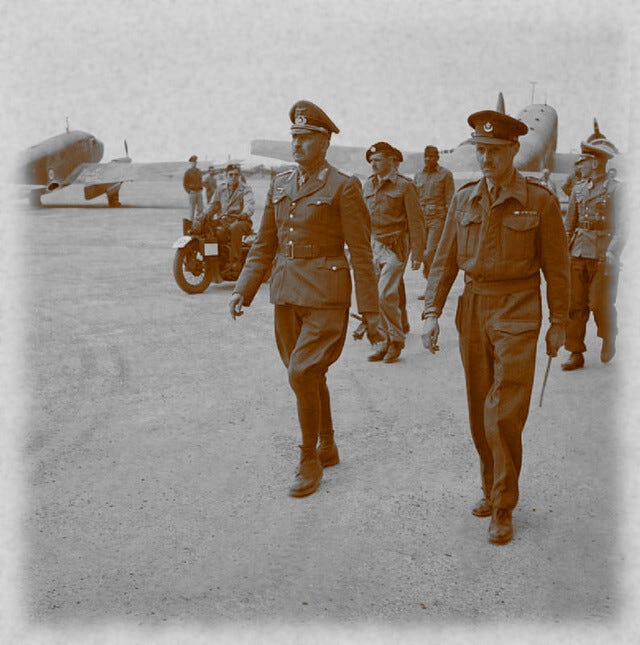
The Allied victory in North Africa emerged from interacting pressures: Italian collapse drawing in German forces, British resilience at Alamein reversing Axis momentum, and the Torch landings splitting an already overextended defense, all converging to force surrender by May 1943. Battles such as First Alamein and Kasserine revealed that while Axis forces retained tactical effectiveness and localized operational initiative, persistent strained logistics and fractured command structures, exacerbated by widening operational fronts, prevented those successes from being translated into decisive results. In the end, the Africa campaign demonstrated that coalition warfare conducted across expansive theaters cannot rely on tactical brilliance alone. Rather, sustained logistical depth, unified command structures, and strategic adaptability are necessary for successful operations. Axis defeat was not the result of a single battlefield reversal, but of cumulative erosion—where distance magnified shortages, rival commands diluted effort, and every attempted counterstroke further drained irreplaceable resources. As the ‘end of the beginning,’ North Africa thus stands as a cautionary example of how peripheral commitments can become liabilities, and how wars are ultimately won by the capacity to sustain efforts, coordinate, and exploit an enemy’s structural weaknesses over time.
See Also


Further Reading
Keegan, John. The Second World War. Penguin Books, 2005.
Stewart, Richard W., ed. American Military History : The United States Army in a Global Era, 1917-2010. Vol. 2. Center of Military History, United States Army, 2010.
The vastness of the North African theater of operations challenged the operational reach of both sides, with long lines of communication from their bases limiting their ability to concentrate combat power for a decisive victory. Ultimately, despite Rommel's tactical victories, poorly calculated operational and strategic risks had consequences.
Love this B